San Mateo County Artists Form Task Force to Set AI Guidelines
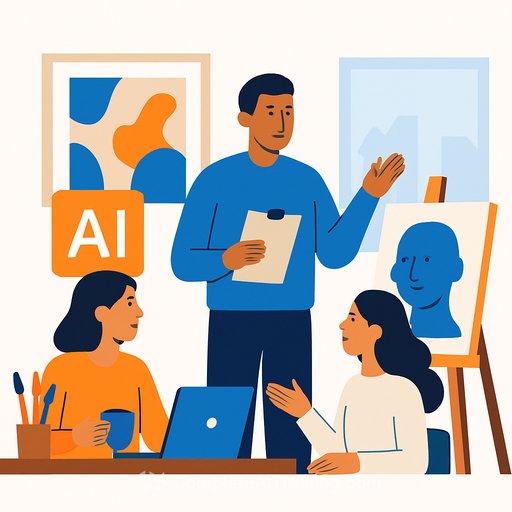
A group of artists in San Mateo County is developing a framework for how artificial intelligence should be used in creative spaces. The task force, led by members of Art Bias-an artist residency program in San Carlos-aims to establish standards for labeling, admissions, and curation that other organizations could adopt.
The task force brings together artists with opposing views. Some reject AI-generated work as art entirely. Others, like Mahyar Rahmatian, use AI as a primary creative medium.
Terra Fuller, Art Bias's executive director, said the residency deliberately displays traditional Japanese calligraphy alongside AI-enhanced photography and paintings. "We're not going to ban any medium, technique or tool," Fuller said. "There's a lot of nuances we need to explore."
The Economics and Ethics Question
Artists and curators see practical advantages to AI creation: faster production, lower costs, and wider accessibility. But those same qualities raise fairness concerns.
Liz Broekhuyse, a graphic designer and artist on the task force, said image-generation tools likely trained on artists' work without permission or compensation. "Having done that without consent or credit or compensation for a commercial tool doesn't sit well with me," Broekhuyse said.
Shari Bryant, another task force member who works in AI system management, emphasized transparency as a key requirement. "People don't want to feel tricked," Bryant said. She does not use AI in her own work, preferring what she calls "that struggle and toil of art."
What Separates AI Art From Fine Art
Fuller distinguishes between fine art-which expresses an artist's personal view, trials, and struggles-and AI art, which she describes as "averaging the experience of all art forms." The difference shapes how audiences respond. Fuller has seen visitors change their opinion of a piece after learning it was AI-generated.
Bryant said AI art should demonstrate something unique to the medium rather than mimicking existing forms. "If AI is validated as an artistic form, I want it to do something unique to AI," Bryant said. "What's special about it? I'm not saying there isn't anything, but show me."
The affordability of AI work may attract different buyers than original paintings, Fuller said. But for Broekhuyse, the issue extends beyond economics. Well-funded startups display AI art in their hallways while small nonprofits struggle to pay human artists fairly.
Next Steps
The task force aims to generate dialogue from multiple perspectives to inform Art Bias's policies. Fuller said the guidelines could serve as a baseline for other organizations facing the same questions about disclosure, artistic merit, and fair attribution.
Learn more about Generative Art Courses and AI for Creatives to understand how these tools work and how artists are integrating them into their practice.
Your membership also unlocks: