
AI news ·
San Diego charter school purchases two humanoid AI robots for $500,000
Altus Schools spent $500,000 on two humanoid robots to tutor at-risk students. The purchase raises safety concerns about using machines as wellness coaches for teens.
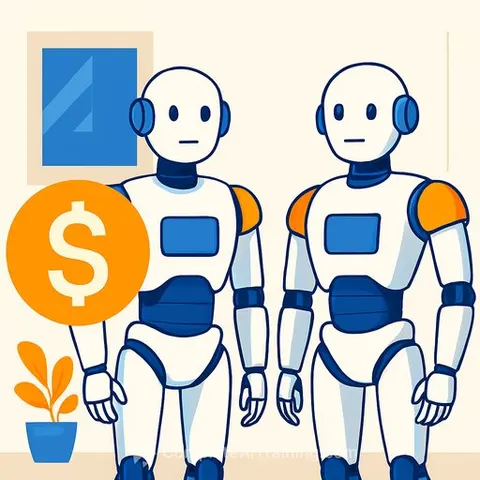
A San Diego charter school network has spent $500,000 on two humanoid robots, with plans to deploy them in classrooms this fall. The purchase by Altus Schools, which serves students who have fallen behind academically, is one of the first known cases of a school system buying physical AI to function as a teaching partner - and it is raising questions about cost, safety, and what role a machine should play in the lives of at-risk adolescents.
The robots, named Ameca, are manufactured by Engineered Arts and described by the school as the "world's most advanced AI-powered humanoid robot." Each stands 6'2" with a bald head and blue eyes. They are ChatGPT-enabled and will be stationed at the school's resource centers, where students can go for one-on-one help outside their independent coursework.
A charter model built on acceleration and individual support
Altus operates a network of schools designed for students who need to recover credits or accelerate their learning. The San Diego location in particular has posted strong results helping students catch up. The model relies heavily on self-paced work, supplemented by in-person sessions at resource centers. That's where Ameca is intended to interact with students, offering targeted coaching through four distinct personas.
Four personas, one that's drawing concern
Three of Ameca's modes fall within typical education categories: Sage the Teacher, Ari the College and Career Planner, and Lexi the Translator. The fourth - Remi the Wellness Coach - is prompting the most scrutiny. Students at Altus are often coping with stress, anxiety, or self-esteem challenges, making them potentially more vulnerable to forming emotional attachments with a machine.
Principal Cathryn Rambo told Voice of San Diego that the wellness coach persona is meant to offer encouragement around situations like test anxiety, not to handle serious mental health issues. "If a student is upset about an argument with a parent, we're never going to put them in front of a robot," Rambo said.
Still, researchers have flagged real dangers. A 2025 study from Common Sense Media and Stanford University found that leading AI companion platforms carry "very serious risks" for teens, including simulating real relationships, reinforcing unhealthy emotions, and discouraging in-person friendships. The report noted that inappropriate content frequently slips past platform safeguards even in teen modes.
Safeguards and unanswered questions
Altus says several guardrails will be in place. Students will not be left alone with the robots. All memory from a session is erased afterward, and no student data is recorded. The robots are pre-programmed to deflect certain topics - they can discuss the Clinton presidency, for example, but will avoid details about the 1998 sex scandal. Imitating controversial figures is blocked.
But these protections don't eliminate the known tendency of large language models to hallucinate or to be manipulated into ignoring programmed boundaries. And the school's larger experiment still leaves key questions open. Rambo's email to families described Altus as "the first school in the world researching the use of physical AI as a teaching partner," but has not named any research partner. The half-million-dollar price tag has also drawn attention at a time when many public schools remain underfunded. Adding to the skepticism, the core AI functionality - the ChatGPT-based interaction - could be accessed through existing chatbot subscriptions for a fraction of the cost, raising the question of why a full humanoid form factor was necessary at all.
Why this matters for education professionals
Altus's experiment is an early stress test for K-12 leaders watching the rapid push of AI into classrooms. The decision to purchase physical robots rather than software alone illustrates the gap between the marketing of AI and the practical questions schools must answer: who is responsible for safeguarding student well-being, what evidence justifies the cost, and how transparent should the research be when children are the subjects. For educators and administrators looking to make informed decisions about AI, building foundational knowledge is essential. The debate over Ameca shows that the hardware is becoming available before the ethical and pedagogical frameworks are in place. Teachers and school leaders who invest time in an AI Learning Path for Teachers can be better prepared to evaluate such deployments and advocate for guardrails that prioritize student development over novelty. As the broader conversation around AI for Education intensifies, the San Diego case is likely to become a reference point for districts weighing similar purchases.