San Jose Plans to Spin Off AI Policy Initiative as Independent Nonprofit
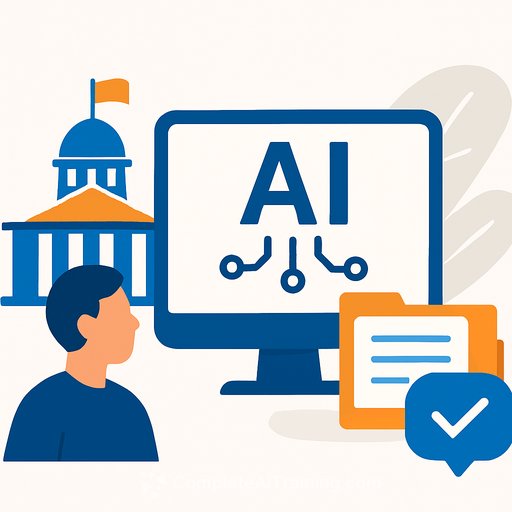
San Jose's GovAI Coalition, which advises government agencies worldwide on artificial intelligence adoption, will become an independent nonprofit if the City Council approves the proposal Tuesday. The move would allow the organization to raise funding and hire dedicated staff instead of relying on volunteers.
The coalition has grown to more than 3,000 members representing 900 public agencies since its launch in 2023. It provides governments with guidance on AI tools, including how to evaluate products for data security risks, train workers, and draft procurement agreements.
Why the Nonprofit Structure
San Jose Chief Information Officer Khaled Tawfik currently chairs the coalition's board. Under the nonprofit model, an independent board of directors made up of public sector leaders would govern the organization, though Tawfik would stay in his role.
Philanthropic organizations have expressed interest in funding the coalition but have been reluctant to do so while it remains government-run, according to a city memo. The Packard Foundation is providing a $150,000 grant to support the transition.
"The current model employs very dedicated volunteers and the transition to a nonprofit will remove some of those constraints and allow dedicated staff to devote more time to delivering value for the coalition membership," said Jonathan Behnke, San Diego's chief information officer and coalition board member.
What the Coalition Does
The organization publishes free resources for government agencies, including fact sheets on using AI assistants at work, training guides for public employees, and template documents for procurement and data-sharing agreements.
Attendance at coalition meetings has grown from about 50 agencies at the first gathering in November 2023 to a global membership spanning cities, states, and public transit agencies across multiple continents.
The coalition addresses a real need. As governments experiment with generative AI and large language models, they face questions about data privacy, worker displacement, and the risks of poorly implemented systems.
Government's Own AI Experiments
San Jose has already deployed AI tools to optimize public transit, translate public meetings, and review official documents. The city recently began searching for a generative AI platform to help workers with routine tasks.
City leaders view these tools as a way to accomplish more despite staffing shortages. But workers have raised concerns about job displacement and the potential for automation failures to disrupt government operations.
Alena Stern, chief data scientist at the Urban Institute, said government agencies will need ongoing support as AI technology evolves. "We've moved from generative AI to agentic generative AI, and as technology is changing, there's a need to constantly be refreshing and updating," Stern said. "The GovAI Coalition can play that central role in distilling learnings across governments as folks are experimenting and exploring."
Maddy Dwyer, a policy analyst with the Center for Democracy and Technology, said the coalition's network allows government, civil society, and industry leaders to share knowledge and push the public sector toward responsible AI adoption.
For AI for Government professionals, the nonprofit structure could mean more resources and clearer guidance as agencies navigate AI implementation at scale.
Your membership also unlocks: