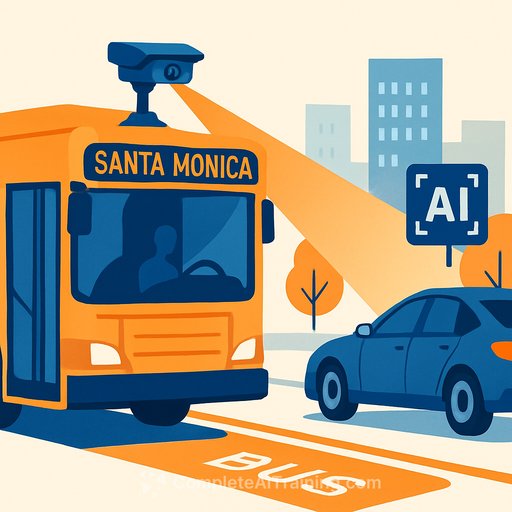
Santa Monica Launches AI-Powered Bus Lane Enforcement
Starting July 1, Santa Monica will deploy artificial intelligence (AI) cameras on its Big Blue Bus system to automatically identify and ticket drivers illegally parking in bus lanes. This initiative marks a key step in the city's effort to improve transit efficiency and reduce lane obstructions.
How the AI Enforcement Works
The buses will be equipped with Hayden AI camera systems featuring forward-facing lenses and license plate readers. These cameras use computer vision and analytics to detect violations, capturing encrypted evidence packages for review. Importantly, all footage is assessed by human officers before any citations are issued, ensuring accuracy and fairness. The system does not use facial recognition technology.
Pilot Program Results
Earlier this year, a 45-day pilot along Lincoln Boulevard—where a dedicated bus lane exists—detected 511 parking violations. The highest concentration of infractions occurred southbound near Grant Street, with 90 violations recorded. During the pilot, no tickets were issued; the data helped refine the system ahead of full enforcement.
Broader AI Surveillance Efforts
Santa Monica is expanding its use of AI surveillance beyond bus lanes. A second pilot is active in the downtown area, where AI cameras monitor crime-prone locations 24/7. Staff can use loudspeakers to warn potential trespassers or vandals in real time, potentially preventing incidents before law enforcement intervention is needed.
Benefits and Impact
- Automated enforcement technology has helped cities nationwide increase bus speeds by 36% and reduce collisions by 34% on monitored routes.
- By preventing illegal parking, buses can maintain schedules and improve boarding access, especially for passengers with disabilities.
- Other major cities like New York, Los Angeles, and Washington, D.C. have successfully implemented similar systems.
Local Transit Context
The Big Blue Bus system serves 13.3 million riders annually across Santa Monica’s 58-square-mile area. Hayden AI has installed over 650 camera systems nationwide, working with transit agencies from Oakland to Philadelphia.
For example, New York City’s deployment since 2019 shows that 86% of drivers caught violating bus lane rules do not repeat offenses, indicating a strong deterrent effect. Los Angeles Metro issued 5,500 citations in its first month using the technology—almost ten times the usual monthly total.
Program Rollout and Revenue Use
Santa Monica will begin with a warning phase before issuing fines, giving drivers time to adjust to the new enforcement. Fine revenues are planned for reinvestment into transit and safety programs, aiming to reduce violations close to zero.
This move reflects a practical approach to improving public transportation reliability and safety through technology, with clear operational benefits for transit agencies and city operations teams.
For professionals interested in AI applications in operations, exploring relevant training and courses can provide valuable insights. Check out Complete AI Training for resources on AI tools and systems used in transportation and urban management.
Your membership also unlocks: