AI's New Bottleneck: Electricity, Not GPUs
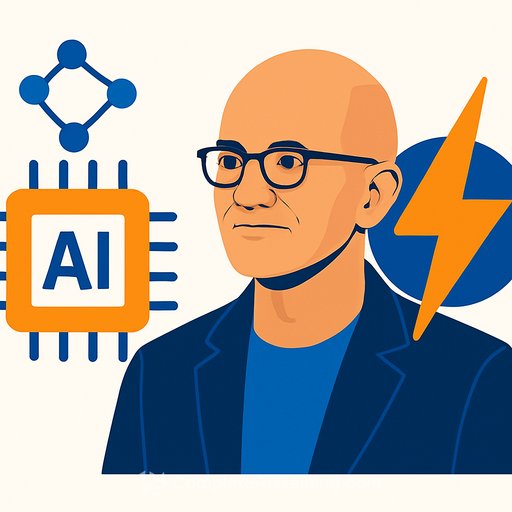
Satya Nadella says the constraint in AI has shifted. After building up a deep inventory of GPUs, the limiting factor is now electricity to run and scale those chips.
On a podcast with Sam Altman, he explained the new reality: you can have racks of accelerators ready to train and serve models, yet stall because the grid connection isn't there. The pinch point has moved from components to megawatts and siting.
Why energy is the choke point
Modern data centers consume as much energy as a small town and need reliable, high-capacity connections to the electric grid. Interconnection queues, transformer shortages, and permitting timelines add friction and delay.
Region matters. Local grid headroom, policy, and community sentiment can make or break timelines. For context, see the IEA's view on data center electricity demand: IEA analysis.
What this means for your AI roadmap
Energy strategy is now core to AI strategy. Treat electricity availability as a first-order constraint in model plans, capacity forecasts, and product launch dates.
- Siting strategy: prioritize regions with available interconnection capacity, favorable tariffs, and supportive policy.
- Secure supply: pursue long-term electricity purchase agreements (PPAs) to lock in price and volume.
- On-site generation: consider solar + storage, fuel cells, and high-efficiency turbines to cover peaks or bridge delays.
- Next-gen options: track small modular reactors (SMRs) for future baseload; see U.S. NRC: SMRs.
- Efficiency levers: liquid cooling, workload scheduling, pruning/quantization, and model distillation to cut megawatt-hours per token.
- Multi-region design: distribute training/inference to match where electricity is available and affordable.
- Carbon strategy: combine clean energy procurement with hour-matching to reduce exposure to emissions and policy risk.
Financial impact
Electricity and cooling are now a dominant share of total cost for training and inference. PPAs can hedge volatility, while on-site assets shift spend from OPEX to CAPEX and improve availability.
Delays are expensive. Interconnection queues can stretch years, and congestion drives up prices. Model launch dates and unit economics must reflect this risk.
Execution checklist (next 90 days)
- Baseline: quantify current and forecasted AI load (MW, MWh) by model, site, and timeline.
- Map capacity: identify substations and regions with credible interconnection paths; get queue positions, not just LOIs.
- Procure: initiate multi-year PPAs; evaluate blend-and-extend options and shape profiles to your load curve.
- Bridge: develop interim solutions (on-site generation, demand response, load shifting) to de-risk near-term ramps.
- Engineering: lock cooling strategy (liquid/immersion), raise rack density targets, and set E2E efficiency KPIs (PUE, WUE, kWh/inference).
- Governance: create an energy review board across infra, finance, and product; gate GPU purchases on electricity availability.
Operating model shifts
Make electricity a portfolio constraint in planning tools. Stage GPU deployments based on confirmed interconnection dates, not forecasts.
Partner early with utilities and regulators. Align legal, real estate, and community engagement to compress permitting time.
What good looks like for 2026 plans
- Locked PPAs covering a majority of expected AI load with firm delivery profiles.
- Diversified siting across at least two regions with proven grid headroom.
- On-site generation and storage to handle peaks and outages.
- Cooling and model efficiency programs that measurably reduce kWh per training run and per inference.
- Clear carbon trajectory with hourly matching in priority regions.
If your team is building AI capability while wrestling with infrastructure constraints, align skills with the plan. Practical learning paths for specific roles include AI for Executives & Strategy, the AI Learning Path for VPs of Strategy, and the AI Learning Path for Business Unit Managers.
Bottom line
GPUs are no longer the scarcest resource. The real constraint is electricity capacity, location, and timing. The leaders will secure dependable megawatts first, then scale models with confidence.
Your membership also unlocks: