
AI news ·
Saudi Arabia signs agreement to develop AI programs for cultural sector
Saudi Arabia signed an agreement to integrate AI across 16 cultural sectors. The move prepares the creative economy for the 2026 Year of AI.
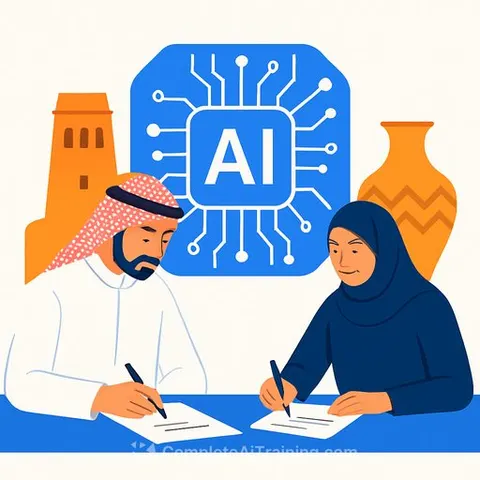
Saudi Arabia is preparing to launch a new wave of AI-powered cultural initiatives after the Ministry of Culture, the Cultural Development Fund, and the Saudi Data and AI Authority (SDAIA) signed a trilateral agreement on Monday. The memorandum of understanding aims to design joint AI programs for the cultural sector, individual creators, and cultural enterprises, as the Kingdom gears up to designate 2026 the Year of Artificial Intelligence.
The deal signals a government push to embed advanced technologies across the cultural economy. For Saudi artists, designers, and cultural professionals, the move opens a direct path to blend their craft with AI tools, expand their reach, and strengthen the operational backbone of creative institutions.
Building an enabling ecosystem
Raed bin Khalil Al Eid, a cultural innovation adviser and founder of the Cultural Management Platform, said the agreement reflects a growing recognition of AI's role in culture's future. He stressed that the real test will be effective implementation that turns the memorandum into projects with clear impact.
A specialized study by the Cultural Management Platform documented AI applications across all 16 cultural sectors officially recognized in Saudi Arabia-heritage, museums, libraries, literature, publishing, translation, music, theater, film, architecture, fashion, and culinary arts. The findings showed that AI has become an enabling technology that spans the entire creative ecosystem, widening investment opportunities. For professionals exploring AI for Creatives, this broad applicability makes adoption more practical and career paths more varied.
Al Eid argued that the Ministry of Culture's primary role now is to build the environment for AI to flourish-establishing policies, regulations, professional standards, and governance frameworks that cover intellectual property, data, and ethics. That foundation, he said, would give private companies, nonprofits, and community initiatives the confidence to develop their own AI solutions.
Culture in the Year of AI
Al Eid said cultural innovation is no longer optional but essential as audiences, consumption habits, generational interests, and regional priorities keep shifting. Pairing AI with cultural innovation, he added, does more than improve efficiency: it can broaden culture's reach, attract new audiences, and create more diverse, interactive, and sustainable experiences.
Saudi Arabia's cultural sector is already undergoing a fast digital shift, with even more momentum expected as the 2026 Year of AI approaches. The Ministry of Culture and its affiliated commissions have launched competitions and hackathons to attract innovators and speed up the development of AI applications across every cultural field.
For artists and cultural professionals, the initiative is expected to open fresh opportunities to combine human creativity with advanced AI capabilities, including generative art tools that are reshaping visual culture.
Why this matters for creatives
The agreement doesn't just signal policy direction-it creates concrete openings. Artists who understand how AI can amplify their work will be positioned to lead in a cultural economy where the government is actively funding AI experiments, setting new professional standards, and building the infrastructure for AI-driven creative work. Waiting until the programs are fully rolled out means missing the early-stage collaborations, hackathons, and funding rounds that will shape the sector's next decade.