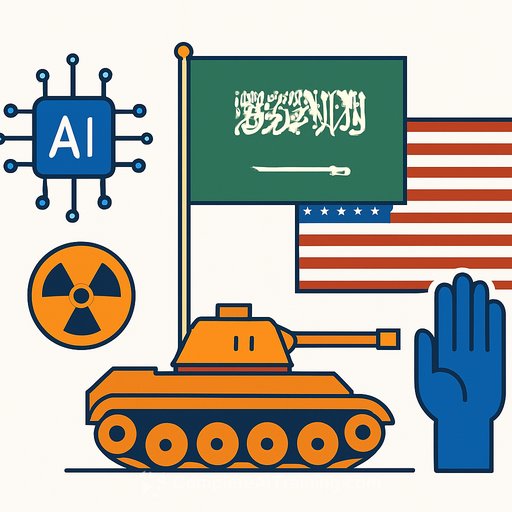
Saudi Arabia's Trillion-Dollar Pledge: What Finance Needs To Know
Saudi Arabia says it will lift its US investment commitment from $600 billion to $1 trillion, according to a White House statement tied to a November visit by Crown Prince Mohammed bin Salman. The headline is huge. The real work is figuring out timing, structure, and the risk budget behind it.
For finance teams, this isn't a press release to skim. It's a pipeline signal across energy, AI infrastructure, critical minerals, defense, and capital markets that could shape fund flows and deal calendars for years.
Where the Money Likely Goes
- Nuclear energy: Potential equity in US projects, fuel cycle partnerships, and advanced reactor supply chains. Expect long lead times, heavy permitting, and consortium deals.
- Critical minerals: Stakes in US-friendly mining, processing, and recycling. Look for offtake agreements tied to EV and grid storage demand.
- AI and compute infrastructure: Data centers, AI chips, and power. Partnerships with hyperscalers and chip designers are likely; grid access becomes a gating factor.
- Defense: Co-investments with primes, MRO capacity, and technology transfer where allowed. Export controls and security reviews will define the ceiling.
- Capital markets and trade: LP commitments, co-GP structures, and potential listings or credit vehicles. Think structured finance rather than simple headline checks.
How It Might Be Funded
Expect the Public Investment Fund (PIF) and other state-linked vehicles to lead, using a mix of equity, partnerships, and debt. Analysts cited by the Foreign Affairs Forum say Saudi Arabia likely has the capacity to back the pledge, especially by leaning on PIF assets and international financing.
The bigger question is opportunity cost. If oil revenues soften, pushing $1 trillion abroad could strain public finances or slow domestic projects. Deployment pace and recycling of proceeds will matter more than one-time announcements.
Deal Signals So Far
A November 19 investor event in Washington drew leaders from Blackstone, Nvidia, Tesla, Salesforce, Global AI, and the state-owned HUMAIN. That lineup hints at a focus on AI infrastructure, supply chains, mobility, and software partnerships.
Watch for term sheets tied to data center power procurement, chip capacity allocations, and long-dated offtake in minerals. Those are the telltale markers that capital is moving beyond MOUs.
Regulatory And Geopolitical Risk
- CFIUS and security reviews: Anything touching strategic tech, energy, or defense will face scrutiny. Deal structures may require minority stakes, board observer rights, or clean-teams.
- Export controls: AI chips, advanced manufacturing tools, and certain software will remain tightly controlled. Don't assume access even with capital in hand.
- Human rights and ESG: The Committee to Protect Journalists and other groups called on the US to push Riyadh on rights and press freedom, adding reputational risk for counterparties. For context, see CPJ.
- Macroeconomic exposure: Oil price volatility can change the investment cadence, especially for illiquid assets.
What To Watch In The Next 12-24 Months
- Formal investment frameworks or multi-year allocation plans from PIF and US partners.
- Named projects in nuclear and data center power, including grid interconnects and long-term PPAs.
- Mineral offtake and processing deals tied to US or allied supply chains.
- Defense-adjacent JV structures that clear security reviews.
- New fund vehicles, co-invest rights, and secondary market activity to recycle capital.
Action Steps For Finance Teams
- Map counterparties: Identify PIF-affiliated entities and their mandate fit across your portfolio or pipeline.
- Pre-screen CFIUS: Run early-stage diligence on governance, data access, and IP to avoid late-stage surprises.
- Structure for durability: Use step-in rights, staged funding, and performance-based milestones to manage policy and commodity risk.
- Secure power and chips first: For AI buildouts, capacity agreements (power, water, chips) are now the critical path.
- ESG and comms: Prepare disclosures and stakeholder messaging early if deals touch sensitive areas.
Bottom Line
$1 trillion is less about a single wave of cash and more about sustained, themed allocations across energy security and compute capacity. The upside is real for sponsors, developers, and operators who can clear policy hurdles and lock in supply.
Treat this as a multi-year allocation cycle. The winners will get the structure, compliance, and power contracts right before the press release goes out.
Your membership also unlocks: