Schneider Electric SE: The Operating Layer for the All-Electric, AI-Optimized Enterprise
If you run Ops for a plant, a portfolio of buildings, or a data center fleet, you're hitting constraints. Electrical capacity, emissions targets, uptime expectations, and budget discipline are all tightening at once.
Schneider Electric SE has quietly become the coordination layer that brings hardware, software, and AI into one controllable fabric. Think less "gear vendor," more "operating system" for energy and automation at enterprise scale.
The Infrastructure Problem Ops Teams Need to Solve
Compute demand is surging while utility capacity stalls. Factories must decarbonize without choking throughput. Buildings are expected to lower emissions, stay comfortable, and avoid downtime-all at the same time.
Schneider Electric SE is built for this tension: sense everything, model everything, then automate the decisions that cut waste, stabilize operations, and reduce emissions.
Inside EcoStruxure: Three Layers, One Control Fabric
1) Connected products
Breakers and switchgear (MasterPacT, ComPacT), medium-voltage equipment, Altivar drives, and Modicon PLCs now ship "born-digital." They're instrumented, networked, and ready to feed supervisory systems in real time.
2) Edge control
Platforms like EcoStruxure Building Operation and EcoStruxure Automation Expert execute deterministic control close to the process. In buildings: optimize HVAC, lighting, and access using occupancy, tariffs, and weather. In industry: coordinate robots, drives, and loops for the most throughput per kilowatt-hour. In data centers: continuously tune electrical and cooling capacity to match IT load and grid constraints.
3) Apps and analytics
EcoStruxure Resource Advisor, Microgrid Advisor, and cloud-based monitoring bring sites into a single pane of glass. AI adds anomaly detection, failure prediction, and optimization recommendations your team can accept or automate.
What Makes the Strategy Work (for Ops)
- Deep verticalization: Segment-specific stacks for data centers, manufacturing, commercial real estate, and utilities. For data centers, UPS, rack distribution, cooling, and DCIM sit in one AI-assisted loop aimed at uptime and energy efficiency.
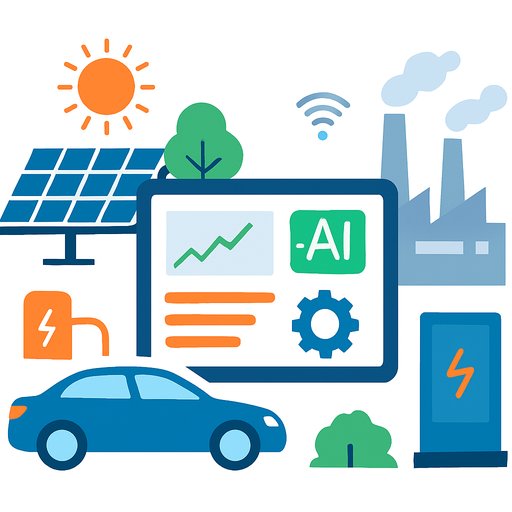
- Electrification as the core narrative: Microgrids, EV charging integrated with building management, and grid-interactive buildings turn energy from a fixed expense into a controllable (and sometimes monetizable) asset.
- Openness and interoperability: Uses Modbus, BACnet, OPC UA, and APIs to integrate both Schneider and third-party gear-critical for brownfield sites where rip-and-replace is off the table. See OPC UA for context.
- Software and services as the growth engine: Consulting, managed services, and subscriptions wrap around hardware. Customers get outcomes-uptime SLAs, energy savings, emissions reductions-while Schneider builds recurring revenue.
Market Rivals: How Schneider Electric SE Stacks Up
Siemens
Siemens Xcelerator plus Desigo CC and Sentron face off against EcoStruxure in buildings and electrical distribution, while TIA Portal and SIMATIC go head-to-head with Automation Expert and Modicon. Siemens leans into digital twin and PLM in discrete manufacturing; Schneider pushes harder on energy performance and microgrid readiness.
ABB
ABB Ability, Relion, and Emax compete across data centers and industrial distribution, paired with Ability Energy and Asset Manager. ABB's message centers on reliability and electrical robustness. Schneider's pitch resonates with boards: carbon reduction, lifecycle services, and enterprise-level energy strategy.
Rockwell Automation
FactoryTalk and PlantPAx are strong in North American discrete and hybrid manufacturing. Rockwell often depends on partners to cover building and electrical domains; Schneider offers one data and control fabric that spans electrical distribution, buildings, and process automation.
Why Schneider Electric SE Often Wins
- Energy-native DNA: Electrification is assumed across heating, mobility, compute, and industry. EcoStruxure bakes in electrical quality, flexibility, and grid interaction as first-class priorities.
- End-to-end visibility: From substation to machine to room controller, one footprint. That's how you respond to dynamic tariffs, run demand response, and orchestrate EV charging, rooftop solar, and storage without a tangle of middleware.
- Pragmatic openness: Open protocols plus partnerships with major IT vendors ensure data flows into enterprise lakes and analytics platforms with less friction.
- Sustainability as a board-level offer: Advisory services tie tech to procurement, ESG targets, and performance contracts that commit to specific savings.
Stock Lens: Why Investors Assign a Premium
Schneider Electric Aktie (ISIN FR0000121972) is being valued less like a cyclical equipment maker and more like a structural growth story tied to electrification, digitalization, and regulation. Recent trading sits near the higher end of its multi-year range, reflecting that shift.
Three secular drivers support that view: AI-hungry data centers needing efficiency and capacity, industrial decarbonization that must cut emissions and OPEX, and buildings turning into grid-interactive assets. The mix of software, services, and recurring programs layered over a massive installed base is what public markets tend to reward.
What Ops Leaders Can Do Now
- Baseline the estate: Map electrical distribution, critical loads, HVAC, and process assets. Instrument the gaps with metering and sensors.
- Unify the edge: Consolidate site control on a common platform (building, electrical, and automation) to reduce silos and integration risk.
- Run a pilot: Pick one facility to test closed-loop optimization for tariffs, occupancy, and process throughput. Measure energy cost per unit, emissions per unit, and uptime.
- Monetize flexibility: Enable demand response and on-site generation/storage where markets permit. Treat energy as a controllable line item.
- Contract for outcomes: Consider SLAs for uptime, savings, and emissions with shared accountability across hardware, software, and services.
- Skill up the team: Build AI and automation fluency for planners, facility managers, and controls engineers. If helpful, explore role-based options here: AI courses by job.
- Design for openness: Favor solutions that speak Modbus, BACnet, and OPC UA to reduce vendor lock-in and retrofit friction.
The Bottom Line for Operations
Schneider Electric SE's advantage is execution: one fabric for energy and automation, open enough for brownfield realities, and backed by services that tie to business outcomes. For Ops, that means fewer blind spots, lower energy spend, a credible decarbonization path, and infrastructure ready for EVs, microgrids, and AI-driven loads.
If you're planning next year's capex, score options on three axes: openness, enterprise-level analytics, and whether sustainability targets are as actionable as uptime. EcoStruxure is built to check all three.
Your membership also unlocks: