
AI news ·
Scholar launches AI-assisted telehealth practice for special education evaluations
Scholar, a Tampa edtech firm, launches a telehealth practice using AI to triple psychologist capacity and cut special ed evaluation time from 12 months to under a semester.
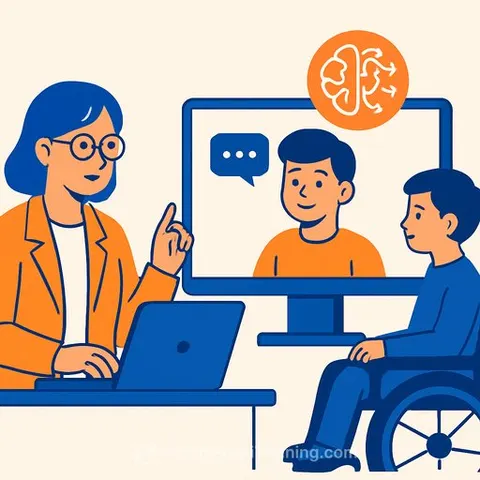
A Tampa education technology company is launching a telehealth practice that pairs licensed psychologists with artificial intelligence, aiming to slash the time and cost of special education evaluations. Scholar, whose classroom software already serves about 22,000 Florida students, said the combination could help cut a process that often takes 12 months down to less than a semester.
Scholar, which develops software used to manage individualized education plans, or IEPs, is pursuing a different application, using AI for Education to shorten the evaluations, planning and documentation required before students qualify for special education services. The software assists with scoring assessments and preparing draft reports and education plans, while licensed psychologists remain responsible for diagnoses and final recommendations.
The evaluation bottleneck
Founder and CEO Ed Buckley said the expansion grew out of repeated requests from educators who already used Scholar's classroom platform. That tool helps manage accommodations for students with disabilities, gifted learners, and English language learners. But the real pain, schools told him, comes earlier.
"What we kept hearing from parents and schools is, 'That's great. You manage them once they're diagnosed and have a plan. But getting diagnosed and getting the plan written upstream, those are the real pain points,'" Buckley said.
He described the shift as moving from "the third step in a three-step process" to handling the full sequence. Under the new model, families can seek evaluations directly through the telehealth practice, and completed IEPs flow into the same software schools already use.
A new model for assessments
Buckley said the goal is to increase how many evaluations psychologists can complete rather than replace the clinicians. Licensed providers still diagnose students and approve every education plan. The AI component drafts documents that a psychologist reviews and finalizes.
"Our goal is to try to triple psychologist capacity," Buckley said. "The goal is to reduce the cost at least 50% and take the whole process, which takes about 12 months now, and ideally make it less than a semester."
He emphasized that families often wait nearly an entire school year before children receive an evaluation and begin services. "You shouldn't have to wait a whole school year just to get your kid diagnosed and have that plan go into action," he said.
Adoption across Florida schools
The launch arrives as Florida districts test artificial intelligence in both classrooms and administrative offices. Buckley said Hillsborough, Pinellas, and Pasco counties have adopted different approaches, often shaped by existing technology platforms. Districts already committed to Microsoft, for example, frequently start with the company's built-in AI tools.
Buckley said the resistance that dominates national headlines has not been his team's experience inside schools. "I think there's been more headlines about it than actual pushback that we've seen," he said. "We've been thoughtful about bringing the stakeholders along for the ride."
Special education, he noted, has drawn far less attention from technology companies than classroom instruction, even though it affects millions of families and demands extensive evaluation and documentation. "People think of AI and innovation," Buckley said. "They don't think of special education."
Why this matters for educators
The bottleneck before special education services can drain months of instructional time, and any tool that compresses that window directly affects classroom planning. If AI-assisted evaluations can deliver a completed IEP in under a semester, teachers and support staff receive actionable plans sooner, not after a critical year has already slipped by. The Scholar model shows a path where technology handles the documentation burden while licensed psychologists retain control over clinical decisions - a division of labor that may become more common as districts adopt AI in administrative workflows.