
AI news ·
School homework is 'worse than useless' due to widespread AI use, polls reveal
Homework is "worse than useless" as students use AI. Polls show parents are confused, and schools offer no clear guidance.
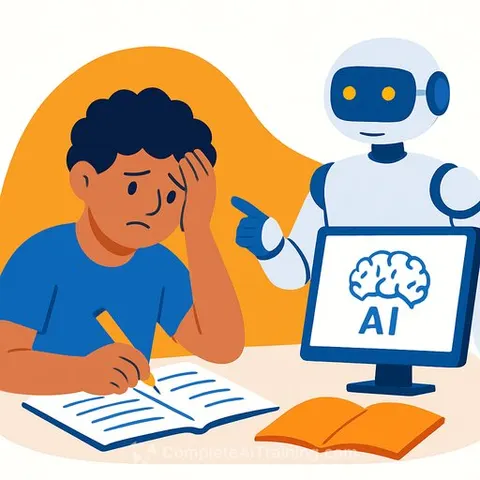
School homework has become "worse than useless" as students turn to AI tools, and polling data shows parents are confused about what is permitted. The education system has yet to offer clear guidance for families navigating the technology.
The erosion of homework's value
The core problem is not student laziness. When an AI can generate an essay or solve a maths problem in seconds, the assignment stops measuring what a child understands. Teachers cannot assess learning if they cannot see the student's unaided thinking. The description "worse than useless" captures what happens: homework stops being practice and becomes an exercise in prompt engineering, with no feedback loop for improvement.
Parents seek clear rules
Polls indicate significant confusion among parents. Many do not know whether letting their child use AI for homework is acceptable, cheating, or something in between. Without school-level policies, families create their own inconsistent standards. One parent might ban all AI, while another treats it like a calculator. The result is an uneven playing field and a growing credibility gap between what teachers assign and what students submit.
Teachers who want to build coherent AI policies can explore practical resources such as the AI Learning Path for Teachers. Structured guidance helps educators move past ad hoc decisions and align assessment strategies with how students actually work.
Why this matters for teachers and school leaders
The risk is not that AI exists - it is that homework as a formative tool becomes meaningless if no one defines fair use. School leaders must set explicit rules and explain them to families. That means deciding which tasks can reasonably involve AI, which must be done independently, and how to verify the difference. Without that, homework assignments will continue to generate data that tells nobody anything useful about a student's progress.