Fraud and Non-Payment Risks in Emerging Markets
Fraud and non-payment risks are increasing in emerging markets due to limited transparency and poor data-sharing. These challenges make it harder to detect and prevent fraudulent activities. Technologies like artificial intelligence (AI) are promising tools to address these issues, but their full potential depends on government initiatives and industry education.
Losses from fraud and non-payment hit the global financial system hard, but emerging markets suffer most. This heightens the urgency to improve transparency and data collaboration across the sector.
Transforming Trade Finance
A recent workshop, hosted by ITFA, FCI, and EBRD in London, focused on how new funding solutions and technologies are changing trade finance. Experts discussed securing supply chains and tackling fraud risks in emerging markets. The panel explored solutions such as blockchain, AI, government policies, and the role of international organisations, emphasizing the need for better education on fraud prevention.
Data-sharing and Urgency
The World Economic Forum estimates trade-based financial crime costs the global economy around $1.6 trillion yearly, stressing the need for stronger oversight and data-sharing. Deutsche Bank reports that rising fraud has driven major banks to exit trade finance markets, removing over $20 billion in liquidity.
Despite this, data on fraud is rarely shared across institutions. A panel led by Betül Kurtuluş of FCI highlighted this silence and the pressing need to address it. Ian Miller from Lenvi pointed out a contradiction: while risk is often discussed, real incidents rarely are. A 2023 report showed 89% of European receivables finance decision-makers see rising fraud, with 81% expecting it to continue. Yet, 9% admitted to lacking formal fraud prevention strategies.
The Role and Limitations of Blockchains
Blockchain offers a decentralized, transparent, and traceable database that can enhance trade finance security. The technology uses cryptography to maintain privacy while improving efficiency and reducing costs. It could boost global trade by up to $1 trillion in the next decade.
Sam Curtis of Complidata described blockchain as a strong tool to reduce fraud and non-payment risk. However, challenges remain in regulatory acceptance, system integration, scalability, and stakeholder buy-in. Blockchain can also slow transactions and add costs, especially for smaller, fast-moving assets where its benefits are less clear.
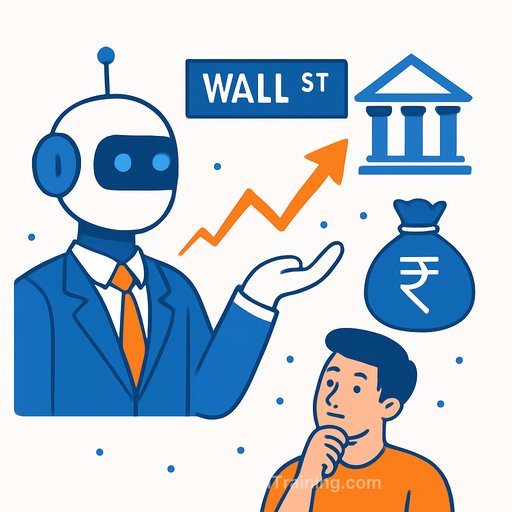
Fighting Fire with Fire: AI-led Fraud with AI
AI excels at spotting subtle document fraud like font inconsistencies or mismatched trade details that humans might miss. Curtis emphasized that AI is ready to deliver results for those who adopt it. Though underused in trade finance, AI already helps institutions analyze large datasets in real time to detect anomalies.
Oswald Kuyler from the Asian Development Bank warned that fraudsters will soon use AI to automate attacks across multiple institutions. The only defense is to use AI-powered detection. Major players like Visa and Mastercard are investing heavily in AI fraud detection, a practice that should extend to supply chains in emerging markets.
The types of fraud remain the same—fake invoices and false claims—but AI enables fraudsters to scale their operations. Combating fraud now requires blending modern AI tools with traditional risk management.
Government and Multilateral Leadership
Technology alone isn't enough. Effective government policies and leadership from international organisations are key to securing supply chains. India, for example, introduced mandatory e-invoicing under its GST system, requiring real-time validation of invoices above certain thresholds. This creates tamper-proof records, simplifies tax reporting, and standardizes company communications.
Türkiye also mandated e-invoicing for most businesses, linking it with tax systems to create audit trails and reduce double financing and tax evasion. According to Kurtuluş, Türkiye detects millions of fraud cases annually, supporting SME financing effectively.
International organisations can help emerging economies improve business registries and identity infrastructure. As Kuyler noted, these foundational steps enable future innovation in fraud and non-payment detection.
Education and Capacity-Building
Even the best tools require skilled users. Education and capacity-building are vital in the fight against trade finance fraud. Curtis pointed out that while risk and compliance teams often understand AI’s potential, trade finance staff may lag behind. Training is essential to maximize AI’s benefits.
Industry groups like FCI and ITFA’s Financial Crime Compliance Initiative regularly offer webinars and events on fraud types, sanctions, and controls. Sharing knowledge and preserving institutional memory through experienced professionals strengthens collective resilience.
Curtis summed it up well: the most valuable education comes from learning through shared experience and open information exchange.
Your membership also unlocks: