Agentic AI, digital twins, and intelligent wearables: how security operations shift by 2026
Operations teams don't need more dashboards. You need faster decisions, fewer blind spots, and proof you're closing risk without bloating headcount. Agentic AI, digital twins, and intelligent wearables give you that-if you implement with clear guardrails and measurable outcomes.
Agentic AI in the SOC: autonomy with a leash
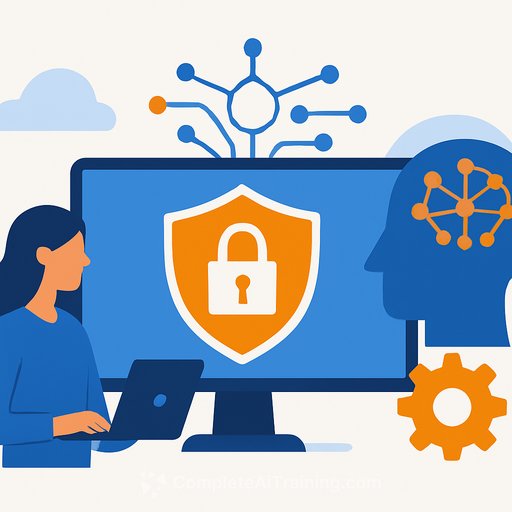
Agentic AI plans and takes actions under policies you define. Think: triage low-risk tickets, auto-isolate infected endpoints, schedule patch windows, draft user comms, and propose next best actions-all with approvals where needed.
- High-value starters: phishing triage, EDR contain/release, credential resets, low-risk firewall rules, noisy alert deduplication.
- Controls to enforce: approval thresholds by risk, change windows, rollback by default, rate limits, and tamper-evident logs.
- Operate in "shadow mode" first: AI suggests; humans approve. Promote to "supervised execute" only after hitting accuracy targets.
Digital twins: test before it hits production
A digital twin mirrors your environment-sites, networks, OT lines, and critical processes-so you can rehearse incidents and change plans without risking downtime. Use it to pressure-test playbooks, patch sequencing, and segmentation policies.
- Inputs: CMDB, OT asset inventory, building systems (BMS), network configs, user flows, and historical incident data.
- Use cases: ransomware tabletop with live data, evacuation routes under different constraints, supplier outage scenarios, and patch collision checks.
- Outcome: fewer failed changes, faster recovery, and tighter, evidence-backed approvals.
Intelligent wearables: close the last mile
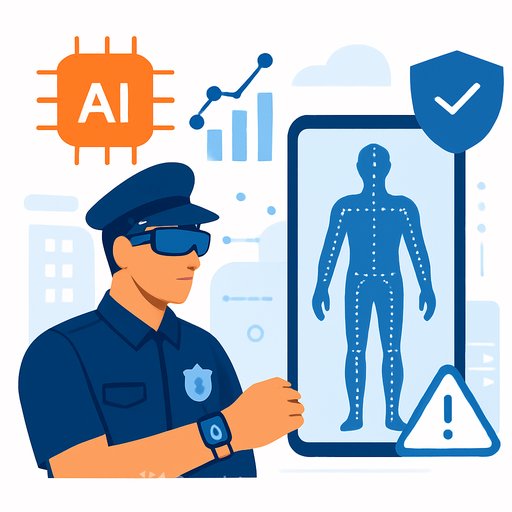
Badges, sensors, AR headsets, and bodycams give you real-time context at the edge. They strengthen mustering, lone-worker safety, PPE compliance, and incident verification.
- Signals to use: location/geofencing, fall detection, vitals/fatigue risk (where lawful), and proximity alerts for hazardous zones.
- Automations: trigger mustering after alarms, lock door groups, alert SOC on man-down, and overlay AR instructions for safe shutdowns.
- Privacy first: clear consent, opt-out paths where required, data minimization, and role-based access.
Reference architecture that scales
- Ingest: event streaming (SIEM/SOAR), MQTT/OPC-UA for OT/IoT, and time-series storage for telemetry.
- Reasoning: policy engine for guardrails, vector search for context, and agentic workflows tied to your SOAR.
- Digital twin: model assets, people flows, and dependencies; sync with change management to rehearse before deploy.
- Security: KMS-backed encryption, SSO/SCIM, granular RBAC, and immutable logging.
Governance and guardrails
- Adopt a risk framework such as the NIST AI Risk Management Framework.
- Map threats and responses to MITRE ATT&CK and record control coverage.
- Define an approval matrix by risk level, and keep humans in the loop for medium/high impact actions.
- Set kill switches, change-freeze windows, and escalation routes. Log every action with inputs, outputs, and who approved.
- For executive guidance on strategic governance, consider the AI Learning Path for CIOs.
90/180/365-day rollout
- Days 0-90: Select two use cases (e.g., phishing and EDR contain). Run shadow mode. Build a twin for one site. Complete a privacy impact assessment and union/legal review.
- Days 90-180: Integrate with SOAR, EDR, MDM, and door access. Pilot wearables with a volunteer crew. Add approval thresholds. Hold monthly tabletop drills in the twin.
- Days 180-365: Expand to 3-5 sites. Introduce supervised execution on proven playbooks. Automate reporting. Start quarterly red/purple team exercises against the twin.
KPIs that prove value
- Mean time to detect (MTTD) and respond (MTTR).
- Autoclose rate for low-risk tickets and % of actions needing human approval.
- False-positive rate, patch lead time, and change success rate.
- Wearable metrics: response time to man-down, mustering completion time, and PPE compliance rate.
Simple ROI view: (labor hours avoided + loss avoided + downtime avoided) - (tools + integration + training). Track per use case, not just overall.
Procurement checklist
- Security and compliance: SOC 2 report, ISO 27001 alignment, SBOM, data residency options, SSO/SCIM, customer-managed keys.
- Ops fit: open APIs/webhooks, event streaming, playbook builder, on-prem/edge options for OT, and offline modes.
- Performance: latency SLAs, rate limits, and backpressure handling.
- Wearables: battery life, IP rating, intrinsically safe certs (e.g., ATEX), comfort, and device management at scale.
Risks and how to reduce them
- Over-automation: start with low-impact actions; require approvals for anything that changes state.
- Model errors or drift: evaluate on your data, monitor outcomes, and retrain on a fixed cadence.
- Privacy blowback: clear purpose limits, short retention, and role-based views; involve workers' councils early.
- Vendor lock-in: demand exportable playbooks, data egress, and standards-based interfaces.
- Hidden cost spikes: cap inference calls, cache results where safe, and budget per use case.
Example playbook: phishing to closure
- Detect suspicious email → correlate with known campaigns.
- Quarantine email, flag recipients, and open ticket (shadow mode).
- If confidence ≥ threshold and no business block, disable link domains and reset credentials (approval required).
- Notify affected users, document actions, and roll back if false positive is confirmed.
Team structure and skills
- AI/automation supervisor: owns guardrails, metrics, and approvals.
- Playbook engineer: builds flows, tests in the twin, maintains integrations.
- Data lead: telemetry quality, retention, and access controls.
- Privacy and legal partners: consent, notices, and retention schedules.
If your crew needs a structured path to get there, browse role-focused learning at Complete AI Training: Courses by Job.
Compliance and privacy essentials
- Run Data Protection Impact Assessments for wearables and agentic actions.
- Minimize personal data; prefer on-device processing where feasible.
- Set retention by purpose; purge automatically; restrict who sees biometric or location data.
- Keep workers informed: policies, signage, and simple opt-out paths where required (e.g., GDPR/CCPA contexts).
- For role-specific privacy and regulatory guidance, consider the AI Learning Path for Regulatory Affairs Specialists.
Your next steps
- Pick two low-risk, high-volume use cases and put agentic AI in shadow mode.
- Build a single-site twin and use it for every change rehearsal.
- Pilot wearables with volunteers and publish a clear privacy notice.
- Lock in KPIs and approval matrices before any "auto-execute."
- Use the AI Learning Path for Project Managers to guide rollout, governance, and KPI tracking.
The tech is ready. The advantage goes to teams that set guardrails, ship small wins, and prove outcomes month after month.
Your membership also unlocks: