The era of AI search: marketing's once-in-a-generation shift
Generative AI jumped from labs to laptops and rewired discovery. Search didn't fade - it splintered. People still Google, but they also ask ChatGPT, hit Copilot, and skim AI answers before they ever see your site.
The shock was real. Traffic didn't dip; it fell off a cliff for some. Clicks vanished, revenue plans buckled, and the old playbook couldn't explain it. We're past the initial chaos, but the rules are different now.
If SEO isn't dead, what changed?
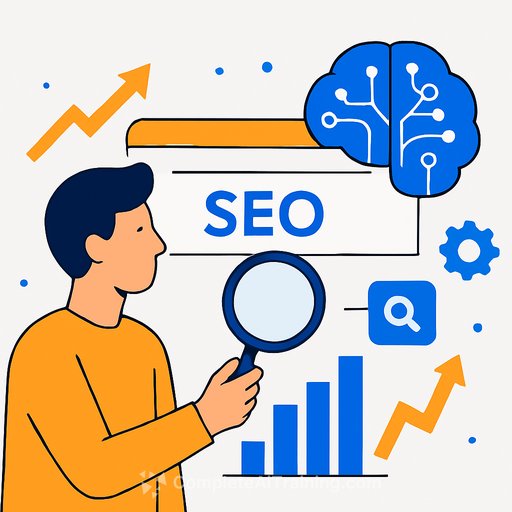
SEO didn't die. Google didn't either. Since ChatGPT launched, Google searches rose ~20%, and as of October 2025, 94.4% of all searches still happen on Google. The shift isn't away from search - it's toward many search surfaces at once.
Visibility moved from a single channel to a network of AI-driven touchpoints. Your brand can win on Google and still lose inside LLM answers. That's the new gap.
GEO, AEO… and the bigger picture
Generative engine optimization (GEO) helps AI engines include your brand in answers. Answer engine optimization (AEO) aims to get your content cited when AI recommends products or services. Both matter. Neither is enough on its own.
The winning combo: SEO + AI Search
Keep everything that works in traditional SEO. Add AI Search: the practice of making your brand discoverable, credible, and accurately represented wherever AI answers, summarizes, or recommends.
- Your brand is cited as a trusted source inside LLM outputs.
- AI systems prefer your verified domain over third-party commentary.
- Your content structure, metadata, and llms.txt signal machine readiness.
- Brand sentiment, expertise, and authority stay consistent across every AI surface.
The job is bigger. It's visibility plus proof. Rankings matter, but citations and confidence signals decide whether AI includes you at all.
90-day AI Search playbook
- Stand up a "source of truth" hub: One page per entity (company, products, features, pricing, founders). Publish clear facts, dates, and claims you want AI to repeat. Keep it current.
- Entity-first structure: Add Organization, Product, Person, and FAQ schema. Follow Google's structured data guidance so machines can parse you cleanly. See Google's docs.
- Machine-readable facts: Use JSON-LD for specs, FAQs, comparisons, and definitions. Provide canonical URLs for every key fact.
- Crawl rules for AI: Configure robots rules and create an llms.txt to declare preferred sources and usage signals. Control or allow crawlers like GPTBot as needed. Review GPTBot controls.
- Citation strategy: Land references on domains AI engines trust. Prioritize primary research, original data, and expert commentary that journalists and analysts will cite.
- Answer-first content: Start pages with a concise summary (2-4 sentences), then expand with evidence, examples, and links to sources. Make it skimmable and quotable.
- Claims and sources: Pair every meaningful claim with a source. Use consistent wording so models tie the claim to your brand.
- Author credibility: Add real author bios, credentials, and links to profiles. Show experience and proof of work.
- Consistency checks: Align facts across your site, social profiles, app store listings, and knowledge panels. Inconsistency kills trust in model outputs.
- Measure AI visibility: Track brand mentions, citations, and answer inclusion inside LLMs and answer engines. Watch "share of answer" alongside SERP share.
- Experiment cadence: Ship weekly updates, monitor impact in both AI answers and organic search, and double down on formats that get cited.
The new role of SEO leaders
- PR partnership: Target outlets and formats AI treats as authoritative. Push original studies and clear data viz that earn citations.
- Content guidance: Train writers to produce human-first articles that are machine-parseable - strong summaries, clean headings, precise schema, and verified sources.
- Executive clarity: Explain how brand mentions inside AI shape trust, pipeline, and conversion - even when clicks don't show up in GA.
- Team upskilling: Level up skills across SEO, content, and PR. A focused program helps move fast. AI certification for marketing specialists.
Tools that connect both worlds
Platforms now tie classic SEO with AI visibility metrics so you can see how often your brand appears, gets cited, and wins answers - across Google and AI engines. Semrush One, released in October 2025, is one example that brings these workflows under one roof.
The moment we're in
This shift rivals the early days of search. The brands that get AI Search right will set the pace for the next decade. Those that wait will fight uphill for attention they used to take for granted.
SEO hasn't ended; it expanded. The mandate is simple: be findable, be credible, be the source. Do that consistently and AI will bring your brand into the conversation - with or without a click.
Your membership also unlocks: