How AI Is Rewriting Brand Discovery: Why Fintech Leaders Can't Ignore GEO
Search isn't a list of blue links anymore. When customers ask ChatGPT, Gemini, or Perplexity for recommendations, they get a synthesized answer built from how AI understands your brand-its facts, signals, and context.
For fintech marketers, that changes the playbook. If your brand isn't represented accurately in AI systems, you're quietly losing discovery, trust, and revenue to competitors who are.
Caption: Fintech leaders on stage at the Cyprus Fintech Summit discussing how Generative Engine Optimization (GEO) and AI are redefining trust and visibility in digital finance.
The AI Visibility Gap
Most teams don't know how AI describes them. They can't see if their facts are correct in knowledge graphs, how often they appear in AI answers, or whether a competitor is cited as the "authoritative" source.
That's the visibility gap. It's where market share leaks without anyone noticing.
"As AI becomes the primary discovery layer, brands compete not just for visibility but for accurate representation," said Uri Samet, CEO of Buzz Dealer, a Digital PR and Online Reputation Management agency. "Brands need to appear consistently across all types of AI-driven searches, including reputation questions, category research, competitor comparisons, and others."
At the Cyprus Fintech Summit, Buzz Dealer unveiled expanded GEO services built to close that gap. Fintech executives responded fast-asking how to audit AI answers, strengthen knowledge graph signals, and correct brand narratives as models update.
From SEO to GEO
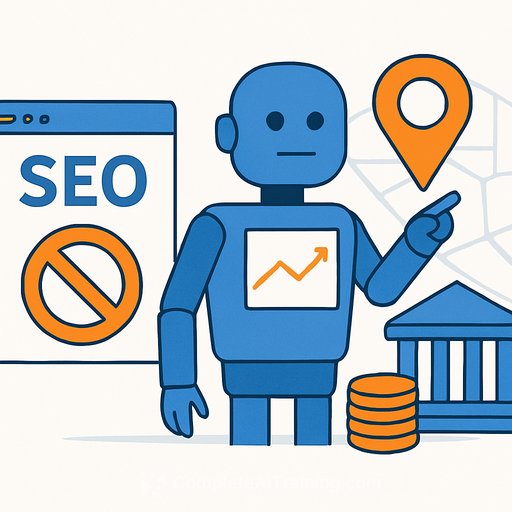
Traditional SEO optimizes for search engines. GEO-Generative Engine Optimization-optimizes for how AI systems interpret, understand, and represent your brand across prompts and contexts.
You can rank #1 on Google and still be invisible, misquoted, or outshined by a competitor inside an AI answer. That disconnect costs qualified demand.
Caption: Ron Gilo unpacking how GEO is reshaping brand discovery during a live conversation at the Cyprus Fintech Summit.
"Traditional SEO still matters, but it is no longer enough on its own," said Ron Gilo, Chief Marketing Officer of Buzz Dealer. "Brands that do not optimize for AI-driven discovery risk losing visibility in the places where customer decisions increasingly begin."
What GEO Looks Like in Practice
- AI Visibility Optimization: Structure brand data so LLMs can identify, resolve, and summarize it accurately.
- Reputation Mapping for Knowledge Graphs: Build, align, and reinforce authoritative sources that feed AI.
- Fact-Source Alignment: Ensure your key facts match the sources AI cites most often.
- Multilingual GEO Coverage: Scale your signals across languages and regions, not just English.
- AI Narrative Defense: Monitor model answers and correct drift, gaps, and outdated claims.
The Fintech Imperative
Financial choices are high-stakes. If an AI answer misstates your fees, features, or licensing-or favors a competitor-you don't just lose clicks. You lose customers.
Teams that invest in GEO now will build compounding visibility inside AI answers. Those that wait will chase citations already owned by early movers.
A Fast GEO Playbook for Marketers
- Run an AI audit: Ask top models common tasks and comparisons in your category. Capture answers, citations, and gaps.
- Fix your facts at the source: Update first-party pages, FAQs, bios, and policy docs. Add precise, crawlable statements and consistent naming.
- Strengthen structured data: Mark up organization, product, pricing, reviews, leadership, and contact info. Reference authoritative IDs where possible. See Google's structured data guidance here.
- Earn and normalize citations: Align press, directories, and profiles. Standardize key facts (founding year, HQ, license, assets, leadership) across sources.
- Close multilingual gaps: Localize facts, pages, and citations for priority markets. Keep numbers and claims consistent across languages.
- Monitor and correct: Re-audit answers monthly. Track changes after product launches, funding rounds, or regulatory updates.
Team and Workflow Notes
- PR + SEO + RevOps alignment: Treat facts as a product. Assign owners for truth sources, structured data, and external profiles.
- Content with receipts: Publish claims with citations and clear authorship. Create explainer pages that models can quote cleanly.
- Crisis readiness: Prepare pre-approved updates and evidence for fast corrections if AI answers go off-track.
Why This Matters Now
At the Cyprus Fintech Summit, one insight kept coming up: the edge in 2025 won't go to the brand with the flashiest website or the most backlinks. It goes to the brand AI trusts to be accurate.
Your customers will keep asking AI for comparisons, "best for" lists, risk explanations, and step-by-step guides. Make sure your brand is in those answers-and represented correctly.
Next Steps
- Spin up a 30-day GEO sprint: audit, fix facts, add structured data, align citations, re-check.
- Fold GEO into your quarterly planning: new product = new facts to structure, publish, and syndicate.
- Upskill your team on AI-driven discovery and GEO fundamentals. If you need a starting point, see this certification for marketers here.
Waiting means ceding ground to competitors already optimizing for AI visibility. If you want deeper guidance, watch for Buzz Dealer's official GEO announcement and build your plan from there.
Caption: Buzz Dealer team engaging with fintech leaders at the Cyprus Fintech Summit booth.
Your membership also unlocks: