South Korea Seeks Favorable Terms as U.S. Tariffs Target Advanced AI Chips
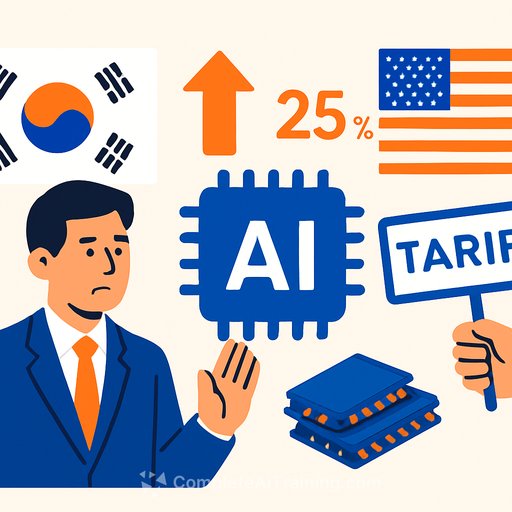
South Korea is moving to secure favorable treatment under new U.S. tariffs on certain high-end AI chips. Officials said a prior joint fact sheet with Washington included assurances that Seoul would not face worse tariff treatment than key competitors.
For now, South Korean exporters see limited near-term impact. The current measures focus on advanced compute chips, while memory chips - South Korea's main export - are excluded at this stage.
What the U.S. action covers
The U.S. has imposed a 25% tariff on specific artificial intelligence chips, including models such as Nvidia's H200 and AMD's MI325X. The proclamation carves out exemptions for imports destined for U.S. data centers, startups, non-data center consumer uses, non-data center civil industrial uses, and U.S. public sector applications.
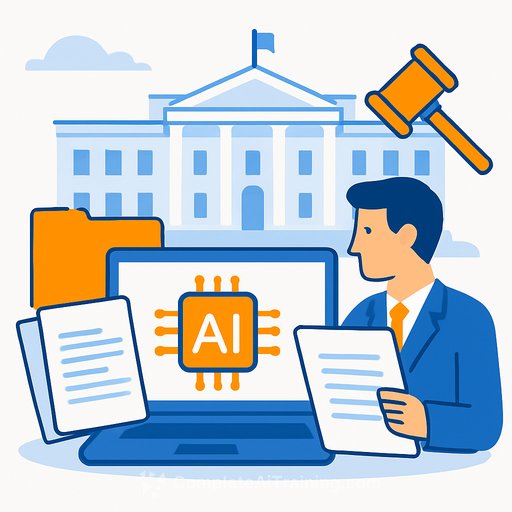
The move follows a Section 232 investigation into national security risks linked to semiconductor imports. Officials also signaled that broader tariffs on semiconductors and derivative products could follow to encourage onshore manufacturing.
Seoul's stance
Seoul plans to press for tariff treatment that matches or improves on what competitors receive. The government noted its joint fact sheet with the U.S. and emphasized active coordination with industry to protect South Korean firms.
Trade minister Yeo Han-koo called the immediate impact "limited," given the current focus on advanced compute chips. He also warned it's too early to relax, as a second phase could expand the scope and timing is uncertain.
Signals from Washington
U.S. Commerce Secretary Howard Lutnick indicated that South Korean and Taiwanese chipmakers not investing in U.S. facilities could face tariffs up to 100% unless they commit to production in the U.S. The message came during Micron's groundbreaking for a new New York plant.
The broader U.S. objective is clear: build more chips domestically and reduce exposure to external supply risk, especially from Taiwan.
What government agencies and public buyers should do now
- Confirm whether your purchases fall under the stated exemptions for data centers, startups, and public sector applications. Keep documentation ready for audits.
- Inventory AI hardware tied to specific models and performance thresholds that could trigger tariffs. Track HS codes and supplier declarations.
- Update tenders and contracts with tariff risk clauses (repricing, substitution, and delivery flexibility). Require suppliers to notify you of scope changes.
- Coordinate early with customs brokers and legal teams on classification, origin, and any emerging exclusion processes or duty drawback options.
- Scenario-plan budgets for a potential phase-two expansion that could touch broader chip categories or derivative devices.
- Feed real-time procurement data to trade and foreign affairs teams to support negotiations that reference the joint fact sheet commitments.
- For state and local entities running compute clusters, validate exemption status for public sector uses and maintain clear use-case records.
Risk outlook: next 3-12 months
Short term: limited disruption for memory chip trade flows. Medium term: higher risk if the U.S. widens scope to include memory or more derivative products, or if performance thresholds are revised.
- Watch for new Section 232 notices and Federal Register updates adjusting product scope or benchmarks.
- Track announcements from the White House and Commerce on broader semiconductor tariffs and onshore investment requirements.
- Monitor investment moves by Samsung, SK hynix, and TSMC in the U.S., as they may influence tariff exposure and supply availability.
- Assess potential responses from regional partners that could affect bilateral or multilateral trade channels.
Action checklist for ministries, embassies, and procurement leads
- Set up a tariff watch cell to centralize alerts, guidance, and supplier communications.
- Map all AI-related hardware in current and planned projects; flag items that could meet "advanced compute" thresholds.
- Prepare negotiation briefs citing the joint fact sheet's "no less favorable" treatment commitments.
- Engage major vendors on allocation, lead times, and U.S. manufacturing commitments; secure fallback options.
- Align budget planning with multiple pricing scenarios and potential duty timelines.
- Document exemption claims for public sector procurements and standardize evidence requirements across agencies.
Sources and further reading
For background on national security trade measures, see the U.S. Department of Commerce's overview of Section 232 investigations. For U.S. onshoring efforts and incentives, review CHIPS for America.
Upskilling your team
If your unit is expanding AI procurement or oversight, role-specific learning paths can quickly raise baseline fluency. Consider the AI Learning Path for Procurement Specialists, the AI Learning Path for Purchasing Managers, or the AI Learning Path for Supplier Relationship Managers.
Your membership also unlocks: