Seoul Statement: IEC, ISO and ITU set a common path for sustainable, safe AI
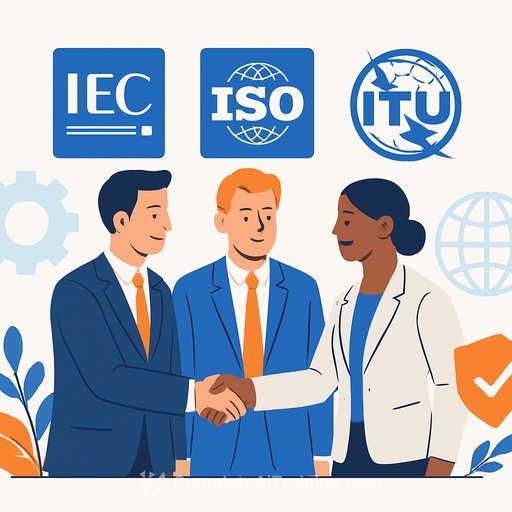
December 2, 2025 - The International Electrotechnical Commission (IEC), International Organization for Standardization (ISO) and International Telecommunication Union (ITU) issued a joint "Seoul Statement" committing to push international standards that make AI inclusive, open, sustainable, fair, safe and secure.
For engineering and product teams, this is a clear signal: AI features will be expected to meet shared, testable norms across safety, interoperability and environmental impact. Standards are moving from optional to assumed.
Why this matters for IT and development teams
- Interoperability by default: Data schemas, APIs and model documentation will need to line up across vendors to reduce integration friction.
- Safety you can prove: Expect conformance tests for model behavior, red-team results and incident handling to become standard release artifacts.
- Lifecycle governance: From problem framing to decommissioning, teams will need traceability for data, models, prompts and decisions.
- Inclusion and fairness: Bias assessments and accessibility checks won't be "nice to have" anymore-they'll be gated checks.
- Sustainability metrics: Energy usage and emissions reporting for training and inference will be requested by buyers and regulators.
Where standards are likely headed
- AI management systems: Organization-wide controls, roles and audits for AI projects (policy, risk, monitoring, improvement).
- Risk management: Consistent methods to identify, analyze and treat AI risks, including harm scenarios and mitigations.
- System lifecycle: Requirements for data lineage, model versioning, deployment approvals, rollback plans and retirement.
- Transparency and evaluation: Model cards, dataset statements, evaluation suites, content provenance and watermarking guidance.
- Security: Threat modeling for AI-specific risks (prompt injection, data poisoning, model theft) and continuous monitoring.
- Interoperability: Common vocabularies and exchange formats for datasets, metrics and model outputs.
- Environmental reporting: Standardized methods to calculate and disclose energy use and emissions.
90-day action plan
- Inventory: List every AI feature, model and third-party service. Note purpose, data sources, model versions and owners.
- Risk register: Capture foreseeable harms, likelihood, severity and mitigations. Assign owners and review cadence.
- Documentation: Add MODEL_CARD.md and DATASET_CARD.md to repos with inputs, metrics, limits and safe-use notes.
- Eval pipeline: Automate behavioral tests (quality, safety, bias, prompt injection). Gate releases on thresholds.
- Security controls: Add input validation, output filtering, secrets isolation, rate limits and abuse monitoring.
- Incident response: Define triggers, on-call paths and rollback steps for AI-specific failures.
- Energy tracking: Log compute hours, hardware type and power source during training and inference.
- Vendor clauses: Require suppliers to disclose model lineage, datasets (where possible), eval results and energy metrics.
Developer checklist for each AI feature
- Clear problem statement, intended users and misuse cases.
- PII handling: minimization, masking, retention rules and access logs.
- Pre-deployment evals: quality metrics, out-of-distribution behavior and red-team findings.
- Bias testing across relevant cohorts with thresholds and fixes.
- Fail-safes: fallback responses, human escalation and rate-limit behavior.
- Observability: prompt/model/version IDs, user/session IDs and key metrics (quality, safety, latency, cost).
- Change control: pull request templates capturing data/model changes and rollback plans.
Procurement and vendor management
- Request evaluation reports, safety test suites and monitoring dashboards.
- Require security whitepapers for model and data protection.
- Add sustainability disclosures to RFPs: training/inference energy and emissions.
- Ensure rights to perform independent testing and audits.
Open-source projects
- Add SECURITY.md for AI threats and disclosure process.
- Ship example evals and a minimal safety harness in CI.
- Provide MODEL_CARD.md and DATASET_CARD.md with known limits.
- Tag releases with training data windows and notable behavior changes.
What to watch next
- New work items and calls for contribution from IEC, ISO and ITU.
- Conformance and certification programs built on shared test suites.
- Crosswalks between international standards and regional rules to simplify compliance.
Useful references
Level up your team
If you're standing up governance, evaluation and MLOps tooling, structured training helps teams move fast without creating gaps. Browse hands-on tracks by role at Complete AI Training - courses by job.
Your membership also unlocks: