Duke-NUS spin-off uses AI to streamline patient feedback in vision care
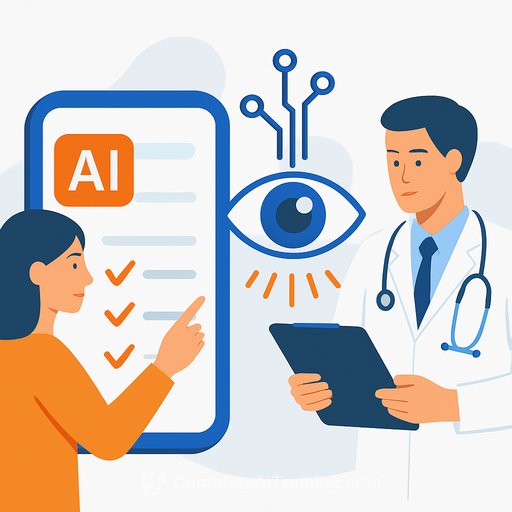
PROMinsight, a company spun out from Singapore Eye Research Institute and Duke-NUS Medical School, is replacing long patient questionnaires with AI-driven adaptive tests that ask only the most relevant questions about vision-related quality of life.
The system adjusts in real time based on patient responses, shortening assessments while capturing more precise data. A one-year implementation study at Singapore National Eye Centre found uptake exceeded 80 percent, with clinicians reporting the patient-reported outcome measures changed their clinical decisions.
One glaucoma consultant noted a patient with good vision but poor quality-of-life scores. Without the data, she said, she would have assumed the patient was fine and moved on.
How the technology works
PROMinsight's computerised adaptive tests (CATs) measure how eye disease and treatment affect daily activities: mobility, visual comfort, emotional concerns and treatment management. The tests are tailored for specific conditions including diabetic retinopathy, glaucoma, cataracts and age-related macular degeneration.
The company licensed three CAT technologies from SingHealth Duke-NUS Academic Medical Centre: MyoRI-CAT for myopia patients, GlauCAT-Asian for glaucoma patients in Asian settings, and MacCAT for age-related macular degeneration. Cloud-based delivery and real-time scoring allow clinicians to access results during consultations.
Professor Ecosse Lamoureux, co-founder and chief scientific adviser, said the tests were built using feedback and data from thousands of patients with various eye conditions. "By asking relevant questions adapted to patients' ability levels in real time, these assessments capture their quality of life more accurately and efficiently than traditional, fixed questionnaires," he said.
Clinical and research applications
PROMinsight has drawn interest from pharmaceutical companies, contract research organisations and tertiary eye centres worldwide. The company recently received significant non-dilutive investment from a leading ophthalmology pharmaceutical company.
In clinical trials, the tests help capture robust patient-reported data on new therapy effectiveness. In clinical care, they help hospitals monitor outcomes and support value-based care initiatives.
PROMinsight collaborates with the International Consortium for Health Outcomes Measurement, the US Food and Drug Administration and the European Medicines Agency. For researchers, understanding how to apply these tools effectively is part of broader work in AI research and AI for healthcare.
What patients said
One retinal patient noted the adaptive questionnaire asked about coping with daily vision problems-something her doctor didn't usually ask about. "This is what is lacking right now in the current clinical situation," she said.
Clinicians also found value in integrating quality-of-life scores into electronic medical records, where they could guide treatment decisions in real time.
Your membership also unlocks: