
AI news ·
Shadow AI use by developers leaves managed service providers with a growing blind spot
Over 70% of UK employees use unauthorized AI tools, many weekly, yet most security teams have no way to detect it. Shadow AI in software development exposes private code and data to external models outside corporate oversight.
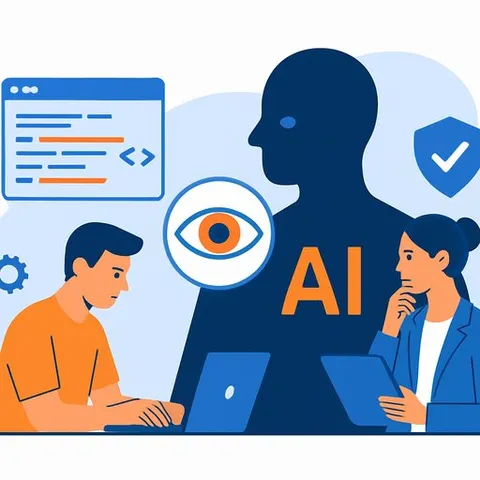
Half of workers use unapproved AI tools. Security teams can't see it.
Shadow AI is now mainstream in software development. Over 70% of UK employees use unauthorized AI tools, with more than half doing so weekly, according to recent research. Yet most organizations lack the visibility to detect or control this use.
The problem mirrors shadow IT - where employees use unsanctioned applications outside corporate oversight. But shadow AI introduces distinct risks that traditional security tools cannot address.
The three-part risk
AI agents typically require access to three things: private data, external communication channels, and the ability to process untrusted input. When all three exist simultaneously, the risk compounds.
Malicious prompts can trick AI agents into exposing sensitive data. Developers may inadvertently send private code, credentials, or confidential information to external AI models. Vulnerable code generated by AI can flow back into production systems, introducing breaches or unsafe patterns if not properly reviewed.
Unlike human developers, AI agents operate at the trust level granted to the software itself - not the trust afforded to people. This distinction matters. An AI agent with write access to a repository can execute commands and automate tasks with minimal oversight.
Why existing security tools fail
Managed Service Providers typically detect shadow IT using Cloud Access Security Brokers, SaaS discovery platforms, and network traffic analysis. These tools identify unusual access patterns or monitor known applications.
Shadow AI bypasses these controls. Developers running AI agents on personal laptops or using personal API keys operate outside standard monitoring. The tools exist inside engineering workflows that conventional surveillance doesn't cover.
MSPs face a clear gap: they cannot detect or prevent unauthorized AI use in development environments without new approaches.
Closing the visibility gap
Organizations can assess their position using AI maturity models. These frameworks measure how AI agents affect software-writing processes and identify where governance and security controls must improve.
The practical solution involves routing AI access through centrally managed infrastructure rather than personal accounts or API keys. This approach gives organizations visibility into which tools developers use, who uses them, and what data flows through them.
When governance lives at the infrastructure layer, it becomes largely invisible to developers while still enforcing controls. Process-level restrictions can limit AI agents to approved services only, preventing compromised agents from reaching unauthorized endpoints or exfiltrating data.
A three-stage evolution for partners
Migrate: Support customers moving from legacy to cloud-based development environments. Standardize developer workspaces and establish secure, centrally managed platforms.
Modernize: Embed AI safely into workflows. Introduce controlled access to AI models, implement audit mechanisms, and integrate governance into development pipelines.
Multiply: Once governance is established, extend AI agent use to automate testing, coding, and operational tasks. Manage agent workflows and deliver ongoing optimization.
Building governance that lasts
The AI tools market changes constantly. Organizations will swap models, tools, and vendors over time. Governance plans built around specific tools become obsolete quickly.
Partners should instead focus on the fundamental processes developers use: how teams build, test, and deliver software. When governance structures anchor to these core processes rather than individual AI products, they remain effective as the vendor landscape shifts.
AI use in development will only increase. Developers will continue seeking tools that accelerate delivery. For MSPs, vendor selection is critical - those prioritizing security governance and observability will be best positioned to help enterprises use AI safely.
For developers looking to understand this shift, AI for Software Developers covers governance, security, and integration patterns in development workflows. Generative Code Courses address AI code generation and developer automation directly.