AI-built, sensory-first mist SPF: what product teams can learn from Shiseido's Voyager
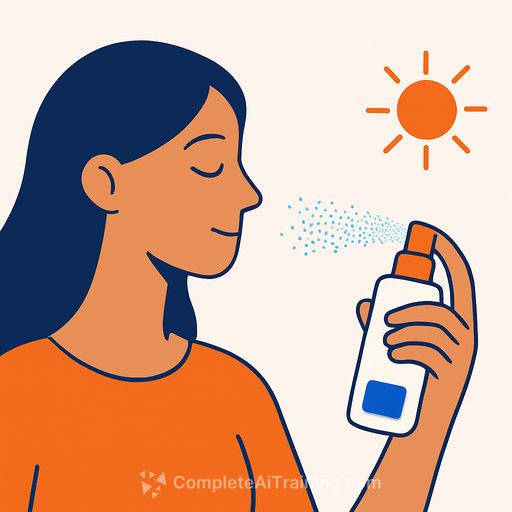
Shiseido used its Voyager AI platform to autonomously propose a mist-type sun care product that feels like a facial toner. It started from a biphasic beauty oil and ended with a light, water-like SPF that blends protection with fragrance and subtle color tone. For product development teams, the signal is clear: AI can move beyond search and actually suggest complete, commercially viable formulations.
Key takeaways
- Voyager progressed from a Research database (launched in 2024) to an AI system trained on formulations that can propose end-to-end cosmetic recipes.
- It compiles 500k+ data points, ingredient informatics, emulsification know-how, and researcher expertise into actionable recommendations.
- The first output: a mist SPF that prioritizes sensory appeal-fresh feel, pleasant scent, and color tone-alongside UV protection.
- Core consumer insight: people want UV protection that doesn't feel like a chore.
Why it matters for product development
- Faster cycles: Less manual research means more time shifting between iterations and testing rather than searching.
- De-risking early stages: Ingredient compatibility and mechanism hints reduce dead-ends before pilot batches.
- Team leverage: Junior formulators can produce commercially ready concepts with AI assistance and expert review.
- Sensory as a spec: Fragrance, color tone, and feel move up front-treated as requirements, not late-stage add-ons.
Behind the screens: how Voyager works
Voyager absorbs cosmetic-specific knowledge including emulsification mechanisms, ingredient interactions, and lessons from past research. It turns that into formulation proposals aligned with a consumer profile-here, a toner-like mist experience with SPF.
Ingredient informatics helps the system reason about individual components and their interactions. The outcome is a shortlist of viable bases, process guidance, and constraints a lab can execute and refine.
Sensory-first SPF: what's new
- Format: Mist that applies like a toner, not a thick lotion.
- Base: Originated from a biphasic beauty oil concept, translated into a lighter, water-like feel.
- Design integration: Fragrance and color tone built alongside UV performance rather than tacked on later.
- Emotion-led brief: "Protection without the chore" as the guiding insight.
How to adapt your development process
- Turn sensory into measurable inputs: Define targets for spreadability, volatility profile, droplet size, residue score, scent intensity, and transfer/staining risk.
- Co-create with AI: Use an AI system to generate multiple formulation paths, then pressure-test in the lab for stability, sprayability, and SPF readouts.
- Front-load compatibility: Screen UV filters against solvents, film formers, fragrances, and pigments early to avoid phase separation and nozzle clogging.
- Process-aware specs: Include shear ranges, order of addition, and cooling profiles in the proposal; they matter as much as the ingredient list.
- Consumer loop: Validate "non-chore" metrics: dry-down time, tackiness, scent persistence, and reapplication willingness.
Technical checkpoints for a mist SPF
- Uniform filter distribution: Ensure filters remain evenly dispersed or dissolved to hit label SPF across sprays.
- Spray system fit: Match viscosity and surface tension to pump spec; check aerosol vs. non-aerosol options and regional rules.
- Stability: Thermal/light stability, phase behavior of biphasic systems, fragrance/color stability, and packaging interactions.
- Aesthetics: Color tone should not stain skin or fabric; fragrance should not overpower or conflict with actives.
- Testing: SPF/UVA testing per region, water resistance where relevant, and repeatability across lots.
Data you'll want in your own AI stack
- Ingredient-level properties: polarity, volatility, refractive index, odor thresholds, and interaction flags.
- Process metadata: shear, temperature, time, and order-of-addition tied to outcomes.
- Sensory panels: structured ratings linked to exact compositions and process notes.
- Regulatory tags by market to keep proposals compliant from day one.
Metrics to track
- Concept-to-pilot time and number of iterations per launch.
- First-pass stability and first-pass SPF hit rate.
- Consumer reapplication intent and daily-use adoption.
- Cost-to-quality ratio vs. prior baselines.
Launch timing
The new mist sun care product is slated for summer 2026 under fibona, Shiseido R&D's open innovation program.
Level up your team's AI fluency
If you're building similar AI-assisted workflows for R&D and product, structured training helps shorten the learning curve. Explore practical options by role here: AI courses by job.
Your membership also unlocks: