Should AI Be Your Financial Advisor in 2026? Co-Pilot, Not Captain
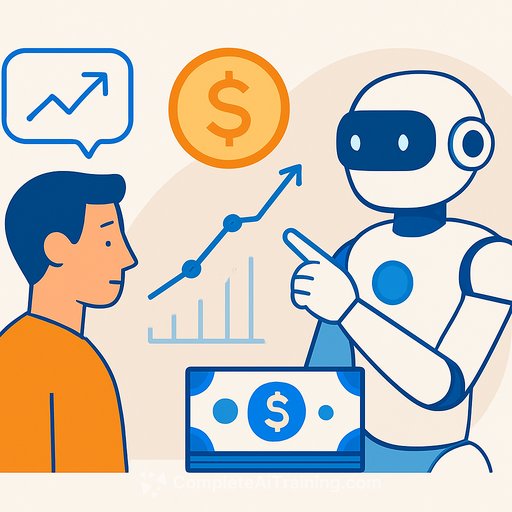
AI is fast, useful, and everywhere. But should it drive your financial decisions? Short answer: no. It should sit in the passenger seat and keep you sharp.
Ask practitioners and you'll hear a consistent theme: AI is an advantage multiplier for speed, options, and analysis; for practical examples, see AI for Finance. It is not a substitute for judgment, context, or accountability.
Where AI Gives You an Edge
Jonathan Vance, owner of Vance Financial Planning, highlights the obvious win: speed and personalization. Traditional search is broad; AI goes deep on specific prompts like state tax nuances for a Missouri resident.
Samyr Laine, managing partner at Freedom Trail Capital, underscores the time delta: "AI can give you insights in seconds that would take hours to research on your own: budgeting breakdowns, investment comparisons, tax strategies." For those without access to an advisor, that's meaningful access to financial literacy.
Dr. Erika Rasure notes that AI can meet underserved communities where they are-technologically, emotionally, and financially-by reducing barriers like geography, cost, and historical mistrust.
- Fast analysis: portfolio comparisons, rebalancing scenarios, fee audits
- On-demand education: plain-English explanations of tax concepts, risk, and asset mix
- Personalization at prompt-level: state rules, account types, constraints
The Red Flags
Speed without context is a liability. Vance flags that AI often answers directly without asking the discovery questions a sound plan requires. If your prompt is thin, the output will be, too.
Laine is blunt: AI lacks context and accountability. It doesn't know your family dynamics, career path, or constraints that determine suitability. And you can't hold it responsible if it's wrong.
Iliya Rybchin adds two operational risks: stale advice if you don't cross-check regulatory changes, and privacy exposure if you paste sensitive data into unvetted tools. Also, during market stress, AI won't provide real empathy.
- Context gaps: missing goals, constraints, liquidity needs, tax lots
- No duty of care: no fiduciary, no accountability
- Model staleness: rules change; content freezes
- Privacy risk: PII in public models is a bad idea
- Behavioral gap: no coaching when clients want to panic-sell
So…Should You Use AI as Your Advisor?
Laine: no-use AI as a tool, not your sole advisor. Data helps, but decisions hinge on context, risk tolerance, and goals.
Rybchin: yes-as a go-to starting point for most consumers. Especially if your playbook is simple: keep fees low, diversify, rebalance, and avoid panic selling. AI is good at enforcing rules consistently.
Even AI agrees. ChatGPT's free version put it plainly: "Short answer: not by itself - yet. Long answer: AI can be a great co-pilot in 2026, but a risky captain."
A Practical Playbook for Finance Pros
Use AI for leverage. Keep judgment and accountability human.
- Good candidates for AI assistance
- Screeners and comparisons: fees, factor tilts, sector exposures, glide paths
- Drafts: investment policy statement templates, client education one-pagers, meeting summaries
- Scenario sketches: rebalancing heuristics, sequence-of-returns illustrations, tax bracket estimates
- Quality checks: surface hidden fees, concentration flags, rule violations
- Keep these firmly human
- Suitability, risk profiling, and constraints (time horizon, liquidity, taxes)
- Complex planning: multi-entity tax, equity comp, estate coordination
- Behavioral coaching during drawdowns
- Final recommendations and compliance sign-off
- Workflow that reduces risk
- Define the decision: objective, constraints, data sources, time horizon
- Prompt with structure: assumptions, formulas, step-by-step reasoning, cite sources and date
- Force disclosures: ask "What facts would change this answer?" and "What's the confidence level?"
- Cross-check: prospectus, custodian data, and primary rules before acting
- Document: prompt, output, sources, final human decision, date/time
- Review cadence: schedule checks for regulatory and product changes
- Data handling
- No PII or client-identifiable data in public models
- Prefer enterprise AI with retention controls, encryption, and audit logs
- Redact, tokenize, or use sandboxed datasets for analysis
- Validation habits
- Ask for step-by-step math and references; verify numbers independently
- Run a "what would make this wrong?" test on every output
- Benchmark against a simple rule: low fees, diversify, rebalance, tax-aware placement
- Client communication
- Label AI-assisted materials clearly
- Explain limits: AI is input, not advice; your team makes the call
What This Means for Your 2026 Practice
If your process is rules-driven, AI can enforce discipline and save hours. If your client base is complex-multiple entities, cross-border tax, bespoke constraints-treat AI as a research assistant and checklist engine, not a decision maker.
Either way, the edge comes from pairing AI's speed with your judgment. That mix outperforms both a lone model and a lone human.
Helpful Resources
- Investor.gov: Robo-Advisers overview
- NIST: AI Risk Management Framework
- Complete AI Training: AI tools for finance
- AI for Vice Presidents of Finance
Bottom line: Use AI to surface options, pressure-test decisions, and enforce simple rules. Keep humans responsible for context, ethics, and the final call.
Your membership also unlocks: