S&I Corporation rolls out fire safety AI agent for facility management
S&I Corporation has introduced a fire safety AI agent and moved it into active use after a pilot that began in October. The tool is now supporting teams across various commercial real estate sites managed by the company.
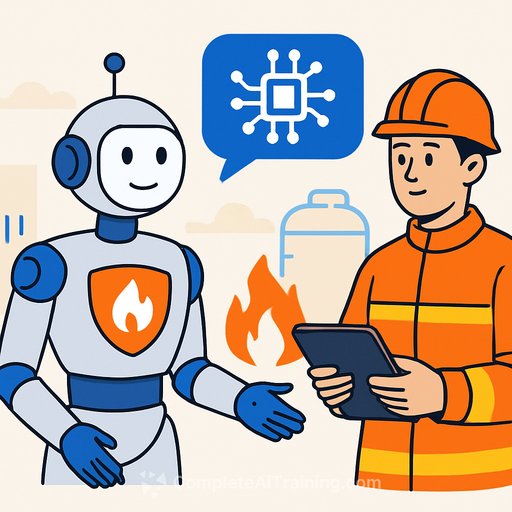
On-site staff can ask the AI agent questions and get fast, accurate answers based on domestic and international fire codes and the site's own manuals. This is shortening response times, reducing back-and-forth with supervisors, and improving consistency in how issues are handled.
Why this matters for real estate and construction teams
Fire protection tasks often hinge on clear, code-consistent decisions made under time pressure. An AI agent that references recognized standards and site SOPs helps cut delays, supports night and weekend coverage, and keeps interpretations aligned across sites.
- Quick lookups on code requirements and inspection steps
- Guidance drawn from site manuals for routine checks and incident response
- Consistent answers that reduce escalations and rework
- Faster documentation and closure of fire-related work orders
Built on S&I's digital stack
The project is part of S&I's broader digital push led by CDO Yang Ho-cheol since March. Leveraging more than 50 years of proptech experience, S&I has been implementing systems such as a remote monitoring system (RMS) and an integrated operations center (IOC), creating a base where AI assistance can plug into day-to-day operations.
Roadmap beyond fire safety
S&I plans to extend the AI agent approach across the full scope of real estate management, including machinery, electrical work, cleaning, and construction. The goal is a consistent, AI-assisted workflow that supports technicians and managers across disciplines.
"The introduction of the fire safety AI agent is an important starting point that changes the safety paradigm in real estate management," said CDO Yang Ho-cheol. "We will continue to develop solutions that enhance efficiency and safety at facility management sites and lead the digital transformation of the real estate management industry as a whole."
Practical next steps for portfolio leaders
- Centralize site manuals, SOPs, and local code references so the AI can surface consistent guidance.
- Integrate with your work order and incident systems to track usage, outcomes, and handoffs.
- Define escalation rules (to fire protection engineers, AHJs, or command centers) when confidence is low.
- Measure impact with clear KPIs: response time, inspection closure rates, repeat incidents, and training hours reduced.
- Set update cycles for code changes and site manual revisions to keep outputs current.
For teams standardizing against recognized fire codes, see resources from the NFPA and the International Code Council.
If you're building internal skills to deploy AI across facilities and construction workflows, explore curated learning paths by role at Complete AI Training.
Your membership also unlocks: