Rheinmetall and Siemens advance secure remote train operation with AI and 5G
Published on 01/19/2026 at 04:42 am EST
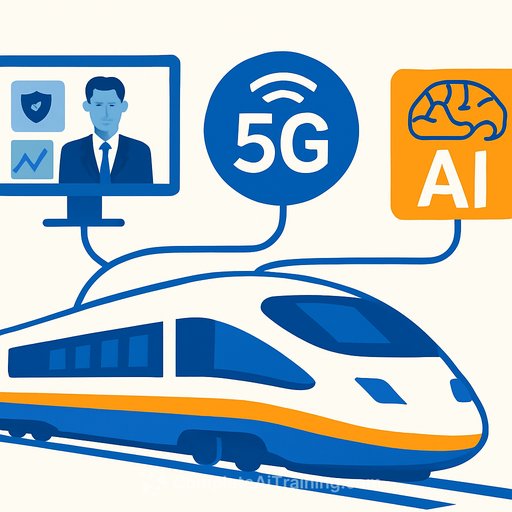
Rheinmetall, through its MIRA subsidiary, has joined Siemens Mobility and partners in RemODtrAIn (Remote operated train with AI based Obstacle Detection). The goal: secure remote control of an ICE 4 from a control station at Deutsche Bahn's maintenance depot near Cologne, backed by a 5G communication layer for high availability across varied conditions. In parallel, AI-based obstacle detection is being trialed on live tracks in the Berlin S-Bahn network.
What this means for operations
- Reduce depot bottlenecks by handling delivery, dispatch and stabling without an onboard driver.
- Let a single operator control multiple vehicles or switch train types as needed to balance workloads.
- Retrofit large fleets cost-effectively and apply a consistent operating logic across mixed rolling stock.
- Improve resource utilization and resilience during staffing constraints or peak turnarounds.
How the system works
MIRA's solution has three pieces: a compact operator control unit, a vehicle-installed teleoperation kit and a cloud fleet management system. Together, they enable a dedicated remote train operation control center with standardized panels and interfaces across train types.
The communication backbone relies on 5G for secure, high-availability links between train and control station. For context on the tech, see 5G standards at 3GPP. AI-based obstacle detection is being validated on real tracks, including the Berlin S-Bahn network.
Safety, compliance and interfaces
The vision system targets ASIL-D, the top tier in automotive functional safety for such components. The architecture includes high-availability communications and certified vehicle interfaces developed with Cattron. The remote operation stack is designed to comply with relevant railway standards and operational requirements.
Standardized operator panels matter here: they compress training time, reduce handover friction and make multi-fleet operations practical without re-learning controls for each model.
Deployment scope and funding
Beyond depots, RemODtrAIn is defining specifications for factory logistics, depot movements and other rail applications. The project is funded by the European Union and Germany's Digital, Sustainable, System-compatible mobility program run by the Federal Ministry for Economic Affairs and Energy (BMWK), with total funding around €17 million. It's a meaningful step for railway digitalization and transport modernization in Germany and Europe.
Action plan for operations teams
- Start in low-risk zones: workshops, depots, yards. Map clear movement envelopes and speed caps.
- Define your control center layout, staffing model and escalation paths before hardware installation.
- Profile the network: set latency budgets, jitter thresholds and failover rules; document fallback procedures.
- Integrate with existing fleet systems (braking, doors, diagnostics). Verify certified interfaces per vehicle type.
- Run structured safety cases for vision and comms, including simulated obstruction and link-loss scenarios.
- Update SOPs for dispatch, handovers and emergency stops. Train operators and maintenance techs together.
- Track KPIs: yard dwell time, moves per hour, staff hours per move, near-miss logs and comms uptime.
- Align early with cybersecurity, unions/works councils and regulators to reduce approval friction.
Scope and benefits in plain terms
Remote operation targets the exact moments that hold yards back: positioning sets, short shunts and last-meter moves. Standardized interfaces make mixed fleets less painful to run. Multi-vehicle control gives you elasticity during peaks without wholesale staffing changes.
"Remote-controlled trains in workshops and depots increase efficiency, reduce staff workload and lay the foundation for further automation steps in the railway sector - safely, economically and scalable." - Win Neidlinger, Managing Director, MIRA GmbH
Where to go from here
If you're building internal capability around AI-driven teleoperation, safety validation and control center workflows, consider a focused training track for your ops and engineering leads. A curated starting point: Courses by Job - Complete AI Training.
Your membership also unlocks: