CES 2026: Siemens Brings Industrial AI From Concept to Daily Operations
At CES 2026, Siemens introduced a suite of industrial AI technologies aimed at compressing timelines and tightening control across energy, manufacturing and infrastructure-upstream oil and gas included. The update builds on Siemens' long-standing work in digital twins, automation and data-driven decision-making for complex assets.
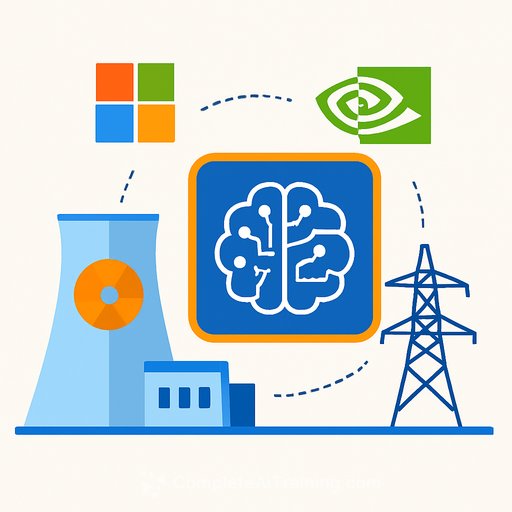
The headline: an expanded partnership with NVIDIA to develop an Industrial AI Operating System that embeds AI across the full facility lifecycle-from design and engineering through operations and maintenance. The platform combines simulation, real-time operational data and AI models to improve optimization speed and asset resilience.
Siemens also announced Digital Twin Composer (expected mid-2026), software that fuses high-fidelity digital twins with live engineering data. Operators can test facility modifications, environmental conditions and operational scenarios before committing-crucial for energy facilities, pipelines and industrial plants where capital efficiency and risk reduction matter. Plant managers and operators can prepare for twin-driven workflows with the AI Learning Path for Plant Managers.
Rounding it out is a set of AI-powered industrial copilots spanning engineering, compliance, manufacturing and operations. They assist with tasks like querying complex datasets, validating designs, managing regulatory requirements and improving day-to-day efficiency-useful for upstream projects facing tighter costs and scrutiny.
What this means for IT, Development and Operations
Operations teams should review guidance on deploying AI copilots, MLOps and edge-to-cloud workflows in the AI for Operations learning resources.
- Data foundation: You'll need unified access to IIoT sensors, historians, SCADA, EAM/CMMS and engineering systems. Expect stronger metadata, lineage and streaming pipelines to keep twins and models in sync.
- MLOps meets simulation: Integrate ML with physics-based models. Plan for model registries, feature stores, twin-to-asset ID mapping and safe rollback paths when scenarios don't match production reality.
- Edge-to-cloud execution: Decide what runs at the edge vs. in the cloud. Size GPUs for site-level inference, consider latency constraints and support offline modes for critical operations.
- Change control and compliance: Treat AI recommendations like engineering changes: versioned artifacts, auditable approvals, and traceability from model output to work orders and field actions.
- System integration: Expect tighter loops between design tools, operations platforms and maintenance systems so that simulations, alarms and work instructions feed each other reliably.
Key pieces from Siemens
- Industrial AI Operating System (with NVIDIA): A lifecycle platform combining simulation, real-time plant data and AI models for faster decision cycles and more predictable outcomes. See background on NVIDIA Omniverse for related industrial simulation capabilities.
- Digital Twin Composer (mid-2026): High-fidelity twins linked to live engineering data to test changes before execution, targeting large-scale infrastructure and energy assets.
- Industrial copilots: Assist across engineering, compliance, manufacturing and operations-helping teams sift through complex data, validate designs and keep projects aligned with requirements.
- Deployment: Delivered through the Siemens Xcelerator ecosystem, with early applications already active in energy and advanced infrastructure projects.
Practical steps to get ready
- Inventory your data: Map sensors, historians, CAD/CAE, and maintenance systems. Close gaps in time-series quality, context (asset tags) and access controls.
- Pick two pilot use cases: Example: throughput optimization and predictive maintenance for a critical unit. Define success metrics, safety constraints and rollback plans.
- Stand up MLOps: Establish model governance, CI/CD for models, shadow deployments and monitoring for drift. Tie model outputs to ticketing/work management.
- Prepare the edge: Confirm network reliability, latency budgets and GPU capacity where inference must run onsite.
- Strengthen change management: Align engineering, operations and compliance on approval workflows for AI-suggested changes.
- Upskill teams: Train engineers and operators to work with copilots, interpret model outputs and challenge recommendations when needed. Learning-path guidance for L&D teams is available in the AI Learning Path for Training & Development Managers.
Timeline and budget notes
Digital Twin Composer is expected mid-2026, while other portfolio elements are moving through the Siemens Xcelerator ecosystem now. Plan phased budgets: data readiness and integration first, pilot use cases second, broader rollout as capabilities mature.
Risks to watch
- Data quality and context: Poor tagging or stale data erodes twin accuracy and model outcomes.
- Model drift and safety: Monitor continuously, keep humans in the loop for high-impact decisions and enforce safe operating envelopes.
- Compliance and audit: Maintain traceability from design changes and AI recommendations to executed work.
- Vendor lock-in: Favor interoperable data formats, open APIs and clear export paths for models and twins.
Bottom line
Siemens is pushing industrial AI deeper into daily workflows-linking simulation, live data and AI with tighter feedback loops. For IT, Dev and Ops leaders, the advantage goes to teams that get the data foundation right, stand up MLOps and prove value with focused pilots before scaling.
If your team is building skills for AI-assisted engineering and operations, consider role-focused learning paths linked above to guide upskilling and deployment planning.
Your membership also unlocks: