AI Data Centers Are Remaking Rural Real Estate: What Developers and Builders Need to Know
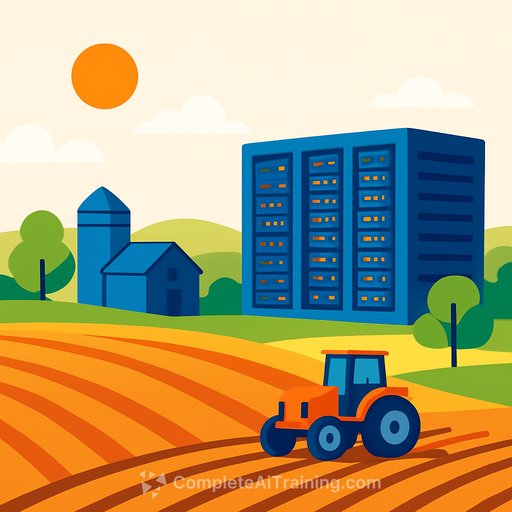
America's next big construction wave isn't in coastal tech hubs. It's on farmland, ranchland, and the edges of small towns where land, megawatts, and cooling water are still available.
From Idaho to Louisiana to Texas, hyperscale and AI training campuses are landing on thousands of acres, pulling in new infrastructure, tax incentives, and supply chains-while triggering pushback over land use, water, and long-term risk.
The new site-selection math
Early data centers hugged major metros. Today, the growth vector runs through rural markets that offer lower land costs, easier expansion, and fewer neighbors competing for grid capacity.
Northern Virginia remains the giant, but the pipeline has shifted. JLL estimates at least 16 GW of colocation and hyperscale capacity under construction across North America-an all-time high. For context and trends, see JLL's latest data center research here. For training on analyzing market data and industry trends, see AI Research Courses.
Case study: Richland Parish, Louisiana
Meta's "Hyperion" campus is underway on former crop fields between Rayville and Delhi. At roughly 4 million square feet across 2,250 acres, the site is slated to be one of the company's largest U.S. builds.
To serve the load, Entergy committed to three natural gas plants. Local leaders cite tens of millions already flowing to small businesses and forecast more than $1 billion in construction wages and substantial sales tax revenue over five years.
The risk side is real. If a marquee tenant scales back, local ratepayers could be exposed to stranded generation costs. Residents also question how many permanent jobs arrive after the buildout. Lessons from prior extractive booms in the region loom large.
Case study: Texas Panhandle and Big Country
Near Amarillo, Fermi America has proposed an Advanced Energy and Intelligence Campus that could span 5,800 acres, over 13 million square feet, and exceed 11 GW in capacity. Locals are split-some raise concerns about notice, easements, and utility corridors; others point to education and industry tie-ins with Texas Tech.
Further south in Abilene, OpenAI's Stargate buildout is linked to multistate campuses and partnerships expected to push capacity toward 7 GW over the next three years. The shift from cattle and cotton fields to high-density compute is accelerating, with timelines gated by interconnection, substations, and equipment lead times.
Case study: Kuna, Idaho
Kuna has two big moves: Meta's nearly 1 million-square-foot data center scheduled to open in late 2026, and Diode Ventures' Gemstone Technology Park-entitled for up to 800 MW, enough to equal the annual use of hundreds of thousands of homes, far beyond local demand.
The Yamamoto family sold 620 acres for Gemstone, later supporting rezoning from agricultural to industrial. In exchange, the developer committed over $44 million in contributions to public safety and schools. Residents like Shalee Murray worry that once large-scale industrial use is allowed, surrounding farms will follow.
Why Kuna? Affordable land, access to hydro resources from the Snake River system, and limited natural disaster risk. It's a template we'll see repeated wherever cheap electrons and water align.
What developers, owners, and contractors should do now
Power and water
- Secure capacity early: dual-track utility agreements, on-site generation options (gas, battery, future hydrogen blends), and phased substation plans.
- Balance mix: PPAs for renewables, firming resources for reliability, and realistic curtailment scenarios.
- Engineer for heat: liquid cooling, heat reuse opportunities, and water strategies (reclaimed sources, closed-loop systems, drought contingencies).
Entitlements and community benefits
- Rezoning with guardrails: buffers, view sheds, road upgrades, and construction traffic plans to protect neighboring farms and homes.
- Community benefits that count: public safety, schools, workforce pipelines, and open-book tracking; set measurable milestones and timelines.
- Transparency: early notices, right-of-way maps, and clear utility routing to avoid the "we found out too late" backlash.
Construction and supply chain
- Long-lead items: transformers, switchgear, generators, chillers, and GPUs. Lock allocations and diversify vendors.
- Industrialized delivery: modular electrical rooms, prefabricated skids, repeatable design blocks to compress schedule (see AI Design Courses).
- Labor strategy: traveling craft + local apprenticeship programs; align with community colleges and trade schools.
Risk management and financing
- Tenant concentration risk: staggered phases, multi-tenant flexibility, and step-in rights where possible.
- Utility risk: cost-sharing on new generation/transmission, indexation clauses, and off-ramps if interconnection timelines slip.
- Policy and tax: structure abatements with performance-based clawbacks; plan for evolving data center taxes, water fees, and emissions rules.
- End-of-life and re-use: decommissioning bonds, salvage value, and retrofit paths as chip and cooling standards change.
Signals to watch
- State approvals for new gas plants, transmission lines, and water rights.
- Interconnection queue reform and utility capex plans.
- GPU allocation cycles and cooling tech shifts (rear-door, direct-to-chip, immersion).
- Local ballot measures on farmland conversion and industrial water use.
- Insurance and reinsurance stance on high-load facilities in high-heat or drought regions.
Bottom line
The next three to five years will rewrite site selection in large swaths of rural America. Teams that lock power, water, and permits early-while building real community benefits-will win the best dirt and the fastest interconnects.
If you're building internal capabilities to evaluate or operate these projects, explore role-based AI upskilling for your team here.
For a broader view of data center trends across markets, JLL's research library is a useful starting point here.
Your membership also unlocks: