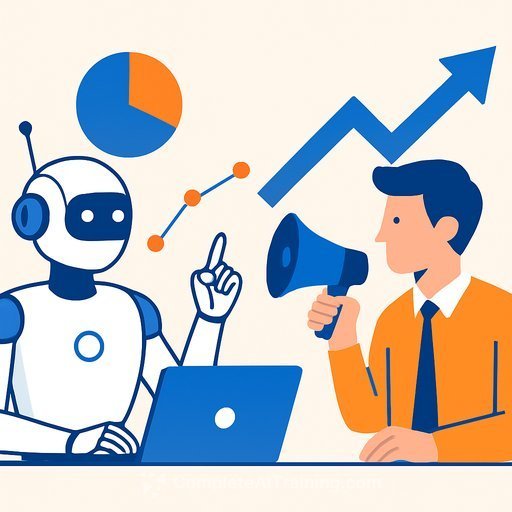
6 AI Predictions That Will Shape Marketing in 2026
Last year split marketers into AI builders and borrowers. That gap widened. The tech moved faster than org charts, budgets, and brand guidelines.
Here's where 2026 is headed-and how to act before your playbook goes stale.
1) Authenticity Is Marketing's Scarcest Resource
AI content is everywhere. Human work-imperfect, specific, and emotionally clear-suddenly feels rare again. The advantage shifts to brands that show real authorship, creative fingerprints, and intent you can feel.
- Ship more "maker marks": behind-the-scenes clips, founder notes, raw sketches, unscripted voice. Keep some edges.
- Prove provenance: publish how work is made, use content provenance standards like C2PA, and label AI use without sounding defensive.
- Design for community, not reach: optimize for conversation quality over volume. Depth beats scale in 2026.
2) Hyper-Personalisation Sets the Performance Curve
Real-time intent beats demographics and old psychographics. Retail Media Networks know what people are doing right now-and that context prints ROI when creative can adapt instantly.
- Shift spend to where signals live: RMNs, onsite personalization, and owned channels with first-party data.
- Instrument real-time triggers: browse behavior, cart status, inventory, weather, and location. React in minutes, not weeks.
- Atomize creative: modular headlines, offers, and visuals that can swap on the fly without breaking brand.
- Measure like adults: align on incrementality and clear retail media measurement, not vanity CPMs.
3) AI Voice Tech Finally Feels Natural
Voice jumps the uncanny valley with real emotional range. Asking the internet out loud becomes normal. The "conversational web" makes screens optional for search, service, and checkout.
- Make content voice-ready: short answers, clean FAQs, and product facts that are easy to read aloud.
- Design voice flows: support, reorders, and simple purchases should work end-to-end with zero taps.
- Test voice ad units: interactive spots that let people ask questions and convert without leaving the experience.
4) Marketing Talent Becomes Hybrid
Being "just" a strategist, copywriter, or designer won't cut it. The work is still creative-AI just raises the bar. The most valuable people pair craft with model fluency and can ship new kinds of outputs fast.
- Map skills, then upskill: prompt craft, agent orchestration, data literacy, and AI-first creative systems.
- Build an internal AI studio: a small squad that prototypes tools, trains the team, and keeps quality high.
- Follow a focused learning path: leaders can use the AI Learning Path for Business Unit Managers to prioritize governance and decision-making skills.
- Invest in credentials that move careers: see the AI certification for marketing specialists.
- Rewrite job descriptions: "can brief, build, and QA with AI" becomes a baseline requirement.
5) AI Agents Rewrite Customer Journeys
People will ask an agent for "best running shoes" and buy without touching a website. Fewer clicks. Fewer visits. Search, SEO, and display feel the squeeze as answers and transactions happen inside agents.
- Optimize for agent answers: structured product feeds, fresh reviews, clear prices, and availability. Clarity wins inclusion.
- Build your own agent: a brand assistant for service, education, and guided selling inside your app and channels.
- Rethink attribution: log conversations, tie IDs across surfaces, and model outcomes instead of chasing last-click ghosts.
- Renegotiate media: pay for outcomes where possible. Inventory is changing; terms should too.
6) Middleware Gets Squeezed Out
Big model platforms keep absorbing features. Commodity "wrapper" tools fade. What's left: a split between general platforms everyone uses and deep custom solutions for specific problems.
- Prune the stack: cut overlapping AI tools that are just fancy front-ends.
- Bet on platforms with strong APIs: portability matters more than pretty dashboards.
- Go deep where you differentiate: one or two custom builds tied to your data, workflow, and brand rules.
- Set exit plans: own your prompts, data, and fine-tunes so you can switch vendors without pain.
What This Means For 2026
The differentiator isn't volume-it's humanity plus speed plus systems. Make work that feels made by someone, deliver it in the exact moment it matters, and let agents do the heavy lifting in the background.
What did we miss? Test hard this year, keep receipts, and we'll compare notes next time.
Your membership also unlocks: