The Skills Strategy – Urgent Imperative For CEOs: Future-Proofing Organizations in the Age of AI
July 11, 2025
Why Skills Strategy Must Be a CEO Priority
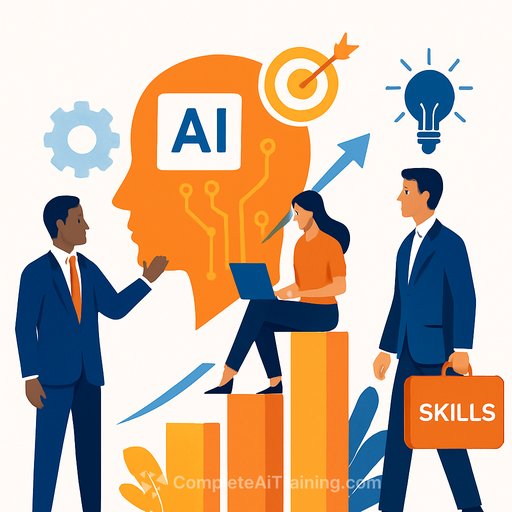
Across industries—tech, retail, finance, healthcare—skills remain the foundation of competitive advantage. Organizations that neglect strategic investment in upskilling and reskilling face stagnation, reduced innovation, and losing top talent. Today, a skills strategy is no longer just an HR responsibility; it demands CEO attention.
With AI adoption accelerating, executives must embed lifelong learning deeply into business strategy. Workforce development should drive growth, not serve as a mere compliance task.
Principles for High-Impact Skills Strategies
Successful skills strategies rest on three pillars:
Strategic Career Mapping
When employees see a clear future in their organization, engagement and retention improve. Aligning skills frameworks with business goals and individual strengths creates accountability. AI-powered analytics can offer dynamic career paths, enhancing internal mobility and preserving knowledge.
Upskilling as a Cultural Imperative
Training must be part of daily workflows, not isolated events. Cultures that promote continuous learning encourage innovation and adaptability. Using on-demand learning platforms, microlearning, and experiential training helps build teams prepared for future challenges.
High-Potential Talent Development
Structured programs for high-potential employees are critical amid intense talent competition. Combining data-driven insights with personalized coaching and leadership training accelerates readiness and strengthens succession plans. Developing internal leaders ensures smooth transitions and organizational resilience.
AI-Powered Career Mapping: A Strategic Lever for Growth
AI-driven career mapping tools like Workday, SAP SuccessFactors, and Oracle Cloud HCM are transforming how organizations create personalized career journeys. These platforms align employee goals with evolving business needs by analyzing real-time skills data.
Vendors such as Lightcast, SkyHive, and Eightfold.ai enrich this process by providing dynamic skills taxonomies and labor market intelligence. Without regularly updating market data, skills frameworks risk becoming outdated.
For example, a data analyst’s role can change significantly within a couple of years. Market intelligence ensures job descriptions and required skills stay current. When connected to talent management systems, these tools guide employees and managers on career paths, learning opportunities, and mentorships.
Integrating these technologies into workforce planning gives every employee a clear, customized growth path. This approach boosts retention, engagement, and internal mobility.
The Key Role of Human Resources
HR is crucial in building and operationalizing a global, skills-based strategy. It acts as both strategic architect and enabler of a workforce ready for the future.
Building a Global Skills-Based Strategy
- Establishing a Unified Skills Framework: HR develops a consistent, enterprise-wide skills taxonomy aligned with business goals. This includes defining core, technical, and leadership skills by function and level while integrating labor market insights from platforms like Lightcast, SkyHive, and Eightfold.ai. The framework balances global consistency with regional relevance.
- Embedding Skills into the Talent Lifecycle: Skills—not just job titles—become the currency of talent decisions. HR ensures this across recruitment, learning and development, and internal mobility. Hiring focuses on future-fit skills using AI-powered tools, while learning journeys and succession plans are skills-centered.
Designing a Strong Job Architecture
- Creating a Transparent Job Framework: HR designs job families, career levels, and role capabilities to provide clarity on career growth and support equitable compensation and targeted development.
- Powering Workforce Agility: A clear job architecture helps identify critical roles and adjacent skills, enabling cross-functional mobility and supporting strategic workforce planning during business changes.
Partnering Across the Ecosystem
- HR collaborates with academia to align educational programs with future skill needs.
- Works with technology vendors to integrate real-time skills data.
- Advises executives on talent investment using predictive analytics.
The CEO’s Role: Future-Proofing the Talent Pipeline
A skills strategy is about more than closing knowledge gaps; it builds a workforce that can thrive during disruption. Studies show that skills in AI-driven industries are changing faster than ever, so CEOs must embed continuous learning into their organizations.
Set the Strategic Direction
- Make skills strategy a boardroom priority and link it to innovation, growth, and competitive advantage.
- Align business and talent goals so HR can design workforce strategies supporting digital transformation and market expansion.
Empower HR with Resources and Authority
- Invest in AI-powered platforms like Workday, SuccessFactors, Eightfold.ai, or Lightcast for real-time skills intelligence and career mapping.
- Elevate HR by positioning the CHRO as a strategic partner reporting directly to the CEO.
Foster Cross-Functional Collaboration
- Break down silos between HR, business units, IT, and finance to create a unified skills roadmap.
- Lead by example: promote continuous learning at the leadership level and recognize teams that embrace upskilling and internal mobility.
Demand Accountability and Measurable Impact
- Set clear KPIs on internal mobility, skills acquisition, retention of high-potential talent, and readiness for future roles.
- Make workforce development a shared responsibility across the executive team.
Lead with a Global Mindset
- Support local adaptation of skills strategies within a global framework.
- Engage external partners such as academic institutions, industry bodies, and technology vendors to stay ahead of skill trends.
Retaining Talent Through Skills Investment
In an era of technological change, a clear skills strategy is a competitive advantage that protects a company’s ability to innovate and lead. Organizations that embed continuous learning in their vision build agile, forward-thinking workforces ready to sustain growth.
For executives looking to deepen their understanding and implementation of AI and skills strategies, exploring targeted training resources can be beneficial. Platforms offering specialized AI courses help leaders and teams stay current and competitive. For more information on AI training options, visit Complete AI Training’s latest courses.
Your membership also unlocks: