New Platform Cuts GPU Costs by 99% Through Shared Node Model
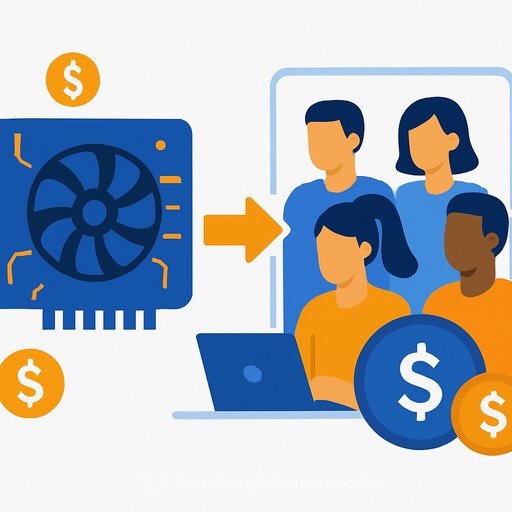
A startup called sllm is letting developers split the cost of high-end GPUs, reducing monthly access to large language models from $14,000 to as little as $5. The platform pools multiple users on dedicated hardware nodes, distributing both the expense and the compute capacity.
Running DeepSeek V3, a 685-billion parameter model, requires eight H100 GPUs and costs roughly $14,000 per month. For startups and solo developers, that price is prohibitive. Sllm addresses this through a cohort model: developers register a payment method, but nothing charges until enough users sign up to fill a node. Once the group is complete, the hardware spins up and everyone gains access.
The company says most developers need between 15 and 25 tokens per second for typical workloads. A single high-end node can serve multiple users simultaneously at that throughput without performance degradation. Pricing starts at $5 per month for smaller models and scales with model size and compute requirements.
Privacy as a Differentiator
Sllm positions itself as a private alternative to mainstream API providers. The platform does not log traffic, contrasting with default developer tiers at OpenAI, Google, and Anthropic, which typically involve some data processing for abuse monitoring and model improvement.
For teams handling proprietary data, customer interactions, or sensitive code generation, zero logging by default is meaningful. Enterprise agreements with major providers offer privacy protections, but those require negotiation and higher pricing tiers.
Inference Costs Are the Real Burden
Training costs dominated AI headlines in 2023 and early 2024. GPT-4's reported $100 million-plus training budget set expectations for frontier model development. But inference-actually running models in production-is where recurring costs accumulate.
Enterprise AI spending is shifting heavily toward operational inference costs as companies move from experimentation to deployment. A model that costs tens of millions to train can cost multiples of that to serve at scale over its lifetime.
The GPU rental market has grown accordingly. Together AI, Fireworks, and Anyscale have built businesses around making inference cheaper and more accessible. Cloud giants dominate raw compute, but smaller providers are carving out space with better pricing, flexibility, or technical advantages. Sllm competes on cost efficiency through direct resource sharing-closer to a timeshare than a traditional cloud service.
Technical Design Removes Switching Friction
Sllm runs vLLM under the hood, an open-source inference engine known for efficient memory management and high throughput. The API is OpenAI-compatible, meaning developers swap the base URL in existing code without rewriting integrations.
This is deliberate. Switching costs in AI infrastructure are already low, and any new provider requiring code rewrites starts at a disadvantage. Compatibility with the de facto standard removes adoption friction entirely.
The Cohort Model's Obvious Risk
The shared node approach introduces dependency on other users signing up. If a cohort for a specific model never fills, the node never launches. Sllm avoids financial loss by not charging until the group is complete, but developers lose time waiting.
Teams needing guaranteed, immediate access to large models may prefer on-demand instances elsewhere. The platform currently offers a limited model selection, which constrains appeal. Expanding that library will determine how quickly cohorts fill at reasonable pace.
The Broader Trend: Cost, Not Supply
H100 GPUs are far more available today than 18 months ago. The constraint has shifted from supply to cost efficiency. Startups and independent developers are discovering that inference at scale burns through funding faster than expected. Every dollar saved on compute is a dollar for product development, hiring, or runway extension.
Providers that reduce costs without sacrificing performance or privacy will find an audience, particularly among developers with real production workloads but no enterprise budgets. Whether cohort-based sharing becomes standard or remains niche depends on execution. The underlying problem-expensive inference-is not going away.
For product teams evaluating infrastructure, the economics have shifted. AI for Product Development now means treating inference costs as a core operational constraint, not an afterthought.
Your membership also unlocks: