AI's Hidden Environmental Bill-and a smarter way to cut it
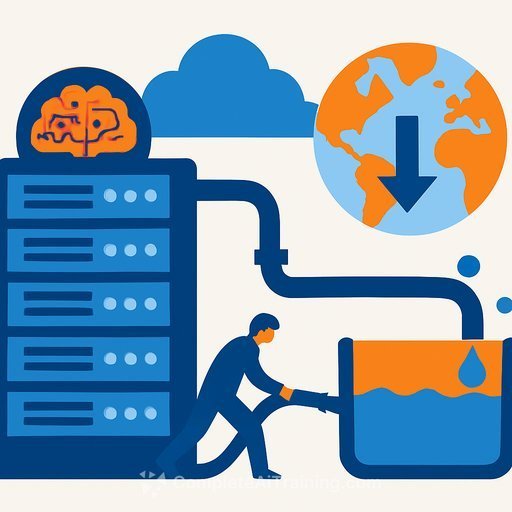
Every chatbot reply, model training run, and streaming recommendation taps huge server farms that eat electricity and water. Most of that power still comes from fossil fuels, which means more emissions and more heat to manage inside data centers.
That pressure is escalating fast. Some data centers now consume more electricity than entire countries, including Sweden. The stakes aren't abstract-this is cost, risk, and carbon, all rising together. The IEA tracks this trend in detail.
Enter Federated Carbon Intelligence (FCI)
A new approach from researchers at the University of California, Riverside proposes a practical fix. Called Federated Carbon Intelligence (FCI), it pairs environmental awareness with real-time hardware health to route AI workloads where they'll do the least damage-to the planet and to your servers.
Simulations show the system could cut CO2 emissions by up to 45% over five years and extend a server fleet's life by 1.6 years. The study appears in MRS Energy & Sustainability.
Why it's different
Most "green" scheduling focuses on cleaner power windows. FCI goes further: it learns the actual condition of each machine and balances carbon intensity with hardware stress. The result is fewer hotspots, fewer failures, and less cooling overhead.
As professor Mihri Ozkan puts it, "AI systems age, they heat up, and their efficiency changes over time-and these shifts have a measurable carbon cost." Professor Cengiz Ozkan adds, "By preventing unnecessary wear, we reduce not only the energy used today but also the environmental footprint of tomorrow's hardware production."
How FCI works
- Real-time server health: Monitors temperature, age, and physical wear to avoid overworking stressed machines.
- Live carbon signals: Tracks carbon intensity by time and region to prefer cleaner energy without sacrificing throughput.
- Workload-aware routing: Matches task demands to the server best suited to handle them with the lowest impact.
- Lifecycle accounting: Factors embodied emissions from manufacturing, not just operational energy.
- No new hardware: Runs as an adaptive coordination layer across existing fleets.
What this means for IT, data, and engineering teams
- Fewer incidents: Avoids pushing aging or hot machines, which reduces thermal throttling and surprise outages.
- Lower cooling use: Spreads heat more intelligently, cutting water and energy demand.
- CapEx deferral: Extends asset life by ~1.6 years, helping you stretch budgets and refresh cycles.
- Policy-ready: Routes jobs dynamically based on carbon targets without breaking SLAs.
- Cloud and on-prem: Works across heterogeneous fleets and regions using uniform telemetry and routing rules.
Practical steps to start (with what you already have)
- Instrument your fleet: Standardize telemetry for temperature, error rates, fan speeds, age, and utilization.
- Pull carbon data: Use regional carbon-intensity feeds or APIs (e.g., utility data, grid operators, third-party signals) to build a simple "cleanliness" score.
- Tag workloads: Classify by urgency, tolerance for delay, GPU/CPU needs, and thermal load so the scheduler has options.
- Set routing policies: Define thresholds for health and carbon, then prefer cleaner regions and healthier machines when constraints allow.
- Simulate before rollout: Replay job traces to test emission cuts and failure rates; adjust weights for carbon vs. performance vs. wear.
- Track embodied carbon: Include manufacturing emissions in refresh decisions; extending life is a real emissions win.
Why this matters now
AI demand is growing faster than the energy systems backing it. The researchers' modeling suggests we can cut emissions and slow hardware aging in parallel-without new gear-by scheduling smarter across the fleet.
Their next step: partner with cloud providers to test FCI in live data centers and set a template for NetZero-aligned AI infrastructure. Or, as Cengiz Ozkan says, climate-aligned computing is achievable-without sacrificing performance.
Upskill for sustainable AI ops
If you're building or running AI systems and want to adopt strategies like FCI, staying current on infrastructure, scheduling, and operational best practices pays off. Explore curated learning paths on Complete AI Training to keep your team sharp.
Your membership also unlocks: