AI is getting smarter, but not wiser. Here's a practical roadmap to close the gap
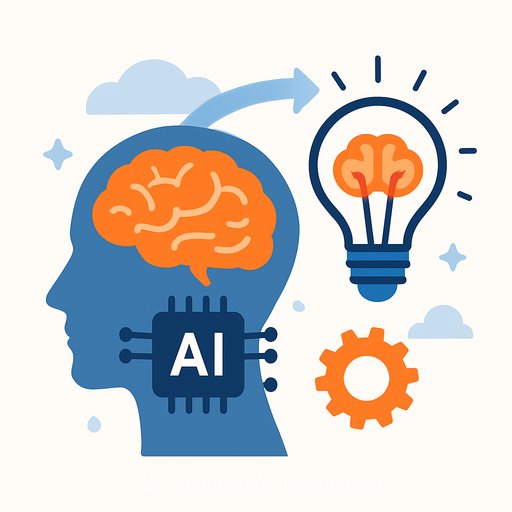
A new study in Trends in Cognitive Sciences outlines the first realistic path to build "wise" AI - systems that can handle uncertainty, explain themselves, work with us, and act safely. The work centers on metacognition: getting AI to think about its own thinking and adjust in real time.
Why this matters: model capabilities are racing ahead, while judgment, calibration, and cooperation lag. That gap drives many of today's safety and reliability headaches.
What the team proposes
- Train large language models for wisdom-oriented skills (not just task accuracy).
- Explore architectures that support wise reasoning and self-regulation.
- Build benchmarks that actually measure AI wisdom, not just raw performance.
Wisdom, operationalized: metacognition at the core
Wisdom isn't just knowledge. It's the mental toolkit people use under uncertainty: recognizing limits, weighing multiple viewpoints, adapting to context, and staying flexible as situations change.
The study argues that AI needs the same toolkit. That includes intellectual humility (knowing what it doesn't know), perspective-seeking (actively testing alternate views), and context adaptation (shifting strategies as goals and constraints change).
As one researcher put it, even the "smartest" system can make poor calls without these guardrails - like a child prodigy who still needs adult supervision: "If the smartest person in the world were a toddler, we still wouldn't hand them the nuclear codes."
Why this is useful for scientists and engineers
- Handle novel, under-specified problems instead of breaking on edge cases.
- Work more cooperatively with humans on shared goals.
- Offer clearer reasoning and better user-facing explanations.
- Reduce risk by aligning behavior with human intent and values.
How to start building wiser systems (practical ideas aligned with the roadmap)
- Add metacognitive control loops: require models to estimate confidence, state unknowns, ask clarifying questions, and defer or escalate when uncertainty is high.
- Train for calibration, not bravado: include ambiguous, messy cases in supervised and RL data. Reward appropriate caution, penalize overconfidence. Track metrics like calibration error and selective prediction utility.
- Engineer perspective-seeking: use retrieval to surface diverse sources, run structured multi-agent critiques, and prompt for stakeholder trade-offs before final answers.
- Enable context adaptation: condition policies on goals, risk level, stakeholder roles, and norms. Let a lightweight meta-controller choose strategies (e.g., explore vs. exploit, critique vs. answer).
- Improve explanations: require concise, verifiable summaries of reasoning, cite evidence, and expose assumptions and uncertainties. Favor audits that tie claims to sources.
- Benchmark wisdom directly: test on under-specified tasks, shifting contexts, and multi-party trade-offs. Score calibration, viewpoint diversity, stability under context shifts, cooperation outcomes, and human-rated explanation usefulness.
The research and what's next
The work was led by the University of Waterloo with collaborators from Université de Montréal, the Max Planck Institutes, Santa Fe Institute, Stanford University, the University of Warwick, and Google DeepMind. Next steps include teaming with industry to build computational models of human wisdom to guide AI design and evaluation.
Reference
Samuel G.B. Johnson et al., "Imagining and building wise machines: the centrality of AI metacognition," Trends in Cognitive Sciences (2026). DOI: 10.1016/j.tics.2026.01.002
Further reading for practitioners
Key concepts
- AI alignment
- Human-centered AI interfaces
- AI governance
- Agentic consumer
- Generative AI ethics
Your membership also unlocks: