Snyk's AI Security Fabric: Security that keeps pace with AI-assisted coding
AI coding assistants are everywhere, and development is moving faster because of it. Snyk's latest pitch - the "Snyk AI Security Fabric" - answers a simple question: if 77% of developers are using AI-assisted coding, can security still run at human speed?
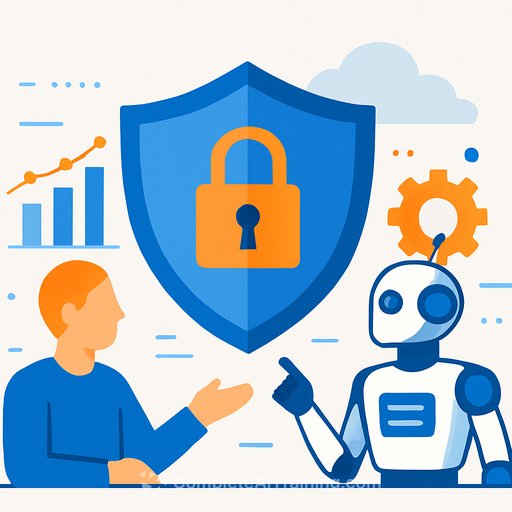
The message is straightforward: treat security as a layer embedded across the SDLC, not a bolt-on step. Keep defenses continuous, keep visibility high, and keep developers in their flow instead of bouncing between tools.
What Snyk is proposing
The AI Security Fabric is framed as a persistent layer that sits inside existing workflows. It's meant to watch, guide, and enforce as code moves from idea to production - without slowing teams down.
Think of it as security stitched into day-to-day development instead of a gate at the end. Whether it lives up to that promise will come down to how it integrates and what it automates.
The three focus areas from Snyk's blog
- The 3 Vectors: A progression from foundational capabilities to more advanced, agentic use cases.
- Prescriptive Path: A three-phase roadmap to stabilize, optimize, and scale security practices.
- Shadow AI: Hidden AI-related risks that traditional tools may miss or ignore.
If this approach lands, Snyk could deepen its hooks across pipelines and become harder to rip out. The "machine-speed" angle also puts pressure on competitors that have been slower to ship AI-focused security.
What this means for engineering and security teams
Shipping faster with AI increases the surface area of change. Policies, dependency risk, prompt injection exposure, and data leakage can slip through if security doesn't sit where work happens.
A fabric model suggests consolidated signals, fewer context switches, and automated guardrails aligned to your SDLC. The win would be faster feedback for developers and fewer surprises for AppSec.
Open questions to resolve before a pilot
- Pricing and packaging: how is the fabric licensed and measured?
- Proof of impact: customer references, measurable MTTR improvements, or defect reduction tied to AI-generated code.
- Operational fit: how it aligns with current workflows, policies, and risk models without adding friction.
- Coverage: how "Shadow AI" is detected and governed across tools, repos, and environments.
Practical next steps
- Inventory AI usage. Document which assistants, plugins, and models are in play, where prompts live, and what data they can touch.
- Define success metrics. Pick a service or repo and track review time, issues caught pre-merge, false positives, and incident rates related to AI-generated changes.
- Set policy baselines. Establish rules for secrets, PII, and dependency risk for AI-authored code. Make them visible in the developer's workflow.
- Run a time-boxed pilot. Keep scope tight, integrate with existing tooling, and require evidence before expansion.
AI-assisted development is moving fast, and the industry data backs it up. For broader context on tool adoption and developer behavior, see the latest Stack Overflow Developer Survey here.
If your team is leveling up skills around AI coding and guardrails, curated resources can help. See our Coding with AI collection or explore AI for IT & Development for practices aligned to engineering and DevOps.
Bottom line
Snyk's AI Security Fabric is a clear statement: security needs to operate at the same speed as AI-enabled development. The pitch is compelling, but the proof will be in measurable outcomes, not concepts.
If you're considering it, run a focused pilot, measure hard numbers, and keep developers in the loop. Velocity without visibility is just risk on a timer.
Your membership also unlocks: