SOCOM Explores AI for Biometric and Operational Data: What Ops Leaders Need to Know
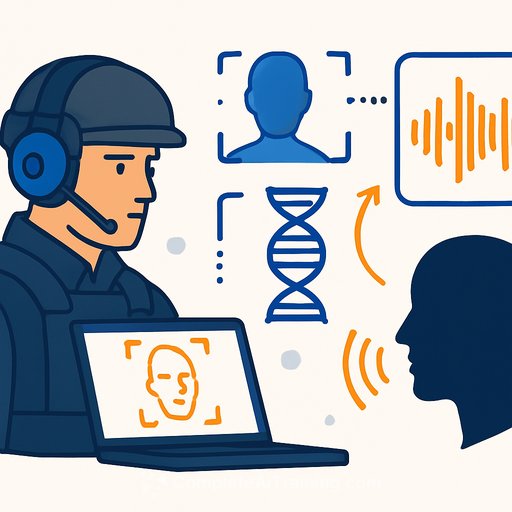
The U.S. Special Operations Command is evaluating AI to process data collected by operators in the field. The focus: facial recognition, voice identification, and DNA profiling. The goal is faster verification in complex environments and tighter decision loops for mission planning and security.
SSE: The Operational Backbone
This effort builds on sensitive site exploitation (SSE), where teams collect documents, electronics, and biometrics during missions to build intelligence packets. A well-known example is the material seized during the raid on Osama bin Laden's compound. AI would sit on top of that workflow, speeding triage while keeping analysts in control.
What's Changing on the Ground
Biometric collection has become standard across conventional and special forces. Teams have gathered fingerprints, face images, voice samples, and DNA for years across multiple theaters. The volume and variety of that data now demand faster, more precise analysis methods.
What SOCOM Asked Industry For
- Facial recognition: Real-time identification at distances up to 100 meters, resilient to lighting, motion, and environmental noise. Performance should be transparent and measurable.
- Voice identification: Isolate a single speaker in noisy, multi-speaker scenarios and match to known samples. On-device or edge-capable options get extra credit.
- DNA profiling: Rapid profile creation for comparison against existing databases (e.g., FBI systems) to support timely hold-or-release calls.
If you're validating vendors, check independent benchmarks like the NIST FRVT for facial recognition and alignment with standards used by agencies that manage DNA systems such as the FBI's CODIS/NDIS.
AI as an Analyst Multiplier
AI is being positioned as a support tool, not an oracle. It handles the first pass-sorting, correlating, flagging anomalies-while human analysts make the call. Private-sector analogs show the same pattern: AI speeds up the grind so experts can focus on judgment and risk.
Ethics, Policy, and Precision
The emphasis appears to be verification of known entities versus direct targeting. That matters for privacy, legal compliance, and reducing wrongful identification. Precision and recall must be tuned to mission needs, with clear thresholds, documented error rates, and human override by default.
Force Protection and Countermeasures
The RFI also explores how adversaries could use commercial biometrics to identify U.S. personnel. Expect red-team assessments and countermeasures to mask or obfuscate signatures. Understanding what's commercially available informs OPSEC and kit design.
Timeline: How Industry Will Engage
- Industry presentations to align on capabilities and constraints
- "On-loan" equipment for testing in controlled and field-representative conditions
- Vendor-led training so SOCOM teams can evaluate real performance, not slideware
Operational Takeaways for Ops Leaders
- Define success upfront: Target ranges, lighting, occlusion, crowd density, and acoustic clutter. Write these into test plans.
- Measure the right metrics: Track false match/false non-match rates, confidence scores, time-to-result, and operator workload.
- Own your data pipeline: Establish ingestion, labeling, audit trails, and retention rules. Chain of custody applies to digital too.
- Human-in-the-loop by Design: No automated actions without analyst confirmation. Log every decision for after-action reviews.
- Edge-first where feasible: Favor systems that run degraded or offline, with sync when connectivity returns.
- Interoperability matters: Plan for cross-checks with partner databases and CJIS-aligned controls where applicable.
- Bias and drift checks: Evaluate performance across demographics and environments. Schedule periodic re-validation.
- OPSEC countermeasures: Test your own exposure against COTS biometric tools and field masking techniques.
- Training and SOPs: Write clear playbooks for capture, verification, escalation, and detainee decision-making.
What to Watch Next
- Results from field testing of vendor "on-loan" systems
- Performance in cluttered, real-world settings versus lab conditions
- Policy guidance on data retention, sharing, and redress for misidentification
- Adversary adoption of similar tools and the effectiveness of countermeasures
Bottom line: AI can compress the time from collection to confident verification, as long as you control the process-requirements, data, metrics, and human judgment.
If your team needs to level up on practical AI skills for operations and analysis, review curated options by role at Complete AI Training.
Your membership also unlocks: