Sony puts AI to work in game development: "it's a tool, not a threat"
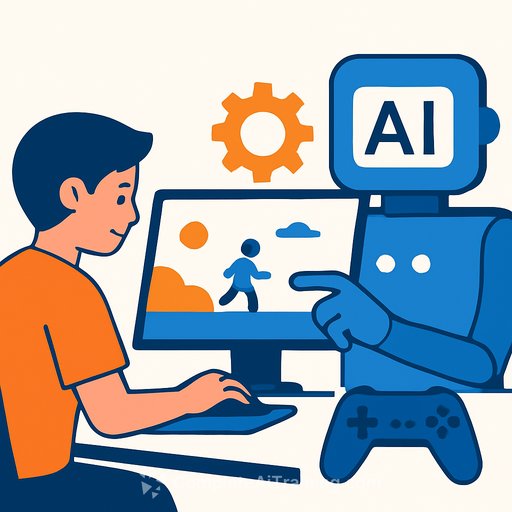
At a recent investor conference, Sony CFO Lin Tao made it clear: the company plans to apply artificial intelligence across game production. The goal is speed and efficiency, not replacement. As stated, AI is a tool, not a threat.
The focus is on large, expensive stages of building virtual worlds. By offloading repetitive tasks, teams can spend more time on the distinctive, hand-crafted elements that define PlayStation Studios games.
Where AI fits in the pipeline
Sony is pursuing controlled integration, making AI a standard part of production while keeping creative decisions with developers. Expect assistance on heavy-lift work, with humans setting direction and quality bars.
- Environment drafts: terrain, layout suggestions, and set dressing passes for faster iteration.
- Asset workflows: baseline meshes, textures, upscaling, retopology, and LOD generation - see AI Design Courses for practical asset and environment workflows.
- Systems support: NPC dialogue variants, quest scaffolding, encounter pacing ideas.
- QA and tooling: test-case generation, log clustering, bug triage support, and telemetry analysis.
- Performance tasks: light baking hints, shader presets, and build optimization suggestions.
- Localization first passes with human review to finalize tone and context.
Quality without compromise
Sony stresses that AI won't replace development teams or become the core of the business. The edge comes from unique, manually created details-AI just clears the busywork so teams can focus on what truly matters.
- Human-in-the-loop as a default: every AI-assisted output gets reviewed and edited.
- Data governance: protect IP, ensure rights for training data, and audit third-party models.
- Version everything: prompts, datasets, checkpoints, and outputs under the same SCM policies as code.
- Evaluation you can trust: automated tests, reference baselines, and scorecards for accuracy, style, and performance.
- Security-by-design: threat modeling for model inputs/outputs and sandboxed execution.
Practical takeaways for dev teams
AAA budgets demand smarter iteration. If you build for console or PC at scale, this shift is a nudge to re-think where your artists, designers, and engineers spend time.
- Map tasks by effort and variance; pilot AI where patterns repeat and quality is measurable.
- Wire AI into tools you already use (Unreal, Unity, Houdini, Substance, Blender) rather than adding friction.
- Define acceptance criteria up front: fidelity, style guides, performance budgets, and review SLAs.
- Keep a clean data trail: label sources, document licenses, and log prompt/context for reproducibility.
- Upskill the team: prompt craft, evaluation methods, and failure-mode awareness.
Context
Sony's approach is to standardize AI in production while preserving the studio identity that players notice on screen. For investor context and corporate updates, see Sony Investor Relations. For brand and first-party context, see PlayStation Studios.
Further learning
If you're building or refining an AI-assisted pipeline, explore practical training and tool roundups at Generative Code.
Your membership also unlocks: