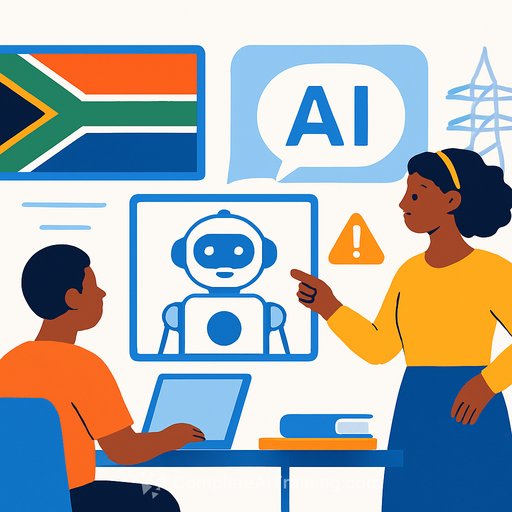
AI in South Africa's Top Schools Isn't "Next" - It's Now
AI isn't waiting for perfect conditions. As Dr Gillian Mooney, Executive: Teaching & Learning at The IIE's Academic Centre of Excellence, puts it: this isn't sci-fi. It's already working quietly in South Africa's top schools as a 24/7 assistant, giving teachers back time for the work that matters most - inspiring young minds.
Real example: tools like The Invigilator app keep assessments running during loadshedding. And AI-driven labour-market analysis is already guiding curricula toward skills with demand - from coding to sustainable farming.
Where AI Delivers Value Today
- Teacher time: Lesson prep support, question generation, rubric drafting, and instant feedback.
- Assessment continuity: Remote and hybrid invigilation that can ride out power cuts and patchy connections.
- Curriculum fit: Job-market trend analysis to keep programmes relevant to local opportunities.
- Inclusion: Read-aloud tools, text simplification, language tutoring - including Xhosa - for diverse learning needs.
- TVET and entrepreneurship: Simulations for welding, retail, and small-business skills that feel close to hands-on practice.
The Hard Constraints We Must Solve
"The digital divide looms large," Dr Mooney warns. AI is pointless if most learners can't access it. On a continent where many still lack reliable electricity, devices, and affordable data, rolling out AI without basics risks leaving the most marginalised behind.
Focus on infrastructure that survives outages: solar-powered devices, offline-first apps, local caching, and zero-rated content. For context on access gaps, see the ITU's global connectivity data here.
Bias is the other red flag. Poor training data can reinforce racial or gender stereotypes in grading, admissions, or recommendations. We've already seen facial recognition systems perform worse on darker skin tones - a caution the NIST study highlights here. Education can't afford those blind spots.
A Practical Playbook for School Leaders
In the next 90 days
- Pick two high-impact use cases: assessment integrity, reading support, translation, or teacher prep. Keep data exposure minimal.
- Pilot offline-first tools that can operate during loadshedding. Test on low-cost Android devices common in your community.
- Publish a clear usage policy: privacy, consent, acceptable use, and human oversight. Keep it short and enforceable.
- Upskill staff with short, role-based learning. Curated options by job are available here.
- Measure outcomes weekly: hours saved per teacher, learner engagement, and bias checks on recommendations.
Over the next 6-12 months
- Build resilience: solar, UPS for key rooms, local content servers, and data compression. Prioritise labs and exam spaces.
- Partner up: telcos for zero-rated access, EdTech vendors for offline modes, NGOs and corporates for device funding.
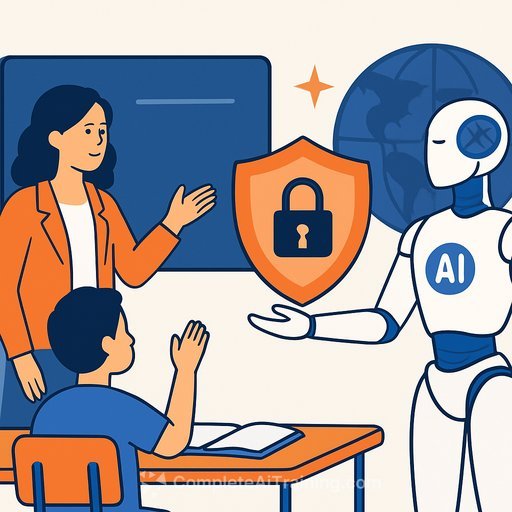
- Set governance: an ethics review group, bias testing before procurement, and audits each term. Keep humans in the loop.
- Protect learners: age-appropriate filters, logging, and clear escalation paths for misuse.
Equity and Impact, Not Hype
Dr Mooney is clear: without widespread internet, affordable devices, or off-grid solutions, AI stays a luxury for city elites. The question is simple - can our AI plans keep working during blackouts and tight data budgets? If not, they're plans on paper.
With access in place, the upside is real. Learners with disabilities get adaptive support. Language barriers shrink with local-language tutoring. Vocational students practise with safe, repeatable simulations. The result is a cohort ready for change, not shocked by it.
What "Good" Looks Like in a South African School
- Teachers spend more time with learners; routine admin is automated.
- Exams continue through loadshedding with credible proctoring.
- Curricula shift with job trends, backed by data rather than guesswork.
- Every learner - rural or urban - gets useful tools on low-cost devices.
- Bias is monitored, reported, and fixed - not ignored.
As Dr Mooney, who heads ADvTECH's centre for research and adoption of new technologies in education, puts it: "The future of African education empowered by AI is an unfolding reality." The task now is urgent and shared - build solutions that are truly African, truly human, and built to work in the places that need them most.
Your membership also unlocks: