South Korea's AI education push: talent pipeline or purpose drift?
South Korea is moving fast to grow "artificial intelligence talent," a core pledge of President Lee Jae Myung, who wants the country among the top three AI powerhouses. The message to schools: fully implement AI education and build the capacity of people to adapt and use it.
The question many educators are asking: are we building thoughtful citizens, or just producing workers for an industry that may change again in five years?
What's inside the "AI for All Initiative"
The Ministry of Education announced a nationwide plan that expands AI education across all age groups while fast-tracking elite talent. The centerpiece is an "AI innovation talent pipeline" that links specialized high schools to university and postgraduate programs.
- More AI-focused secondary schools and new AI admissions tracks at universities.
- Integrated bachelor's-master's-doctorate paths, with doctorates possible in ~5.5 years.
- General curriculum adjusted to include more IT and AI literacy for all students.
- National flagship universities offering foundational AI to every major.
- Working adults reached through cyber universities, Korea National Open University, and industry-linked graduate programs.
Seoul's education office adds AI literacy, ethics, teacher training, and the use of AI tools in ordinary classes across subjects like social studies, Korean language, and ethics; see AI for Education for practical guidance on policy and classroom practice.
The core tension: skills vs. purpose
Several experts argue the policy centers on manpower production without a clear vision of the kind of thinkers and citizens the system should cultivate. As one professor put it, "AI is just a skill… learning a tool cannot be the purpose of education."
The call from unions and faculty is clear: build the capacity to use AI proactively and critically, not just to fill industry pipelines. Without a long-term vision, short-term skills training risks crowding out creativity, leadership, and judgment.
AI in the classroom: tool, not crutch
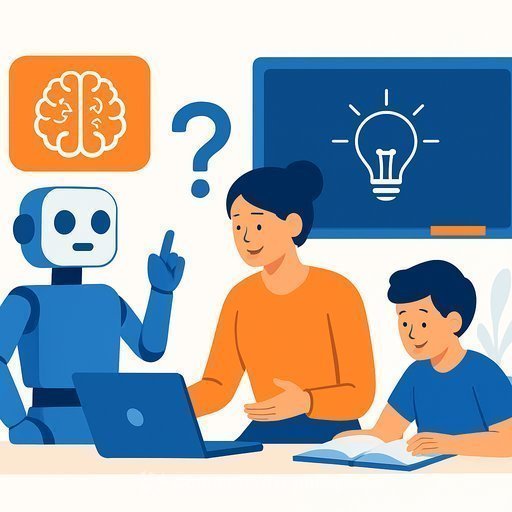
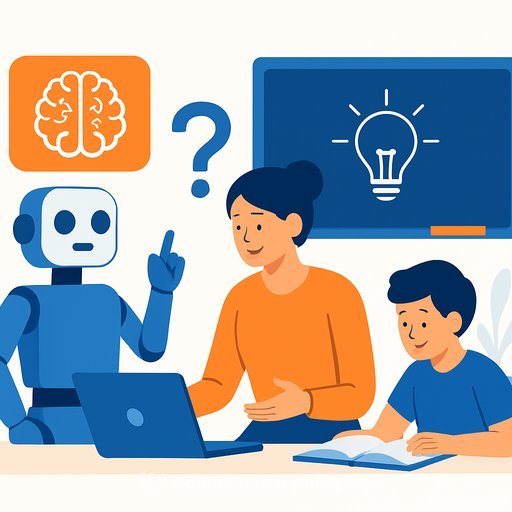
Seoul's plan treats AI as a tool for student work, not a requirement to become developers. That approach makes sense, but there's a warning worth heeding: overreliance on AI for writing and problem-solving can outsource thinking and weaken recall.
For younger learners-especially in a system still heavy on memorization-the risks grow. If admissions and curriculum don't reward deep thought, integrating AI at scale can reinforce shortcuts rather than build capability. The sequence matters: fix assessment and curriculum first, then scale classroom AI.
Assessment is shifting
Seoul plans to expand short-answer and essay-based items to 50 percent of school exam questions by 2030. That's a practical signal to schools: assess reasoning, not just correct answers.
For this to work, teachers need support: shared rubrics, exemplars, moderation systems, and time to collaborate. AI-assisted grading may help, but its use must be transparent and verifiable.
AI for teachers: workload relief, with guardrails
Officials argue AI grading accuracy is improving, trained on achievement standards and real student responses. Teachers testing early tools report mixed results-personalized feedback is helpful, yet some tools take more effort than manual grading.
The unresolved issues are familiar: hallucinations, bias, data security, responsibility, and the limits of AI as an evaluator. In education, the safest path is the ethical path. Pilot, audit, and prove value before scaling.
Practical playbook for education leaders
- Define the graduate profile: Spell out the thinker, citizen, and creator you want to develop. Let that drive AI use cases.
- Sequence the change: Update curriculum and admissions to reward inquiry, synthesis, and originality before flooding classrooms with AI.
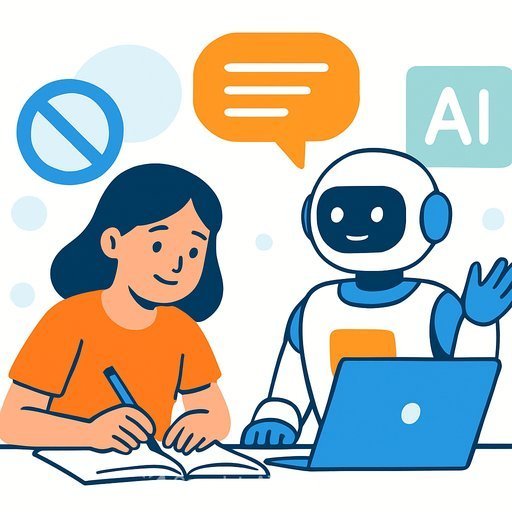
- Set student-use guardrails: What's acceptable help vs. unacceptable outsourcing? Publish policies with examples per subject.
- Professional learning for staff: Run cycles on prompt quality, verification, feedback design, and assessment alignment. Make it job-embedded and consider structured options like the AI Learning Path for Teachers.
- Assessment redesign: Increase authentic tasks, oral defenses, and process documentation. Use AI to generate drafts of rubrics, not final judgments.
- Pilot with evidence: Start small. Compare cohorts. Track outcomes beyond grades-engagement, originality, retention.
- Data governance: Vet vendors for privacy, security, and bias. Require audit logs and teacher override.
- Equity safeguards: Provide device access, offline alternatives, and teacher check-ins to prevent quiet tech-driven gaps.
- Transparency with families: Explain how AI is used, where it's limited, and how students' data is protected.
Useful references
- UNESCO guidance on AI in education for policy, ethics, and teacher development frameworks.
- AI courses by job role for educators planning targeted upskilling paths.
What to watch next
- Clear definition of learner outcomes beyond technical skill.
- Admissions reforms that value creative and critical work.
- Standards for AI grading, including audits, appeals, and transparency.
- Funding for teacher time, training, and evaluation-not just software.
- Evidence that AI use boosts thinking quality, not shortcuts it.
AI belongs in schools, but purpose comes first. South Korea's ambition is bold; the win will come from aligning tools with the kind of minds the country wants to grow.
Your membership also unlocks: