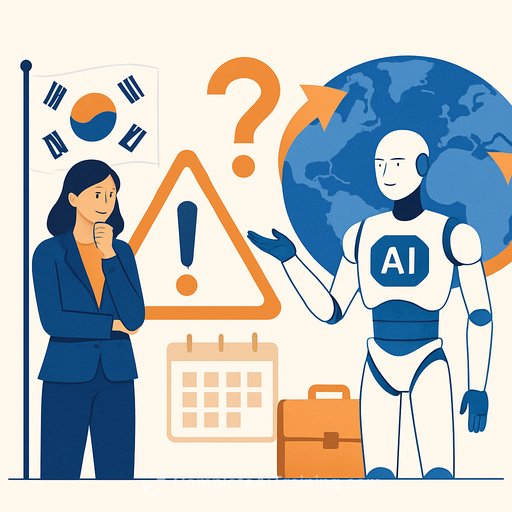
South Korea's AI Law Delay Raises Concerns
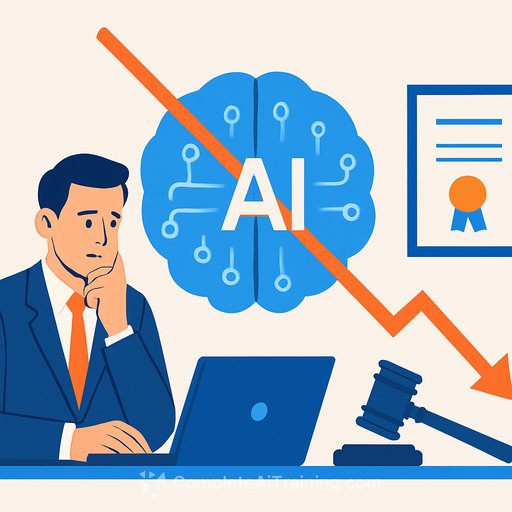
South Korea missed its June 30 deadline to release draft enforcement decrees and rules for its basic artificial intelligence law. The National Assembly passed the AI Basic Act — formally called the Framework Act on the Development of Artificial Intelligence and Establishment of Foundation for Trust — in December 2024. This move surprised markets, as the country was grappling with intense political unrest following then-President Yoon Suk Yeol’s failed martial law attempt.
The Cabinet Council promulgated the law in January 2025, during a period when the government was led by an acting president. At that time, the Ministry of Science and ICT promised to publish draft enforcement details by the end of June for public feedback. This was intended to give companies and users adequate time to prepare for the law’s January 2026 implementation and ensure smoother compliance.
Given that President Lee Jae Myung has been in office for just over a month and started without a transition period, the delay is somewhat understandable. Lee assumed office after an election held due to the forced removal of Yoon by the Constitutional Court. Still, the extended silence on the subordinate legislation process is causing concern among companies. South Korea is set to become a major AI market in the region, but limited clarity and preparation time are making it harder for businesses to strategize effectively.
South Korea's Position in the Global AI Regulatory Landscape
South Korea’s delay stands out amid complaints from various stakeholders that the country, despite enacting its AI law later than the European Union, will be the first to enforce regulatory obligations. While South Korea’s AI Basic Law takes effect in January 2026, the EU AI Act will start applying several months later, from August 2026 onward, with staggered deadlines for key provisions like high-risk systems, governance, and penalties.
When the law was hurriedly passed in late 2024, many expected it to support South Korean AI companies operating in regulated markets. However, the global AI policy environment shifted significantly earlier this year. Countries like the United States, Britain, Canada, and Germany have prioritized AI innovation, with some explicitly moving away from heavy regulation. This shift raises concerns that South Korea's regulatory-first approach may now be out of step with global trends.
Uncertainty and Its Impact on AI Development
The uncertainty surrounding South Korea’s AI law has even led the Democratic Party of Korea, now in power, to propose a revision bill in April. The bill aims to suspend regulatory provisions for three years, citing shifts in policy among the US, the EU, and Japan toward promoting AI industry growth rather than imposing strict regulations. There is no clear timeline for the bill's approval, and lawmakers acknowledge it may face delays.
In response, the Ministry of Science and ICT is exploring ways to delay the law’s full enforcement to avoid hindering innovation. For example, the ministry has suggested introducing a grace period for fines related to violations under Article 43, which allows fines of up to 30 million won ($22,000) for breaches of certain obligations. The details of enforcement, however, depend on a presidential decree, offering some flexibility.
These developments remain fluid as the new administration settles in. Bae Kyung-hoon, nominated as the first Minister of Science and ICT under President Lee, has not yet taken office. The government also has yet to clarify how it will implement key election promises, such as reforming the Presidential Committee on AI, which has been largely inactive since its launch in late 2024.
What Lies Ahead for South Korea’s AI Regulation?
Experts point out that it is unclear how much of the previous government's plans will be maintained under the new leadership. Questions remain about resolving conflicts between overlapping regulatory obligations across different laws and guidelines. While the AI industry faces ongoing uncertainty, one consensus stands firm: uncertainty itself is the biggest obstacle for businesses and investor confidence, especially in a fast-moving sector like artificial intelligence.
Legal professionals involved in AI compliance and policy should monitor these developments closely. Understanding the evolving regulatory timeline and potential grace periods will be critical for advising clients and shaping business strategies in South Korea’s AI market.
For those looking to deepen their knowledge of AI and its legal implications, resources such as Complete AI Training’s courses by job provide targeted learning opportunities to stay ahead in this dynamic field.
Your membership also unlocks: