Spain-India Dual Year 2026: Higher Education Partnerships with Purpose
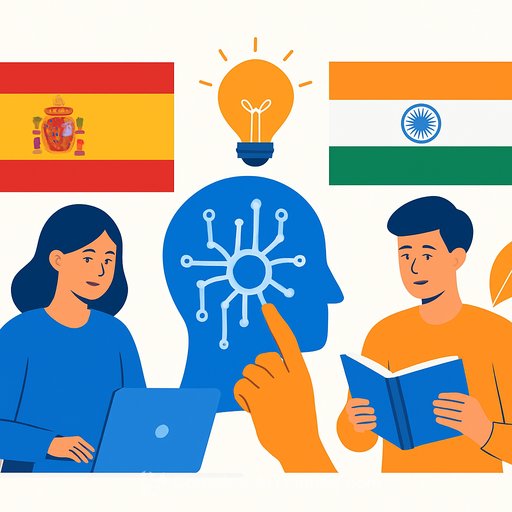
India and Spain closed a focused, forward-looking conference in New Delhi that put education, research and youth exchanges at the center of the Spain-India Dual Year 2026. Timed alongside the India AI Impact Summit 2026, the two-day forum brought clarity: collaboration is moving from polite conversation to concrete action.
India's Education Minister invited leading Spanish universities to establish campuses in India, noting the country is open and ready. With the National Education Policy 2020 enabling global collaboration, the moment favors institutions prepared to build credible, long-term partnerships.
Key signals for university leaders
- Campus openings in India: Spanish universities were encouraged to set up local campuses-an opportunity for dual-degree pathways, industry partnerships and regional research hubs.
- AI with humans at the center: The message was clear-AI should strengthen judgement, creativity and ethical responsibility. It's a tool to extend human capacity, not replace it.
- Joint research and mobility: Expect emphasis on co-funded projects, faculty exchanges, cotutelle PhDs and student mobility with real credit portability.
- Start-up support: Incubation, tech transfer and venture support featured prominently, with universities as engines for innovation and jobs.
- People-to-people ties: Language learning, internships and cultural immersion will sit alongside research and teaching goals.
AI: Augment people, protect integrity
Leaders from both countries agreed: democracies must set the pace for responsible innovation. For campus leaders, that translates into governance, practical guardrails and staff capability.
- Stand up an AI governance board with faculty, students and legal/IT. Publish clear guidelines on academic integrity, data use and model transparency.
- Invest in faculty enablement: course design with AI, assessment redesign, and discipline-specific use cases. See AI for Education for practical frameworks.
- Embed AI literacy for students across programs-ethics, prompts, verification, and domain-grounded critical thinking.
- Run pilots in advising, student services and research workflows with measurable outcomes and review cycles.
- Coordinate with policy stakeholders. If you help shape rules, you can move faster and safer. Useful primer: AI for Policy Makers.
Momentum and representation
Over 30 Rectors and senior leaders from Spain, representing CRUE, joined the conversation alongside about 70 Indian institutions. The scale signals strong institutional buy-in for deeper academic ties throughout 2026.
Spanish leadership emphasized that knowledge strengthens societies and universities carry that responsibility. CRUE's role will be pivotal in coordinating joint initiatives and creating repeatable partnership models. Learn more about CRUE's network at crue.org.
Priority tracks for 2026
- Joint degrees and micro-credentials: Focus on employability, bilingual delivery and stackable learning.
- Co-funded research: Define a shortlist of themes-clean energy, health tech, climate adaptation, language technologies, cybersecurity.
- Mobility at scale: Balanced flows, housing support, scholarships and simplified credit transfer.
- Start-up and IP pathways: Shared incubation, mentor pools, seed funding windows and clear IP frameworks.
- Language and culture: Spanish and Indian language programs that link to internships and community projects.
- Quality and recognition: Transparent QA, mutual recognition, and aligned outcomes for accreditation.
How to prepare your institution now
- Set a 12-month partnership plan: Pick 3-5 focus areas with named owners, target partners and timelines.
- Create a market offer: A concise deck with your research strengths, facilities, industry links and student support-ready to send.
- Shortlist programs for joint delivery: Identify modules that map well for dual degrees or micro-credentials. Pre-build credit maps.
- Draft templates: MoU/MoA, IP/tech transfer, data-sharing, faculty exchange, visiting scholar agreements.
- Stand up an AI teaching support unit: Instructional designers + technologists to help faculty integrate AI responsibly.
- Budget and KPIs: Allocate seed funds, set quarterly targets for exchanges, proposals submitted and pilots launched.
Execution details that prevent delays
- Agree on evaluation and QA early-assessment methods, moderation, plagiarism/AI-use policies.
- Map student services for mobility: housing, visas, insurance, internships and alumni mentoring.
- Plan bilingual support (content plus student services) where needed, with clear turnaround times.
- Establish a single-window partner office to cut response times on legal, finance and academic approvals.
What success looks like by end-2026
- Signed MoUs converted into funded projects and launched programs-not just announcements.
- Joint publications, patents filed, and labs co-led across institutions.
- Faculty exchanges with teaching load clarity and research time protected.
- Student mobility with positive placement outcomes and strong feedback on support services.
- Start-ups launched through joint incubation, with seed funding and follow-on traction.
- Scholarships that widen access and broaden participation, measured and reported.
The takeaway is simple: the opportunity window is open, and the groundwork has begun. With clear priorities, shared standards and a human-first approach to AI, universities in India and Spain can build partnerships that deliver real outcomes for students, researchers and society.
Your membership also unlocks: