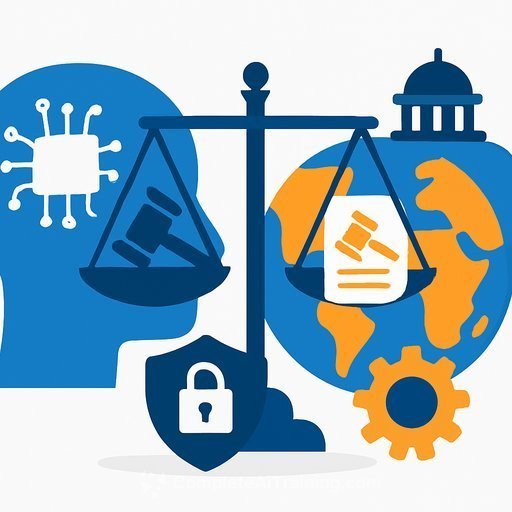
Speed with guardrails: How U.N. tech teams can turn AI pilots into real outcomes
U.N. agencies are leaning into AI to stretch shrinking budgets and keep up with demand from staff and partners. More than 700 AI pilots are underway across 2024-2025. Access isn't the problem anymore - execution is.
The push is coming from both the top and the front lines. Leaders see potential. Teams want to ship. The tension is obvious: move fast, but don't lose control.
AI adoption: urgency meets control
Dedicated AI units are popping up across agencies, while others retrofit Translation, comms, and frontline services with AI features. As one leader put it, staff are eager to try new tools even if policies lag behind. That energy is useful - and risky.
Data privacy and equity remain the hard problems. Several leaders warn that guardrails can't be optional as experimentation spreads. And despite the volume of pilots, very few reach production or hit expected outcomes. The gap is execution discipline.
A practical playbook for turning pilots into production
- Start with a sharp problem statement: one user, one task, one KPI (e.g., reduce case triage time by 30%).
- Set non-negotiables: privacy model (RAG vs. fine-tune), data minimization, PII handling, country data residency.
- Ship a thin slice: a human-in-the-loop microservice or internal tool before touching beneficiary-facing workflows.
- Evaluate and monitor: prompt tests, bias checks, red-teaming, drift alerts, cost caps, and usage analytics.
- Choose the right path to production: clear owner, SLA, rollback plan, and a 90-day success/fail checkpoint.
- Plan the exit: if KPIs don't move, sunset. Archive learnings. Reuse components, not promises.
If your team needs a fast upskilling path (prompts, evals, governance), this curated catalog can help: AI courses by job role.
Unblocking the chain: stablecoins and aid delivery
Circle Foundation is expanding a blockchain-based payment platform to 15 U.N. agencies. The pitch is simple: cross-border payments on legacy rails are slow and expensive. In crises, they can fail outright. Afghanistan's 2021 banking collapse forced 68 cash flights carrying $2.4 billion into the country - an operational and security nightmare.
Field tests suggest upside. UN partners used stablecoin wallets in Ukraine with cash-out options to banks or locally. Mercy Corps reported 75% lower transaction costs and 90% faster settlement in a Kenya pilot. That's real money and time back to programs.
What to get right before scaling:
- On/off ramps: regulated partners, transparent FX, local cash-out, agent coverage.
- KYC/AML: proportionate checks, safeguarding vulnerable groups, clear recourse paths.
- Custody and UX: lost phone recovery, SIM-swap risk, offline options, low-literacy flows.
- Token risk: stablecoin quality, chain choice, fees, congestion, vendor lock-in.
- Data protection: who can see what - and for how long. Default to least privilege.
The democracy dilemma hits the tech stack
At Davos, one message cut through: democratic erosion is now a business risk. Disinformation exploits ad systems and platform incentives, eroding trust and adding operational cost. Estimates peg fake news as a $78 billion drag on the global economy each year.
Where tech teams can help right now:
- Ad integrity: exclude known disinfo domains, verify traffic sources, and cut monetization paths.
- Content authenticity: adopt open standards like C2PA-style provenance where feasible in tooling and workflows.
- Data hygiene: label synthetic media and clearly separate it from verified content in internal systems.
- Coalitions: join or align with initiatives targeting FIMI tactics and shared threat intel.
For background on "foreign information manipulation and interference," see the EU's overview: What is FIMI?
Budget fog in the U.K.: build for uncertainty
The U.K.'s multiyear aid allocations for 2026-29 remain delayed amid a 40% cut to overseas development spending. Oversight mechanisms may also be weakened, which could lower transparency right when it's needed most.
How to keep delivery on track without numbers:
- Scenario budgets: A/B/C plans with phased feature flags tied to funding thresholds.
- Modular architecture: decouple high-risk components; make pausing cheap.
- Cash-aware ops: track cloud, model, and vendor burn in weekly reviews with kill-switches.
- Outcome telemetry: publish simple impact metrics so cuts don't blindside critical services.
The great leap backward: China's finance pullback
Many expected China to fill development finance gaps as U.S. funding receded. The opposite seems to be happening. Reported Chinese inflows to low- and middle-income countries fell from $26.5 billion in 2018 to $5.1 billion in 2024, while repayments continued. In several countries, net transfers flipped negative.
The implications for IT and delivery teams:
- Assume tighter capital: prioritize OPEX-light designs, open-source stacks, and shared services.
- Diversify backers: look at MDB instruments, blended finance, and local-currency partnerships.
- Stretch dollars: target the 20% of features that deliver 80% of value; automate reporting to protect core operations.
What this means for your next 90 days
- Pick one AI use case with measurable value. Ship an HIL prototype. Decide to scale or kill by day 90.
- Stand up a lightweight AI policy: approved tools, data tiers, review gates, incident response.
- Audit payment flows in crisis programs. If remittance friction is high, run a stablecoin sandbox with tight guardrails.
- Harden info integrity: update ad blocklists, label synthetic media, and brief leadership on FIMI tactics.
- Budget-proof delivery: implement scenario-based feature flags and weekly cost reviews.
In other news (and why you should care)
- Climate funding: Michael Bloomberg's climate spend now tops $3 billion - watch for private funding shaping data, MRV, and reporting standards.
- Measles returns to the U.K.: coverage gaps are translating into real outbreaks, which stresses digital immunization systems and supply chains. Refresher here: WHO measles facts.
- Debt pressures: Higher rates in G7 economies spill into low-income countries, squeezing public tech budgets. Expect more asks to "do more with less."
If you're formalizing AI roles, skills, and workflows across your team, here's a curated starting point: Latest AI courses.
Your membership also unlocks: