Where AI Is Delivering Real Value in Insurance, and Where Humans Still Matter
AI has moved from experimentation to expectation across the industry. Most carriers are already investing, and the pressure is on to turn pilots into productivity. The challenge is simple: scale the basics without eroding the judgment and clarity customers rely on.
AI can speed decisions. It can also break trust if outputs feel inconsistent or opaque. The question isn't "Should we use AI?" It's "How do we modernize without losing the human signal?"
Where AI Is Delivering Value
The biggest wins aren't flashy. They're practical. Pricing, underwriting, and claims teams are getting cleaner data, quicker answers, and fewer avoidable errors.
One carrier deployed 80+ AI models in motor claims and cut liability assessment times for complex cases by 23 days. Routing accuracy rose 30%, customer complaints dropped 65%, and the savings topped £60 million in 2024. Fraud detection is trending the same way, with estimates showing multimodal models cutting fraud-related claim costs by 20-40%.
Distribution is benefiting too. Automated eligibility checks, risk screening, and tighter quote logic reduce rework and limit disputes later by capturing better data up front.
- Remove duplicate questions and manual handoffs before the quote.
- Standardize partner data so underwriting isn't fighting inconsistent inputs.
- Prioritize communication over pure automation, so customers and brokers know why questions are asked or risks are flagged.
The lesson: use AI to strengthen fundamentals, not complicate them.
Modernize Without Losing the Human Touch
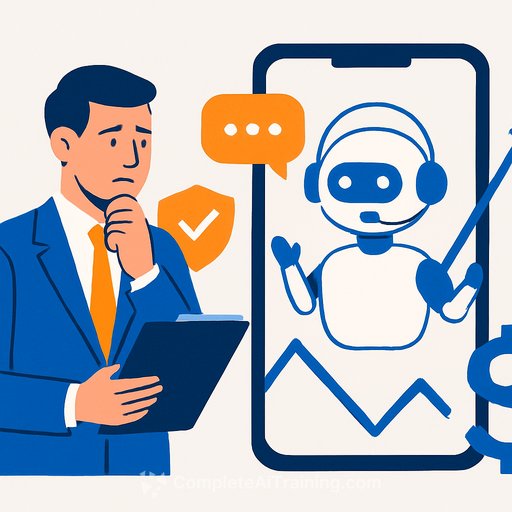
Customers want speed and transparency. They don't need a model schematic. They want to know why a premium changed, what data influenced it, and what options exist if something looks off. Clear, plain-language explanations beat technical disclosures every time.
Seventy percent of customers still prefer human interaction at key moments, especially during claims or for vulnerable segments. Major-loss events, coverage disputes, and sensitive scenarios need judgment and empathy. Protect those touchpoints and you protect trust. Carriers that communicate clearly and consistently see retention lift by roughly 20%.
That promise only holds if your teams understand the tools. If staff can't explain or challenge an outcome, customers won't feel confident. Build an AI-capable workforce by focusing on interrogation, not theory.
- Train with real dashboards, live alerts, and simulated failures.
- Expose blind spots: data gaps, bias risk, edge cases.
- Keep a human-in-the-loop for decisions with material financial or customer impact.
Well-trained teams catch anomalies early-before they become costly errors or regulatory headaches.
Embedded Insurance: The Next Experience Battleground
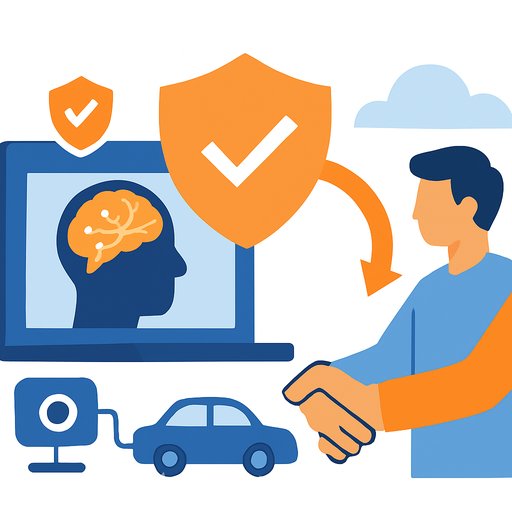
Embedded is shifting from "another channel" to part of the core experience. Two moments matter most: checkout and first use. At checkout, protection fits the flow and feels natural. At first use, reassurance reduces doubt and cancellations.
AI boosts this by matching context-property type, asset specifics, risk profile-without adding extra steps. But the real test is the claim. If it's slow or clunky, the seamless purchase doesn't matter. Mobile-first claims, photo uploads, and fast adjudication should be standard.
The difference behind the scenes is partnership quality. Embedded works when insurers, platforms, and partners share objectives and share data responsibly. Align the platform's existing journey data with what underwriting needs. Eligibility gets shorter, quotes get cleaner, and drop-off falls.
Example: property platforms integrating renters' insurance can prefill quotes with lease data-unit type, coverage requirements, occupancy dates. That removes redundant questions and tightens compliance for property managers and residents. The customer gets a simpler journey. The insurer gets cleaner inputs from day one.
- Share data responsibility to increase accuracy and reduce errors.
- Co-design the journey-don't bolt insurance on at the end.
- Align KPIs so resolution speed and customer satisfaction matter as much as conversion.
Five Moves to Execute Now
- Map your end-to-end journeys and mark the "no-compromise" human touchpoints.
- Define thresholds for human review by product line, claim type, and customer segment.
- Build explainability into every decision you expose to customers and brokers.
- Standardize data contracts with partners; reduce free-text fields and duplicates.
- Run quarterly AI drills: simulate model drift, alert failures, and bias checks.
Upskill the Team That Stands Behind the Model
Technology won't carry the weight alone. You need people who can explain, question, and escalate. If you're building internal capability, consider structured training paths that match roles-claims, underwriting, distribution, compliance-so teams learn with context.
For practical, role-based training options, see Complete AI Training by job. Focus on hands-on exercises with real workflows, not just theory.
The Bottom Line
AI works. The carriers who win won't be the ones who automate the most. They'll be the ones who pair speed with accountability, keep humans where judgment matters, and explain decisions in plain language. Do that consistently, and your customer experience becomes the standard others have to match.
Your membership also unlocks: