
AI news ·
Sprite uses AI as both the tool and the punchline in its new summer campaign
Sprite's new India campaign makes AI the punchline, not the production tool. An AI-generated actor attempts absurd heat hacks before the real one steps in - and the joke scales across 60+ localized versions.
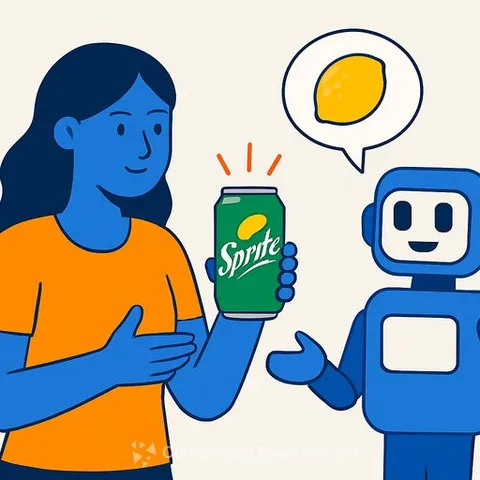
Sprite's AI Campaign Shows Creatives How to Make AI the Story, Not Hide It
Sprite's latest campaign treats AI as the main character, not a behind-the-scenes tool. The brand asks AI for advice on beating the heat, then shows what happens when you actually follow it: absurd, impractical solutions that instantly signal something is wrong. An AI-generated version of actor Sharvari attempts these ideas. The real Sharvari then steps in with the simple answer: Sprite. The campaign works because it critiques AI while using it.
AI as narrative, not production shortcut
Most brands use AI invisibly-optimizing production, cutting costs, enabling scale behind the scenes. Remove AI, and the campaign still works. Sprite inverts this. AI is the narrative engine here. Without it, the entire construct collapses.
The humor depends on audiences recognizing AI-generated weirdness. That's a significant shift. It signals brands are starting to treat AI as a cultural object that audiences already have opinions about, rather than a neutral tool.
The campaign taps into what younger audiences call "brainrot"-AI-generated content that's uncanny, chaotic, and unintentionally funny. Sprite leans into this deliberately instead of avoiding it.
One idea, 60+ localized versions
The strategic second layer: scale through specificity. India's summer isn't uniform. Rajasthan's dry heat differs fundamentally from coastal humidity or Bangalore's milder conditions.
Instead of flattening these differences into one generic narrative, Sprite used AI to generate over 60 hyper-localized versions of the same core idea. Each tweaks the absurd suggestions to match that region's actual weather.
This is climate-contextual storytelling at scale. Traditionally, this level of customization required multiple shoots, regional teams, and significantly higher budgets. AI collapses that complexity.
Why this hits differently
The campaign resonates because it addresses two cultural pressures simultaneously. First: growing skepticism about AI. People are fascinated but increasingly aware of its flaws. By making AI the fool in the narrative, Sprite taps into that sentiment without feeling preachy.
Second: fatigue with one-size-fits-all advertising. Audiences expect personalization, but not at the cost of authenticity. Sprite delivers both scale and specificity without feeling mechanically generated.
The bizarre visuals grab attention. The localized nuances sustain engagement. It's scroll-rewarding, not just scroll-stopping.
What this means for your work
For creatives, this raises a practical question: Does AI change the nature of the idea itself, or is it just a production shortcut?
If the answer is no, it's faster rendering. If the answer is yes-as it is here-it becomes a competitive advantage. Sprite's playbook has two layers. First, use AI to create something distinctive enough to break through noise. Second, use it to make that idea contextually meaningful across diverse audiences.
Most brands are still at layer one. Sprite shows what layer two looks like. Understanding the difference is where real impact lies.
For creatives working with AI design tools and AI for marketing, the lesson is clear: the tool matters less than how you position it in the work itself.