St. John's University Hosts AI Debate for High School Students
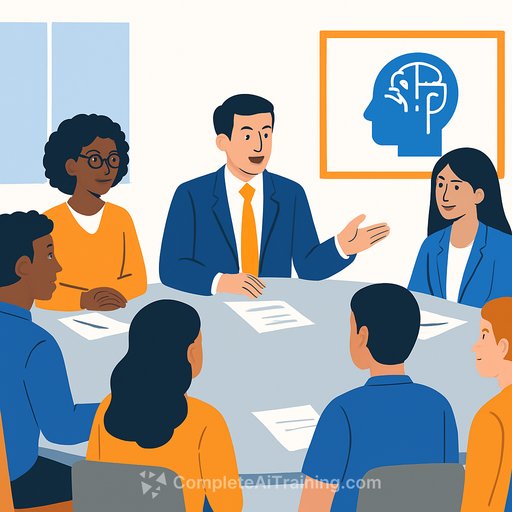
St. John's University brought 15 students from William H. Maxwell Career and Technical Education High School in Brooklyn to its Queens campus on March 14 for a four-hour roundtable on artificial intelligence use in school homework. The event asked students to examine competing perspectives on AI in education and develop their own policy proposals.
Faculty members Meghan M. Dunn and Elisabeth Fondren from the Division of Mass Communication presented opposing viewpoints. One argued that AI supports learning and creativity; the other raised concerns about students losing independent thinking skills if they rely too heavily on the technology.
Students then split into small groups to debate the issue and draft policy recommendations. Most groups supported AI use in schools, but with safeguards and clear guidelines. Some focused on implementation plans while others developed broader policy frameworks.
Student Reaction
Tamir Sobers said the format helped him understand the debate. "It helps students understand AI, including the pros and cons. It gives us a chance to talk and debate about it," he said.
Isaiah Slaughter added that seeing both sides mattered. "It allows you to see both sides of the issue-what we know and what we do not," he said.
Christian Vazquez Jr., who attended the inaugural 2024 roundtable as a junior, returned this year. He is now enrolling at St. John's this fall. "Being here before really opened my eyes to college," he said.
Why Educators Should Pay Attention
Luca Iandoli, dean of the Collins College of Professional Studies, said the roundtable lets students experience how policy gets made. "What we want to do is allow students the opportunity to experience that complexity firsthand and understand how different perspectives come together," he said.
Meghan Dunn emphasized that students need to think about these questions early. AI for Education tools are becoming standard in classrooms, making it crucial for students to understand how the technology affects learning and development.
Miriam E. Prever, an instructor at the Collins College, noted that students rarely get a seat at the table in these conversations. "Too often, young people are spoken about rather than spoken to," she said. "This event allows them the opportunity to express how they feel about democracy and engage with real-world issues."
Chevron Cox, a special education teacher and student government adviser at Maxwell, observed that her students hold divided views. "Students are split on AI. Some want to embrace it, while others feel like it replaces thinking," she said.
For educators looking to build similar discussions in their schools, AI Learning Path for Teachers offers structured guidance on how to approach AI literacy with students.
Your membership also unlocks: