AI Spots Research Errors, but Humans Must Judge What Matters
Large language models can identify technical flaws and logical gaps in scientific papers faster than human reviewers, but they struggle with the subjective judgments that define good research. A Stanford computer scientist who tested AI on roughly 20,000 peer reviews found the technology works best as a filter for objective problems, not as a replacement for human decision-making.
James Zou, a computer scientist at Stanford, ran a randomized experiment pairing AI assistance with human reviewers to measure whether AI improved review quality. He also organized the Agents for Science conference, which invited AI systems to submit and review research papers alongside human scientists.
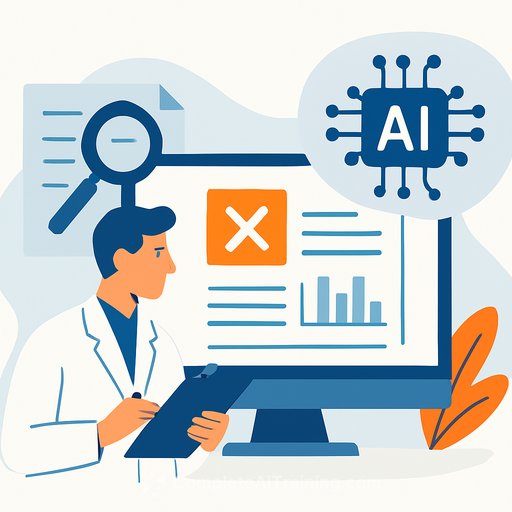
The results show a clear division of labor. AI excels at catching inconsistencies - a number that doesn't match between a table and the text, equations that contradict each other, missing data or methodological gaps. These are verifiable problems with objective answers.
Subjective assessments remain a weakness. When asked to judge whether research is novel or significant, AI can produce reviews that border on flattery rather than critical analysis. "AI is strongest on objective, checkable inconsistencies and technical issues and weaker on subjective judgments about the novelty or significance of the research," Zou said.
The Overburden Problem
The peer review system faces real pressure. Submissions to major journals and conferences have grown faster than the pool of available human reviewers. This backlog forces reviewers to work faster and can lower review quality, frustrating authors waiting for feedback.
AI offers one solution: act as a rapid pre-submission critic. Researchers can run drafts through AI systems before official submission to catch gaps and improve first drafts. This reduces the back-and-forth during formal review and lessens the workload on human reviewers.
The Agents for Science conference received over 300 AI-led research submissions from 28 countries. An experiment at the International Conference on Learning Representations showed that AI feedback improved both the quality of reviews and reviewer engagement.
Scientists Must Remain Accountable
Zou argues that scientists and editors must make final decisions about what gets published. AI should inform and support, not replace, human judgment. Scientists must disclose exactly how AI assisted their work - in research, writing, and revision - and take responsibility for incorporating feedback from both AI and human reviewers.
This transparency requirement extends to the review process itself. If AI systems generate reviews, that fact should be visible to authors and editors. The chain of responsibility must remain clear: humans decide, and humans are accountable.
The scientific community is beginning to act on these principles. Many conferences and journals are now exploring how to use language models in peer review, but they're doing so carefully, testing the approach before full adoption.
What Comes Next
Zou plans to host additional conferences for AI agents to establish evidence and norms for how the technology should be used in science. The field needs more testing before AI becomes a standard tool in publishing.
As AI becomes routine in research - writing code, drafting papers, generating feedback - the scientific community will need to continuously refine which tasks belong to machines and which require human judgment. The goal is to make the collaboration both useful and trustworthy.
Learn more about Generative AI and LLM capabilities or explore AI Research Courses for working scientists.
Your membership also unlocks: