
AI news ·
Stanford researchers find AI accelerates scientific discovery but human expertise remains essential
Stanford researchers say AI speeds up scientific discovery by analyzing massive datasets and designing experiments. Human expertise remains essential to validate findings.
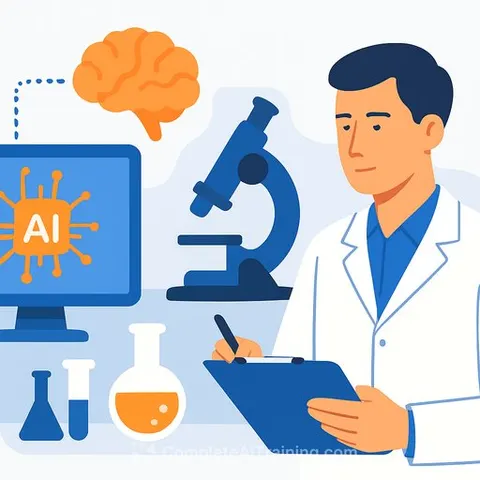
Stanford researchers said AI is reshaping scientific discovery by speeding up data analysis, hypothesis generation, and experimental design across disciplines like biology, medicine, engineering, and astrophysics. The shift could shorten the timeline for breakthroughs in drug development, personalized healthcare, and our understanding of complex systems.
AI's ability to analyze massive datasets and identify patterns is already helping biologists interpret genetic data and build advanced disease models. Stanford researchers believe AI-powered virtual cell models will accelerate drug discovery and enable more tailored medical treatments.
AI agents take on research tasks
AI agents now assist with literature reviews, experiment design, and data interpretation. But researchers at Stanford caution that human expertise remains essential. AI-generated findings must be validated and tested for real-world relevance.
Human judgment still drives discovery
The researchers argue that future scientific progress will depend on merging AI's computational power with human knowledge. AI is evolving from a productivity tool into a core component of research, but rigorous validation, ethical oversight, and critical thinking will always be necessary to ensure reliable results.
Why this matters for science and research professionals
For scientists and researchers, AI offers a way to tackle problems that were once too complex or time-consuming. However, the technology does not replace human judgment. Professionals who learn to integrate AI into their workflows - while maintaining strict validation standards - will be best positioned to lead the next wave of discovery. Resources like the AI Learning Path for Research Scientists can help build those skills.