
AI news ·
Stanford's 2026 AI Index finds progress on capabilities but flags environmental costs and equity gaps
Stanford's 2026 AI Index flags rising energy costs, shrinking model transparency, and unequal access as AI capability keeps climbing. The report has direct implications for IT teams planning infrastructure and managing compliance across regions.
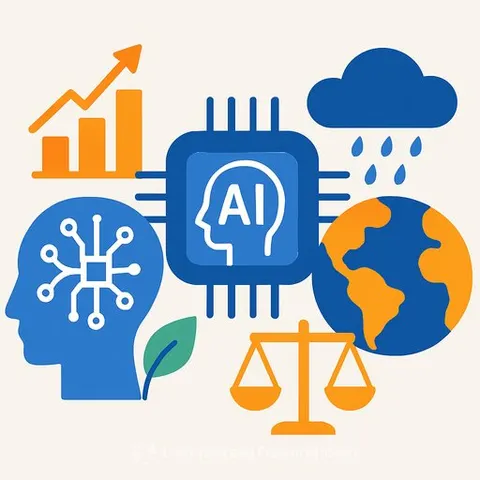
AI Index 2026 Report: 12 Key Findings on Capability, Cost, and Control
The Stanford AI Index released its annual assessment of the field's progress, documenting systems reaching new performance thresholds while flagging growing concerns about energy consumption, model transparency, and unequal access to AI benefits.
The report tracks developments across generative AI, robotics, scientific applications, and workforce impacts. For IT and development professionals, the findings carry direct implications for infrastructure planning, skill requirements, and how AI systems will integrate into production environments.
What the Report Documents
The 2026 Index shows AI models continuing to advance in capability. Breakthrough performance in language and vision tasks now extends to specialized domains-scientific research, medical diagnosis, and disease mapping among them.
Environmental costs are climbing alongside capability gains. Training and running large models consume significant energy, raising questions about sustainability that infrastructure teams will need to address.
Transparency remains limited. The report notes that model developers disclose less detail about training data, computational requirements, and system limitations than in previous years, making it harder for organizations to assess what they're actually deploying.
Practical Applications Emerging
AI is moving into peer review of scientific research, where it identifies gaps and inconsistencies in papers. Human experts still make final judgment calls, but the technology is accelerating the review cycle.
In healthcare, researchers are mapping disease spread using satellite imagery and AI analysis. A platform developed with seed funding has begun tracking schistosomiasis across regions where traditional field surveys are difficult.
Phone data is becoming a research asset. Scientists released an open-source platform that lets researchers study digital behavior patterns while maintaining participant privacy-a model that could extend to other health studies.
Skills and Infrastructure Gaps
The report underscores a widening gap between organizations with resources to build or fine-tune models and those that cannot. This concentration affects who captures value from AI deployment.
Development teams need new competencies. Understanding model limitations, managing computational overhead, and integrating AI into existing systems require different skills than traditional software engineering.
For IT operations, the energy footprint of AI workloads is becoming a budget line item. Data centers running inference at scale require planning around power consumption and cooling.
Policy and Access Questions
The report raises questions about who benefits from AI advances. Most breakthrough systems are controlled by a small number of companies, limiting how broadly the technology can be applied.
Regulation remains fragmented. Different jurisdictions are setting different rules, creating compliance complexity for organizations deploying systems across regions.
Workforce displacement is documented but uneven. Some roles are seeing automation pressure while others are seeing AI create new tasks. The transition is not automatic or painless.
What This Means for Development Teams
The findings suggest several priorities for IT and development professionals. First: build skills in evaluating AI systems critically, not just implementing them. Second: plan infrastructure with energy costs and transparency requirements in mind. Third: expect continued regulatory changes that affect how models can be deployed.
The field is past the hype phase. Systems work. The questions now are about cost, control, and fairness-questions that require technical judgment, not just technical capability.
For professionals looking to understand these developments in depth, Generative AI and LLM courses cover the technical foundations, while AI for IT & Development training focuses on practical integration challenges specific to infrastructure and operations roles.