State Farm AI discrimination suit could force regulators to act
A three-year-old lawsuit against State Farm over alleged racial discrimination in claims handling is approaching trial in Illinois state court. The case could become the catalyst that breaks a regulatory stalemate and forces state insurance commissioners to write enforceable rules governing AI use.
State regulators have largely sidestepped AI regulation, issuing only advisory bulletins rather than binding rules. That could change if a jury verdict draws national attention to discrimination claims tied to automated systems.
"I think all that is going to accelerate more regulatory activity is something ending up on the front page of the New York Times or Wall Street Journal," said Michael Byrne, a partner at McDermott Will & Schulte. "Somebody gets sued or misuses the technology, and the whole industry will be painted with the same broad brush."
What State Farm is accused of
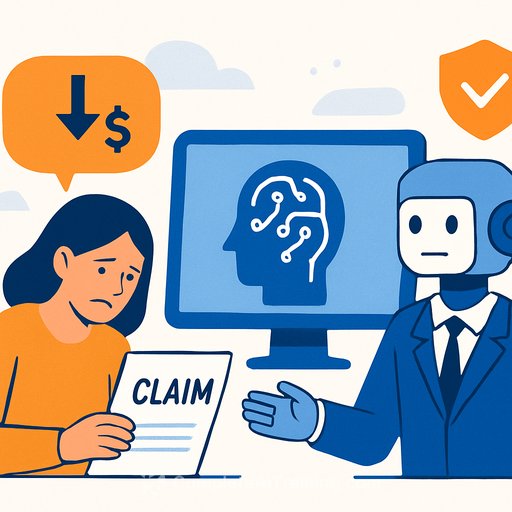
The December 2022 lawsuit alleges State Farm violated the Fair Housing Act by treating Black and white homeowner insurance policyholders differently. Plaintiffs claim a large-scale survey revealed "marked disparities" in how the company handled claims across racial lines.
The suit names automated claims processing and machine-learning algorithms as the source of discrimination. According to the complaint, the AI used voice, geolocation data, social media presence, browser search history, and historical housing and claims data as proxies for race when denying claims.
State Farm has faced multiple discrimination lawsuits. Health insurers Cigna, Humana, and UnitedHealth have also been sued or criticized over AI-driven claims denials. But the State Farm case is notable because it is approaching discovery completion and could proceed to trial-a public proceeding that could generate the kind of attention that moves regulators.
Why regulators have held back
Federal policy is creating a headwind for state action. The Trump administration has made "global dominance in artificial intelligence" a stated goal and is encouraging hundreds of billions in investment. Congress has discussed preempting state AI regulations entirely.
State insurance regulators may be reluctant to impose rules that conflict with federal priorities. The result: most state action has been limited to advisory guidance rather than enforceable requirements.
The National Association of Insurance Commissioners adopted a bulletin in late 2023 reminding insurers to follow existing anti-discrimination and fair competition laws when using AI. As of August, 24 states had adopted it. That same year, the NAIC convened a working group to discuss a potential model law, but industry stakeholders pushed back.
The National Association of Mutual Insurance Commissioners argued AI should be treated as a "tool" already subject to existing insurance law. The American Property Casualty Insurance Association said consumers benefit from AI-driven cost efficiencies, including faster claims settlement. Verisk called a dedicated law redundant.
States moving ahead alone
Colorado and New York have moved past consensus-building to write their own rules. Colorado's 2023 regulation requires insurers to maintain documented risk management procedures and inventories of external consumer data used in underwriting and claims-including social media habits, purchasing patterns, and credit scores.
New York's Department of Financial Services issued a circular letter in 2024 requiring insurers to prove that use of external consumer data is not unfairly discriminatory and is supported by actuarial standards. Insurers must also test whether their AI systems unfairly impact protected classes.
Stephanie Dobecki, a partner at Sidley, said the underlying concern across all frameworks is the same: "There's a risk that the use of artificial intelligence-or different kinds of non-traditional data sources-in connection with insurance practices risks violating state anti-discrimination law."
Kathleen Birrane, a partner at DLA Piper and former Maryland insurance commissioner, noted that regulating AI requires deep understanding of models and actuarial processes. "You don't have a real consensus on all these points among regulators at this time," she said.
The plaintiffs' bar is watching
Claims professionals are using AI to streamline handling of routine claims and to triage damage after major storms. Consulting firms like Deloitte and McKinsey have identified AI as a tool to process information faster and contextualize data more efficiently.
Most major carriers have internal AI guidelines aimed at avoiding discrimination and antitrust violations. But as use of AI expands, litigation risk is rising.
Meghan Dalton, a partner at Clyde & Co, said the plaintiffs' bar will increasingly scrutinize AI in claims handling. "As the use of AI rises, concerns around bias and discrimination will increasingly become a focus for the plaintiffs' bar, especially as more companies integrate AI into their operations," she said. "The use of AI in the claims handling process will be particularly scrutinized and will need to be carefully implemented to avoid any bias."
Insurance professionals should monitor the State Farm trial. A jury verdict finding discrimination could shift the regulatory calculus in states still weighing whether to act. See AI for Insurance and AI for Legal for more on managing AI compliance risk.
Your membership also unlocks: