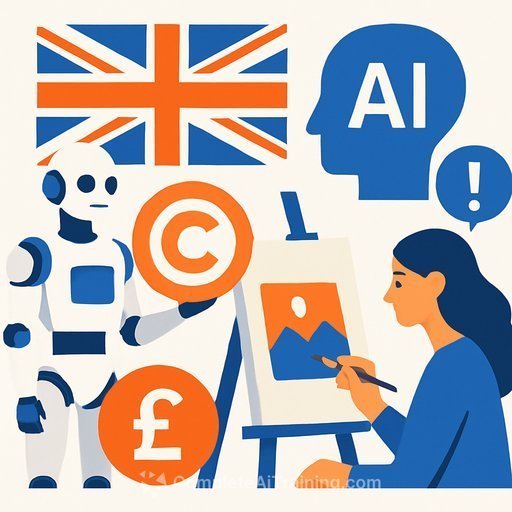
"Stealing Isn't Innovation" Launches: What Creatives Should Do Now
A new campaign just dropped with a clear message: "Stealing our work is not innovation. It's not progress. It's theft-plain and simple."
The Human Artistry Campaign's "Stealing Isn't Innovation" movement launched with 800+ signatories. Names include Scarlett Johansson, Cate Blanchett, Joseph Gordon-Levitt, Jodi Picoult, Roxane Gay, Cyndi Lauper, and They Might Be Giants. That's a serious cross-section of film, publishing, and music saying the same thing: consent and credit matter.
Why this matters
Many labels, news outlets, and studios have cut deals with AI companies while datasets scrape copyrighted catalogs without permission. Creatives pushed back in 2023 through the WGA and SAG-AFTRA strikes, forcing protections into contracts.
This campaign isn't anti-tech. It's pro-creator: include creators in the loop through licensing and partnerships, and build AI on permissioned data. Both can exist-strong tools and respect for rights; for context on the technology and its implications, see Generative AI and LLM.
What this means for your business
Your catalog is leverage. So are your likeness, voice, style, and process notes. If AI companies want to train on it or clone it, that's a negotiation, not a free sample.
Action steps for creatives
- Audit your assets: finished works, drafts, stems, RAW files, outtakes, style guides, and voice notes. Treat them as licensable.
- Set clear terms: where, how, and for how long your work can be used or trained on. Price derivatives and model training separately.
- Use watermarks and persistent metadata where possible. The goal is attribution and traceability, not secrecy.
- Request disclosure: if a partner uses AI, ask what models, what data, and what guardrails. Put that in writing.
- Insist on opt-in, not opt-out. No consent, no training. Simple.
- Negotiate rev share on AI-derived outputs that mimic your style, voice, or likeness.
- Keep a paper trail: licenses, approvals, datasets, and dates. Documentation wins disputes.
- Join collective efforts. Coordinated standards move faster than solo emails; for resources aimed at practitioners, see AI for Creatives.
The bigger picture
We're seeing a split: some companies license data and pay. Others scrape first and apologize later. The first group builds trust and durable models. The second invites lawsuits and public backlash.
The creatives who win will do two things at once: protect their catalogs and learn to direct AI ethically. This is about control, consent, and making sure the pie gets bigger for the people who bake it.
Useful links
- Human Artistry Campaign
- Writers Guild of America
- Build your AI skill stack (Complete AI Training - Courses by Job)
Bottom line
If your work trains a system, you deserve a seat at the table and a slice of the outcome. Say yes to AI that licenses, credits, and pays-and no to anything that treats your life's work like scrap data.
Your membership also unlocks: