Investing for Tomorrow: How STEM Education Fuels the AI Era
AI is rewriting the jobs that matter and how we prep students for them. For education leaders, this isn't theory-it's budgets, curriculum, partnerships, and outcomes.
U.S. software developer roles are projected to grow 17.9% from 2023 to 2033, according to the Bureau of Labor Statistics. At the same time, AI is moving into every job family, with AI mentions in job listings up 56.1% in 2025 and demand for AI engineers up 143.2%. This is durable demand, not a blip. Institutions that move first will set the standard-and capture funding, enrollment, and employer trust.
Farmingdale State College: Building Capacity for What's Next
Farmingdale State College is making a clear bet: a $75 million Computer Sciences Center to double computing enrollment and spark collaboration across disciplines. Centralizing its Division of Computing creates one hub for AI, cybersecurity, and software engineering-skills employers keep asking for.
This is more than new space. It's a practical move to meet regional workforce needs and to give students applied experience that translates into jobs.
AI Management: Technical + Business Fluency
The college's online B.S. in Artificial Intelligence Management blends core programming with business use cases across finance, marketing, and logistics. Students also tackle ethics and societal impact, which employers increasingly expect.
Graduates leave with two advantages: they can build with AI and explain where it drives measurable results. That mix moves resumes to the top of the pile.
Partnerships That Turn Learning Into Outcomes
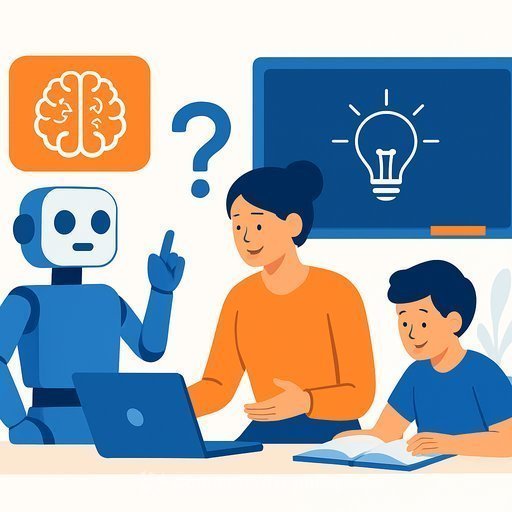
Farmingdale is pairing instruction with research and industry access. A National Science Foundation-supported effort led by faculty members Nur Dean and Xiaojin Ye-"Enhancing Critical Thinking in Introductory Programming through AI and Socratic Metacognitive Inquiry"-launches January 2026. The goal: help students use AI tools while strengthening reasoning and problem-solving. Learn more about NSF programs at nsf.gov.
On the employer side, a partnership with Nicholas Air opens pathways in aviation and maintenance. These ties keep curriculum current and help reduce skills gaps, even if specific placement data for AI graduates isn't yet public.
Why This Matters for Education Leaders
Demand for AI-literate talent is real and compounding. Institutions that fund facilities, modernize coursework, and lock in employer partnerships will see stronger enrollment, better retention, and higher placement rates.
The playbook is clear: build capacity, teach with real tools, measure outcomes, and keep employers at the table.
Action Steps You Can Implement This Year
- Map course outcomes to specific job tasks (e.g., data cleaning, model evaluation, secure deployment) and assess against employer rubrics.
- Integrate AI across disciplines: capstones for business + CS teams, healthcare + data analysis, aviation + predictive maintenance.
- Adopt "AI-with-critical-thinking" pedagogy: Socratic prompts, code reviews, and reflection logs to avoid over-reliance on tools.
- Stand up micro-credentials that stack: Python for data work, prompt design, MLOps basics, AI ethics.
- Form an employer advisory group that meets twice a year to refresh skill priorities and internship pipelines.
- Require portfolio artifacts: repos, model cards, ethics memos, and deployment docs that employers can review in minutes.
- Teach responsible use policies: data privacy, bias assessment, model monitoring, and documentation standards.
What Administrators and Investors Should Track
- Enrollment growth in computing and AI-related courses and the yield from admitted to enrolled.
- Internships secured per cohort and conversion to full-time offers.
- Number of active employer partnerships and funded projects.
- Graduate outcomes within 6-12 months: job titles, salaries, and sectors.
- Faculty development: certifications completed, updated syllabi, and use of AI in instruction and assessment.
A Model With Momentum
Farmingdale's approach-major capital investment, relevant degree paths, NSF-backed research, and industry relationships-points to a workable template for colleges that want results, not headlines. Other institutions can adapt the same playbook to their region and employer base.
If you need a fast way to review AI upskilling options by job function, scan this curated catalog: AI courses by job.
Sources and Further Reading
- U.S. Bureau of Labor Statistics, Occupational Outlook for Software Developers: bls.gov
- National Science Foundation: nsf.gov
Disclaimer: This content reflects opinion and is for information only. It is not investment advice.
Your membership also unlocks: