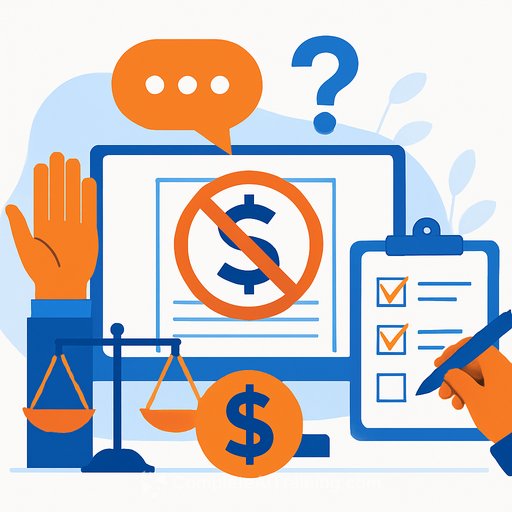
Your "AI Content" Didn't Move the Needle. Here's Why-and What To Do Next
Your firm hired an AI content vendor. Pricing looked fair, turnaround was fast, and every deliverable was "SEO-ready." Six months later, traffic is flat and competitors still outrank you.
The issue isn't AI. The issue is vendors flooding the market with generic drafts that ignore legal compliance, E-E-A-T, and what actually wins in search. They simulate legal tone. They don't build authority or drive qualified cases.
The fix: keep AI in the toolbelt-never in the driver's seat. Use a workflow where humans (including attorneys) verify facts, jurisdiction nuances, and business intent before anything goes live.
Why Law Firms Keep Getting Burned by AI Content
Law firms operate in YMYL categories. That means higher scrutiny, higher stakes, and higher standards. One hallucinated case cite or misquoted statute is enough to erode trust.
Mass-produced AI articles tend to be padded with clichés, thin on local nuance, and light on verified sources. That doesn't just stall rankings-it can harm E-E-A-T signals.
If you want a quick primer on why this matters, review Google's guidance on expertise and YMYL in the Search Quality Rater Guidelines. See Google's SQRG.
Great vendors are transparent about how AI is used and where humans step in. AI should speed up research and drafting. Attorneys should control accuracy, compliance, and final sign-off.
How to Actually Audit Your Content Vendor (Before You Sign)
1) The Pricing Audit
Cheap content is cheap for a reason. Ask exactly what you're buying.
- Price per article and what's included
- Number of edits and revisions
- Delivery timeline
- Who reviews the content (role and credentials)
Quotes of $50-$150 per article usually mean AI drafts with minimal human review. Real legal content often requires $250-$500+ to cover jurisdiction-specific research, attorney review, multiple edit rounds, and fact checks.
Key question: "What does your pricing actually include?" The answer reveals whether they invest in results or cut corners.
2) The Process Audit
Demand a clear workflow that shows how errors are prevented before publication.
- Research sources: Generic blogs or jurisdiction-specific databases?
- Content flow: AI draft → human copyeditor → attorney reviewer → final QA
- Citation verification: Can they show a fully sourced, fact-checked article?
- Error handling: How do they fix issues post-publication (and how fast)?
Ask for a sample with the AI draft, marked-up edits, and the final version. If they can't produce one, human review is probably thin.
3) The Results Audit
Skip promises. Ask for proof.
- Case studies in your exact practice area
- SERP data with ranked keywords and target pages
- Presence in AI Overviews and their artificial intelligence optimization (AIO) plan
- Traffic, leads, and call tracking over time
- Client retention of 12+ months
If they dodge results and hide behind "confidentiality," assume you'll get volume, not outcomes. For AI Overviews specifics, see Google's guidance: About AI Overviews.
The Six Questions That Separate Real Vendors From AI Mills
- "Show three pieces from my practice area-how did you research them?" Look for jurisdiction nuance, competitor analysis, and a clear keyword strategy.
- "What happens after a page ranks #1?" Real partners talk conversions, intake, and case value-not just publishing volume.
- "What percentage of content gets attorney review?" The only acceptable answer is 100%.
- "If we find a factual error in six months, what's your process?" The right answer: fix it immediately and use it as a QA moment-no upcharges.
- "How do you pick topics?" Expect a plan based on your practice areas, gaps in your site, local intent, and competitor content-not a generic calendar.
- "What's your retention rate?" Two years or more signals consistent ROI. High churn is a warning.
What Good Looks Like
- Topic strategy mapped to intake goals, not just keywords
- Jurisdiction-specific sourcing with citations you can verify
- Attorney review on every asset before it ships
- Editorial calendar aligned to ranking opportunities and case value
- Clear AIO approach to win classic SERPs and AI surfaces
- Quarterly reporting that ties pages to calls, consults, and signed matters
The Real Cost of Cheap AI Content
The cost isn't $50 an article. It's the three clients a month who choose a competitor with better guides, clearer answers, and verified citations.
Your content is a 24/7 marketing engine. It educates, builds trust, and moves prospects to take action while you're in court.
If you wouldn't hire an attorney on price alone, don't hire a content vendor that way either.
Next Steps (A 30-Day Plan)
- Audit: Pick 10 key pages. Check citations, jurisdiction fit, and authoritativeness.
- Fix: Correct errors, add sources, tighten intros, and align to a primary query + intent.
- Plan: Build a 90-day brief list: FAQs from intake calls, state-specific statutes, and comparison pages.
- Vet vendors: Use the pricing, process, and results audits above. Ask the six questions.
- Measure: Track rankings, calls, and signed cases per page. Report quarterly.
If your team needs structured training on safe, effective AI workflows for content and review, explore these resources: Latest AI courses.
The vendors worth paying for aren't chasing speed. They're accountable to outcomes. That's the only metric that matters.
Your membership also unlocks: