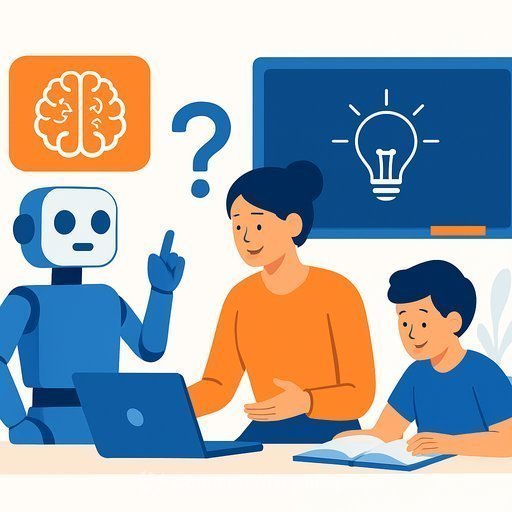
We Need a New Platform for Education in the Age of AI and Robotics
National competitiveness rides on one thing: the capacity of people to learn new tools, solve practical problems, and build new industries. Education is the operating system behind that capacity. Ours is aging.
The current model still mirrors the Industrial Age-standardization, seat time, and testing that assumes stability. That worked when jobs changed slowly. It does not fit a world where software can reshape a role in a year.
From STEM-Only to FACT
STEM is essential, but it's not the whole playbook. We need FACT built into every grade and program:
- Flexibility: shift roles and tools without losing momentum.
- Adaptability: learn new systems under time pressure.
- Creativity: ask better questions, design better workflows, spot new options.
- Technology fluency: speak the basics of computing, data, and responsible tool use.
These are practical competencies, not nice-to-haves. They should be taught early and assessed often.
Make AI and Robotics Core Literacy
Students must learn to build with AI-not just consume it. They should know what these systems can do, where they fail, how bias appears, and why verification matters when answers look convincing.
- Teach computing and AI basics for all students, with clear grade-by-grade progressions.
- Integrate hands-on work with robotics, drones, and sensors in logistics, health care, agriculture, and manufacturing projects.
- Require source-checking and model critique in assignments: "What did the system miss? How did you validate?"
- Offer CTE pathways and dual-enrollment options tied to local employers and community colleges.
- Publish an AI-use policy for classrooms: permitted tools, disclosure rules, and academic integrity.
Higher Ed: Go Modular and Multidisciplinary
Too many graduates are over-degreed and under-prepared. Replace siloed tracks with shorter, stackable programs that mirror how real problems get solved-across fields, not inside narrow boxes.
- Adopt 8-12 week modules that stack into certificates and degrees.
- Center studios and capstones where design, data, software, hardware, and ethics meet.
- Assess by competency, not seat time. Credit prior learning and on-the-job results.
- Weave AI literacy into gen-ed: prompts, verification, bias, security, and policy.
Assessment for a Moving Target
If the economy changes each year, assessments should too. Shift from static exams to proofs of skill that transfer across tools and contexts.
- Versioned performance tasks: repeat a challenge with a new tool or data set three months later.
- Portfolios of shipped work: code, lesson plans with AI audits, robotics builds, and reflection notes.
- "Skill checkouts" for discrete abilities (e.g., prompt design, sensor calibration, data cleaning).
- Time-to-competency metrics: how fast a learner can reach baseline in a new system.
- Oral defenses to explain choices, risks, and verification steps.
Infrastructure and Guardrails
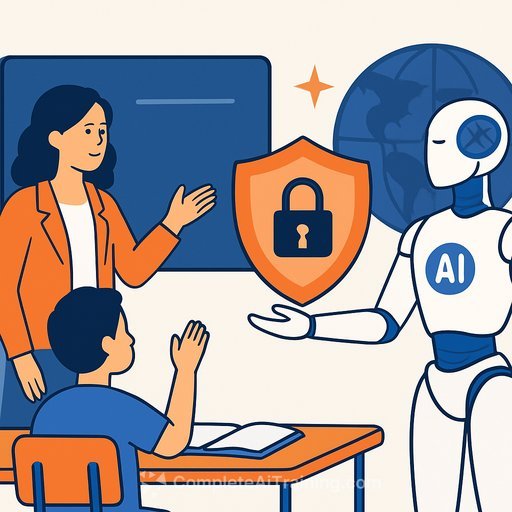
Equity and safety start with infrastructure. Give every educator and student the tools and protections to learn with confidence.
- 1:1 devices, classroom robotics kits, and maker tools with maintenance budgets.
- Secure network access to approved AI systems; classroom accounts with audit trails.
- Clear procurement criteria: data retention, privacy, opt-out, and exportability.
- Adopt an AI risk framework and document how you mitigate bias and misuse (see NIST AI Risk Management Framework).
- Align with privacy rules and publish parent-friendly transparency reports.
- Protect teacher time for practice: weekly collaboration blocks and supported experimentation.
12-Month Starter Plan for District Leaders
- Quarter 1: Name an AI/Robotics lead. Audit curriculum, devices, PD, and policy. Run small pilots in three subjects.
- Quarter 2: Train an initial cohort of teachers. Set AI-use guidelines. Sign MOUs with local employers and a community college.
- Quarter 3: Launch project-based units in grades 6-12 (AI writing lab, drone mapping, sensor-based agriculture). Start micro-credentials.
- Quarter 4: Publish results and rubrics. Budget for scale-up. Expand access to after-school and summer programs.
The Metric That Matters: Trainability
Degrees signal effort. Trainability signals future value. It is the capacity and willingness to learn, unlearn, and relearn-on schedule, under constraints.
- Track onboarding time to a new tool or workflow.
- Measure cross-domain transfer: apply a concept learned in science to a robotics or arts project.
- Count completed micro-credentials and re-skilling cycles per year.
- Reward peer teaching and documented knowledge sharing.
In an AI-first economy, those who learn fastest lead. Those who resist learning fall behind.
Where to Skill Up
- For national CS access trends and policy ideas, see State of Computer Science Education.
- For implementation guardrails, review the NIST AI Risk Management Framework.
- For practical course pathways by job role, explore Complete AI Training: Courses by Job and popular credentials at Popular Certifications.
Bottom Line
Stop optimizing for routine. Build a Platform for Education that teaches students to learn fast, adapt often, and create with new tools responsibly. That is how schools stay relevant-and how communities stay competitive.
Your membership also unlocks: