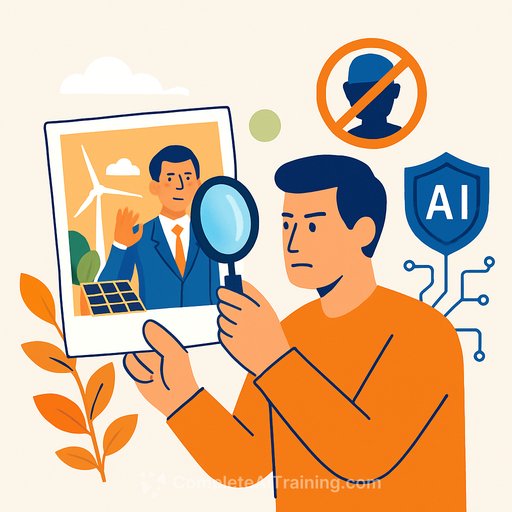
Climate Action: 3 Ways Regulation Can Prevent Deepfake Greenwashing
Generative AI (GenAI) is capable of creating highly convincing fake videos and audio. This poses a real risk to climate action efforts, especially when deepfake greenwashing is used to fake sustainability achievements. Strong, forward-thinking AI regulations are essential to limit this threat.
More than half of company leaders admitted to greenwashing in a 2022 survey of nearly 1,500 executives. An EU Commission study also found that 40% of green claims lack supporting evidence. Greenwashing damages public trust in climate initiatives and slows down the transition to net zero. It also makes it harder to motivate other companies and leaders to commit seriously to climate change.
Traditional greenwashing is already widespread, but deepfake technology could make it worse by enabling fabricated visual and audio content. The number of deepfake videos online reached about 95,820 in 2023, with an estimated 500,000 deepfake videos and audio clips shared on social media platforms—a 550% increase since 2019. By 2025, it’s predicted that 8 million deepfake videos will have circulated online.
Deepfakes can falsely show commitment to renewable energy, carbon capture, or sustainable development. For example, in March 2023, a think tank was accused of using a doctored image of a dead whale near wind turbines to argue against offshore wind projects. The Texas Public Policy Foundation, responsible for the image, dismissed claims of manipulation, calling it “stupid” to label the image doctored. That same year, a fake video of climate activist Greta Thunberg praising “vegan grenades” and “sustainable tanks” spread online. The original BBC interview was about climate anxiety.
These examples highlight the growing threat deepfakes pose to climate action and sustainability. This makes the need for regulatory safeguards against deceptive practices urgent.
Existing AI Regulations
The European Union’s AI Act requires all AI-generated content to be clearly disclosed. This includes videos, audio, and images, helping people in Europe spot AI-enabled greenwashing from real climate action. The US has no federal AI legislation yet, but states like Colorado, Tennessee, and California are enacting laws expected to take effect by 2026. Utah’s Artificial Intelligence Policy Act, for example, requires disclosure of GenAI use when interacting with consumers.
China’s Interim Measures for the Management of Generative AI Services (2023) regulates deepfakes and synthetic content, directly addressing GenAI-induced greenwashing. This is one of the few policies worldwide with such specific focus.
In Africa, there is no AI treaty yet. The African Union Development Agency (AUDA-NEPAD) has a Continental AI Strategy promoting ethical AI development, but regulations are more effective because they are permanent and harder to reverse. A lack of unity among member countries has delayed formal AI regulation. Mauritius and Egypt have national strategies but no specific rules on deepfakes or climate action yet.
Creating Strong AI Regulations
Deepfake technology is evolving faster than laws can keep up. Without proactive regulation, greenwashing risks rising sharply. Governments can take three key steps to prevent deepfake greenwashing:
- Ethical AI Deployment
Regions and continents—like Africa—need AI treaties setting clear standards for ethical, legal GenAI use. These should include safeguards against GenAI in climate disclosures and penalties for deepfake greenwashing. Countries with existing AI policies should strengthen them to address emerging deepfake threats to climate action. - Cross-Sector Collaboration
Beyond legislation, governments should work with industries and sector regulators to embed AI rules into broader legal frameworks. This cooperation creates more consistent and practical regulations covering GenAI use across different fields. - Forward-Looking Legislation
AI is still developing. Laws should not only address current GenAI challenges but also anticipate future risks to climate commitments. Long-term, strategic regulation will help prevent deepfakes and other AI advances from obscuring genuine climate efforts.
Tackling Deepfake Greenwashing
Greenwashing amplified by GenAI will make it harder to track real progress against climate change. If it becomes impossible to tell true efforts from fake ones, measuring climate achievements will become unreliable.
Clear, enforceable AI regulations are needed to govern the ethical use of GenAI, especially in climate action communication. This will protect public trust and ensure that climate initiatives remain transparent and credible.
Your membership also unlocks: