How Grocers Are Bringing AI To Back-End Operations
Consumer-facing AI gets headlines, but store operations are where the real gains are being made. With only 15% of U.S. shoppers using AI for grocery tasks - largely due to trust concerns per Dunnhumby's latest Consumer Trends Tracker - leading grocers are putting AI in the hands of associates and managers first.
The goal is simple: fewer systems, faster decisions, and cleaner execution across labor, tasks, and retail media. The message from the NRF Big Show this year was clear - prioritize store-level AI that removes friction for teams and closes operational gaps.
Why the Focus Has Shifted to the Back End
AI is now table stakes for staying competitive, but not every use case is ready for customers. Ops leaders are prioritizing deployments that compress admin time, standardize routines, and give managers real-time visibility into labor and store health.
Make associates' jobs easier, and the guest experience improves as a result - shorter lines, better on-shelf availability, and fewer headaches for managers.
What Leading Grocers Are Deploying
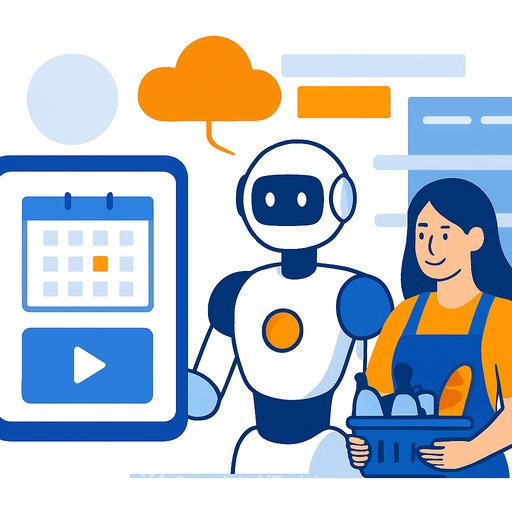
Kroger is rolling out Sage, an AI assistant that gives employees a single place to check schedules, request time off, set availability, and view pay. Store and regional leaders get live labor insights and visibility into changes at the location level.
The company is also testing shopper-facing tools through cloud partners, but the operations stack - scheduling, communications, and labor analytics - is where momentum is strongest.
Hy-Vee consolidated a previously fragmented set of systems into one mobile app and uses Workday's AI to build schedules automatically. Leaders review, make small edits, and publish - instead of rebuilding from scratch.
The throughline: reduce system hopping, move to mobile-first for employees, and let AI handle the heavy lifting so managers can manage.
Ops Playbook: Capture Value in 90 Days
- Pick one high-friction workflow: scheduling, shift swaps, or store comms. Start where time is being burned weekly.
- Unify access: one mobile app, single sign-on, role-based views for associates, department heads, and store leaders.
- Integrate data sources: time and attendance, HRIS, POS traffic patterns, and local events where relevant.
- Pilot 3-5 stores: compare to control stores with a clear pre/post window.
- Train by doing: short micro-lessons, embedded tips, and store champions to field questions in week one.
- Lock guardrails: fairness rules in scheduling, labor compliance constraints, and human review before publish.
KPIs That Actually Move the Needle
- Schedule build time: target 60-80% reduction for department leaders.
- Shift swap approval time: under 2 hours during store hours.
- Labor variance vs. forecast: tighten to within ±2-3% weekly.
- Overtime hours: reduce by 10-20% through better coverage.
- Employee app adoption: 85%+ within 30 days of rollout.
- Task completion on time: lift to 95% for price changes, counts, and resets.
- On-shelf availability: improve by 1-2 pts through faster task cycles.
Retail Media: Turning Store Signals Into Personalization
AI is making retail media smarter by processing more data, faster. The challenge in-store is attribution - it's harder to tie a specific impression to a cart versus a clean digital click path.
Gen Z blurs in-store and mobile, so think "hybrid moments." Use AI to adjust offers in hours, not weeks, and let teams approve auto-generated creative with tight brand and compliance rules.
Operational Moves for In-Store Retail Media
- Unify signals: POS, loyalty, inventory, and traffic counters feed a single model for targeting and measurement.
- Shorten the loop: run daily optimization cycles on placements and offers; freeze learnings weekly for scale.
- Guard shopper trust: clear disclosures, frequency caps, and relevance thresholds to avoid noise.
- Partner play: give CPGs a self-serve dashboard with pre-approved creative templates and real-time pacing.
Risk, Compliance, and Change Management
- Fairness: audit AI scheduling for equitable shift distribution and avoid unintended bias.
- Compliance: hard rules for minors, rest periods, and max hours - enforced by the system, not the manager's memory.
- Data rights: document what's collected, who sees it, and retention windows. Keep a clean audit trail.
- Fallbacks: if AI fails, leaders can publish manual schedules and override recommendations with notes.
What To Do Next
Start with one store process you can automate end-to-end, prove the value, then roll it out. Keep the stack simple, the training light, and the KPIs visible to every leader in the building.
- Deepen your bench on ops-focused AI with AI for Operations.
- Level up store leadership skills with the AI Learning Path for Retail Managers.
AI doesn't need to wow customers to pay off. If it removes friction for your people and tightens execution, it's doing its job.
Your membership also unlocks: